sank - Master This Word
Master this word with our 5-step learning method – Learn English in English
Train English Through Brain Routes, Not Translation.
This page helps you stop memorizing isolated translations and start understanding a word through its shared mental image, native-style thinking, and practical training steps.
Master this word with our 5-step learning method – Learn English in English
Example sentences are the start of understanding. Don't rush to memorize. First feel how the word works in a sentence.
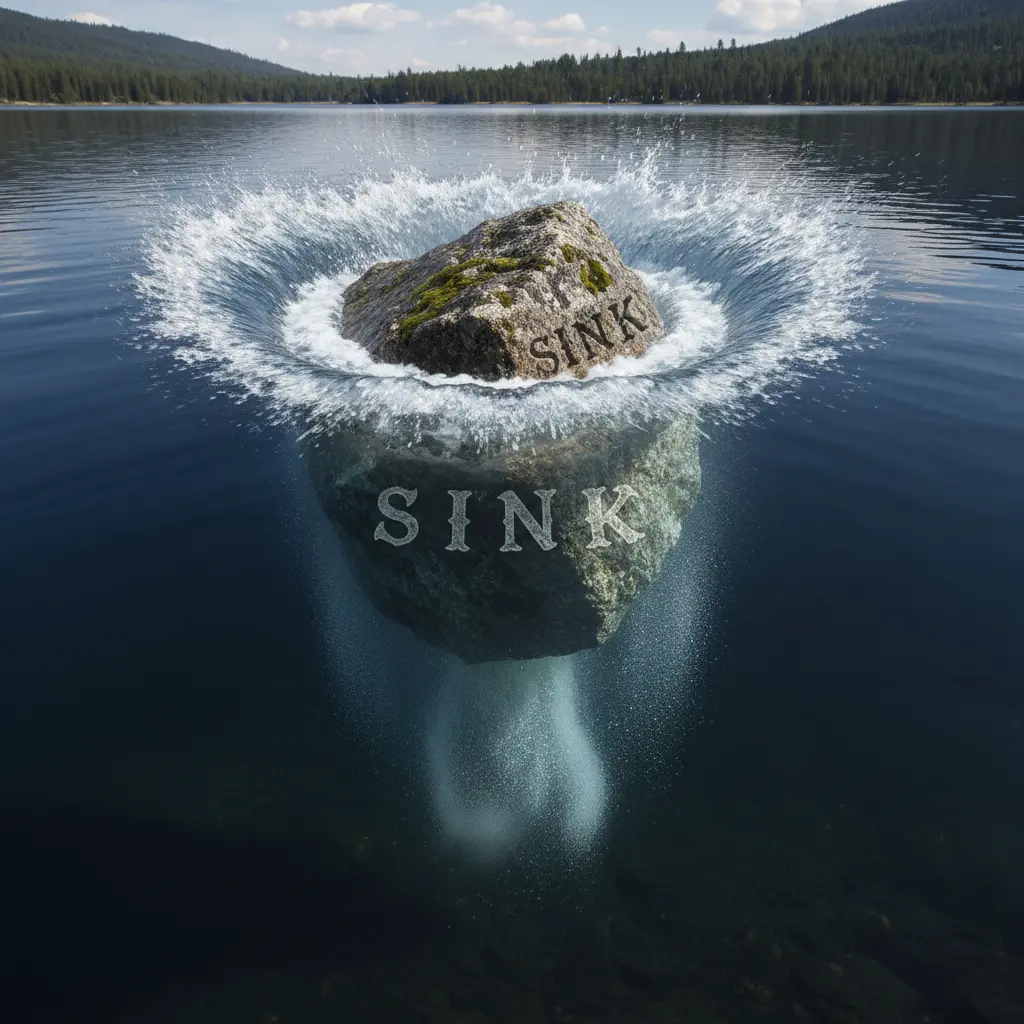
sink = cause to go down + Old English 'sincan' (to sink). Imagine a heavy rock dropping into a lake, creating a splash and disappearing beneath the water, evoking the feeling of sinking.
Note 1: These definitions and etymologies are not standard dictionary definitions, but extended explanations provided to help with memorization and understanding of the actual application of words. Through this background information, we strive to make words more vivid and easier to understand, and help you remember their meanings in real life.
Note 2: LexiTalk designs the learning flow around the linguistics principle of “Comprehensible Input.” When learners encounter material that is slightly above their level but still understandable from context, the brain naturally absorbs the language. That’s why we keep every word inside authentic contexts, using examples and associations to help you understand it and use it flexibly.
Read the FAQ explanation of Comprehensible InputI grip the mug and tilt it toward the sink, watching the water rise as the cup begins its slow descent. I push it a little farther, and it sinks with a soft plunk, my wrist easing as I adjust the angle to keep it balanced. The motion feels like a small decision my body makes—move, shift, change—until gravity does the rest and the mug settles in the basin. In that quiet moment the word sinks in as a felt experience, not a rule, when you hold, move and let it happen.
Sink has two main uses in English: as a verb meaning to descend below the surface of a liquid, or to cause something to go down or disappear beneath the water; and as a noun meaning a basin for holding water, such as a kitchen sink or a bathroom sink. It also appears in many phrases (sink in, sink into sleep, sink a ship, sink or swim). Pay attention to tense: sank is the simple past, sunk is the past participle. Learners often confuse sink with sit or set, or mix up the past tense forms sank vs sunk. The noun sense is common in everyday talk about kitchens and bathrooms, and in idioms about effort and failure.
Native English users quickly separate sink as a physical container and as an action. Learners may map all meanings to a single sense, misplacing sink in idioms or confusing past forms.
Download LexiTalk app for personalized learning experience
Download AppCookies
We use cookies for essential site functions, analytics, and ads. You can accept, reject, or manage preferences. Privacy Policy