sculptures - Master This Word
Master this word with our 5-step learning method – Learn English in English
Train English Through Brain Routes, Not Translation.
This page helps you stop memorizing isolated translations and start understanding a word through its shared mental image, native-style thinking, and practical training steps.
Master this word with our 5-step learning method – Learn English in English
Example sentences are the start of understanding. Don't rush to memorize. First feel how the word works in a sentence.
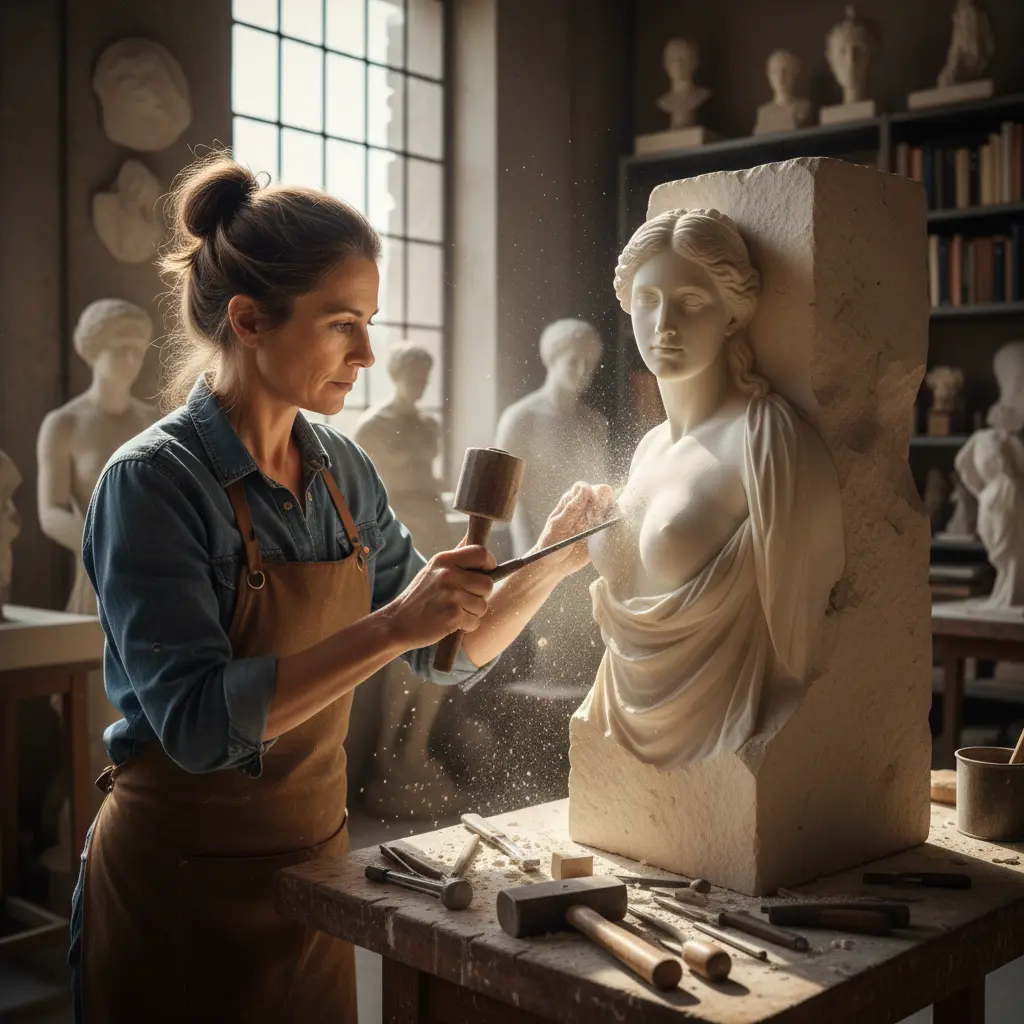
sculpture = sculpt (to carve) + -ure (process of), from Latin 'sculptura' (carving). Visualize a skilled artist chiseling a block of stone into a beautiful statue, revealing its hidden form.
Note 1: These definitions and etymologies are not standard dictionary definitions, but extended explanations provided to help with memorization and understanding of the actual application of words. Through this background information, we strive to make words more vivid and easier to understand, and help you remember their meanings in real life.
Note 2: LexiTalk designs the learning flow around the linguistics principle of “Comprehensible Input.” When learners encounter material that is slightly above their level but still understandable from context, the brain naturally absorbs the language. That’s why we keep every word inside authentic contexts, using examples and associations to help you understand it and use it flexibly.
Read the FAQ explanation of Comprehensible InputI pick up a lump of clay and move my fingers across its cool surface. I press, tilt, and turn, watching the shape change under my hands. There’s a small burn of focus as I adjust where to push or pull, deciding what to hold steady and what to set free. The form feels like a choice I make with my fingers, a tiny world I can place in the palm of a moment.
A sculpture is a three-dimensional artwork created by shaping materials such as stone, metal, wood, or clay. Unlike painting, sculpture occupies space and can be viewed from multiple angles, inviting viewers to walk around it. Sculptors work with tools, textures, and scale to convey ideas, emotions, or stories, from portraits to abstract forms. The process may involve carving, modeling, casting, or assembling, each with distinct techniques. Sculpture reflects cultural heritage, religious symbolism, political commentary, and personal imagination. In museums and public spaces, sculptures transform environments, guiding light and shadow, inviting interaction. To study sculpture, learners notice material, form, proportion, and the relationship between surface and void.
Sculpture is a tangible, space-occupying art form; English uses sculpture to cover a broad range from representational to abstract. Learners often split sculpture and statue too rigidly, or think all sculpture must be carved from stone.
Download LexiTalk app for personalized learning experience
Download AppCookies
We use cookies for essential site functions, analytics, and ads. You can accept, reject, or manage preferences. Privacy Policy