sensitive - Master This Word
Master this word with our 5-step learning method – Learn English in English
Train English Through Brain Routes, Not Translation.
This page helps you stop memorizing isolated translations and start understanding a word through its shared mental image, native-style thinking, and practical training steps.
Master this word with our 5-step learning method – Learn English in English
Example sentences are the start of understanding. Don't rush to memorize. First feel how the word works in a sentence.
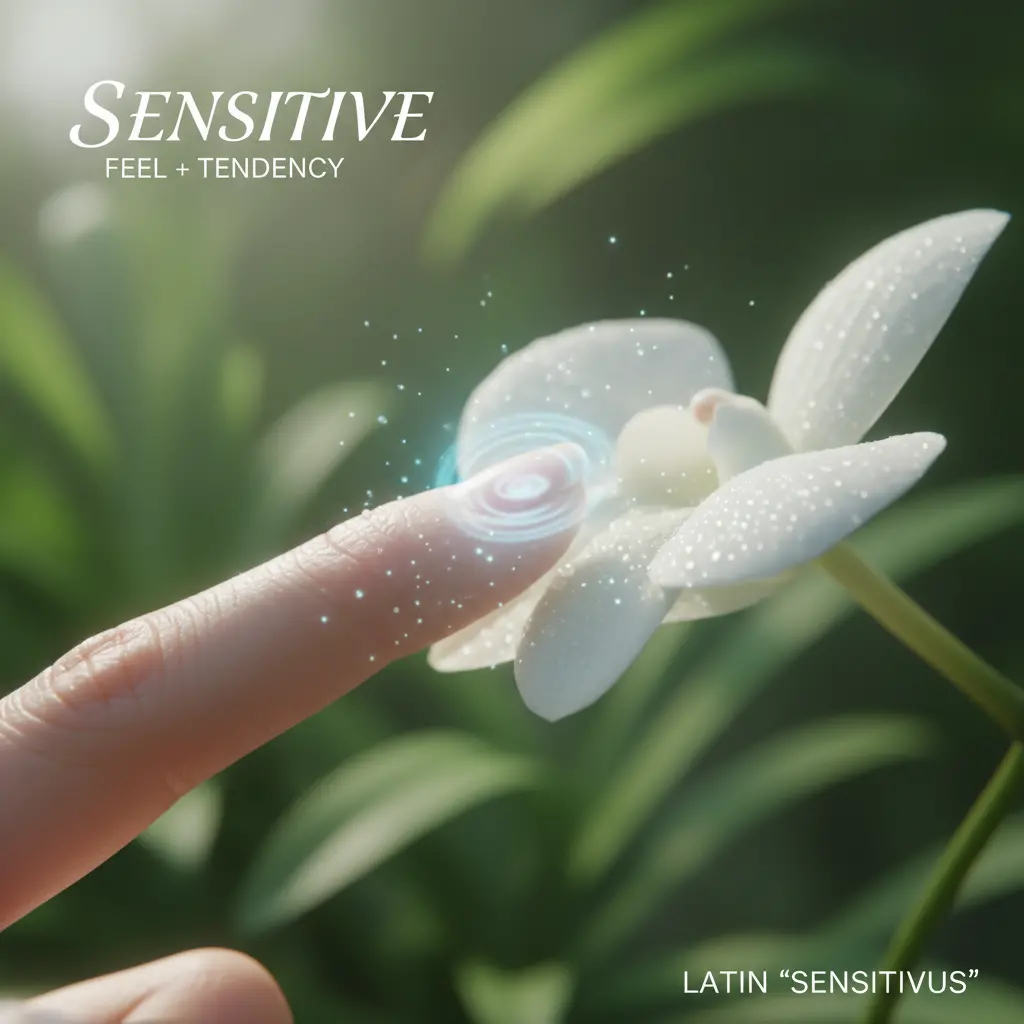
sens- = feel + -itive (suffix indicating tendency or quality). Originated from Latin 'sensitivus', through Old French 'sensible', to English 'sensitive'. Imagine a flower petal responding delicately to the touch.
Note 1: These definitions and etymologies are not standard dictionary definitions, but extended explanations provided to help with memorization and understanding of the actual application of words. Through this background information, we strive to make words more vivid and easier to understand, and help you remember their meanings in real life.
Note 2: LexiTalk designs the learning flow around the linguistics principle of “Comprehensible Input.” When learners encounter material that is slightly above their level but still understandable from context, the brain naturally absorbs the language. That’s why we keep every word inside authentic contexts, using examples and associations to help you understand it and use it flexibly.
Read the FAQ explanation of Comprehensible InputI hold a cup and gently move it a little, watching the liquid ripple. A breeze slides in and I shift my stance to keep from spilling. I adjust my grip and feel the space between hand and cup tighten, a careful pull on my attention. That habit of noticing tiny nudges stays with me in conversations and in scenes that feel sharp.
Sensitive describes something or someone that reacts readily to touch, pain, or external stimuli, and can also refer to people who notice and care about others’ feelings. Physically, a sensitive skin or sensor registers small changes; emotionally, a sensitive person is easily moved or affected by criticism and social situations. It can also mean being aware of delicate contexts and norms, requiring tact. The root sens- means feel, and the suffix -ive marks a tendency or quality, from Latin sensitivus via Old French sensible. A helpful image is a flower petal that responds gently to a light touch.
In English, sensitive spans physical, emotional, and social awareness; learners often confuse it with sensible or easily offended.
Which of the following words is the opposite of 'sensitive'?
How would you describe someone who is described as 'sensitive'?
In what context might being 'sensitive' be seen as a positive trait?
Which word best describes someone who is easily affected or offended by external influences?
How can being 'sensitive' impact your interactions with others?
Download LexiTalk app for personalized learning experience
Download AppCookies
We use cookies for essential site functions, analytics, and ads. You can accept, reject, or manage preferences. Privacy Policy