shy - Master This Word
Master this word with our 5-step learning method – Learn English in English
Train English Through Brain Routes, Not Translation.
This page helps you stop memorizing isolated translations and start understanding a word through its shared mental image, native-style thinking, and practical training steps.
Master this word with our 5-step learning method – Learn English in English
Example sentences are the start of understanding. Don't rush to memorize. First feel how the word works in a sentence.
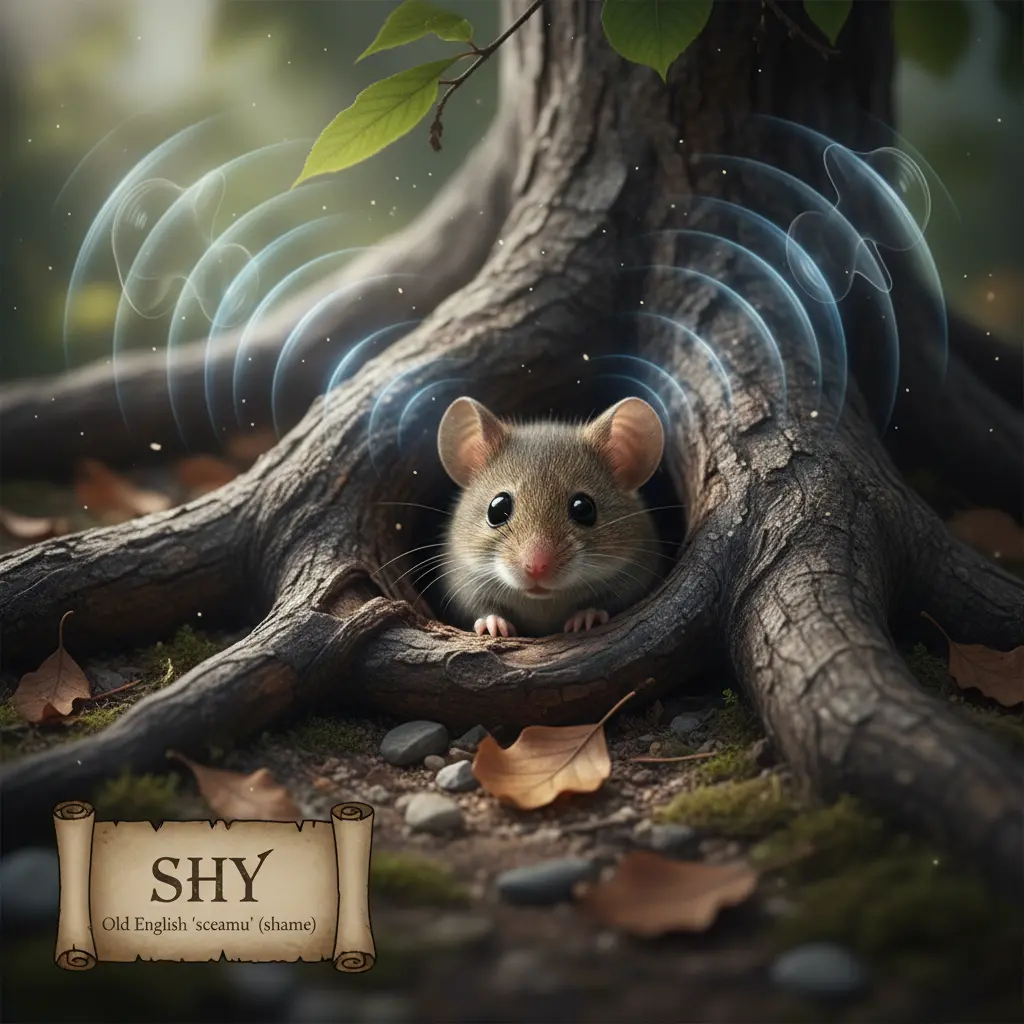
Root: shy (perceived as 'to frighten or scare'). Origin: Old English 'sceamu' (shame) → Middle English 'shy' → modern English. Memory image: Imagine a timid mouse hiding away, scared by loud noises, as a vivid image of shyness.
Note 1: These definitions and etymologies are not standard dictionary definitions, but extended explanations provided to help with memorization and understanding of the actual application of words. Through this background information, we strive to make words more vivid and easier to understand, and help you remember their meanings in real life.
Note 2: LexiTalk designs the learning flow around the linguistics principle of “Comprehensible Input.” When learners encounter material that is slightly above their level but still understandable from context, the brain naturally absorbs the language. That’s why we keep every word inside authentic contexts, using examples and associations to help you understand it and use it flexibly.
Read the FAQ explanation of Comprehensible InputI shift in my seat, straighten my shoulders, and settle into a quiet listening stance. A small pause in my breath makes room for others to speak, and I let my gaze drift toward the speaker. That gentle tension in my chest feels like a door I am choosing not to fling open, a decision to keep the spotlight off me. In real moments I move at a slower pace, listen more than I speak, and let my words come when they truly fit.
Shy describes a person who feels nervous or timid in social situations, often avoiding attention or interaction. It can refer to a temporary mood or to a more lasting trait: shy people may blush, hesitate to speak, or keep to the margins of a gathering. The word carries a nuance of self consciousness rather than a lack of ability, and it can apply to children discovering new environments or adults facing unfamiliar crowds. Shyness is not the same as being unfriendly; it is about inner restraint and a preference for quiet, private moments over loud or crowded settings, sometimes easing with familiarity or encouragement.
Shy is a common English descriptor for a mix of self consciousness and a preference for quiet settings; learners often confuse it with being anti social. The nuance is situational and not a fixed defect, and shy can describe feelings in one setting while another setting feels fine.
What does the word 'shy' mean?
Which sentence uses the word 'shy' correctly?
Choose the synonym for 'shy':
In what situation would someone be described as shy?
How would you describe a shy person in real life?
Download LexiTalk app for personalized learning experience
Download AppCookies
We use cookies for essential site functions, analytics, and ads. You can accept, reject, or manage preferences. Privacy Policy