
siblings - Master This Word
Master this word with our 5-step learning method – Learn English in English
Train English Through Brain Routes, Not Translation.
This page helps you stop memorizing isolated translations and start understanding a word through its shared mental image, native-style thinking, and practical training steps.
Master this word with our 5-step learning method – Learn English in English
Example sentences are the start of understanding. Don't rush to memorize. First feel how the word works in a sentence.
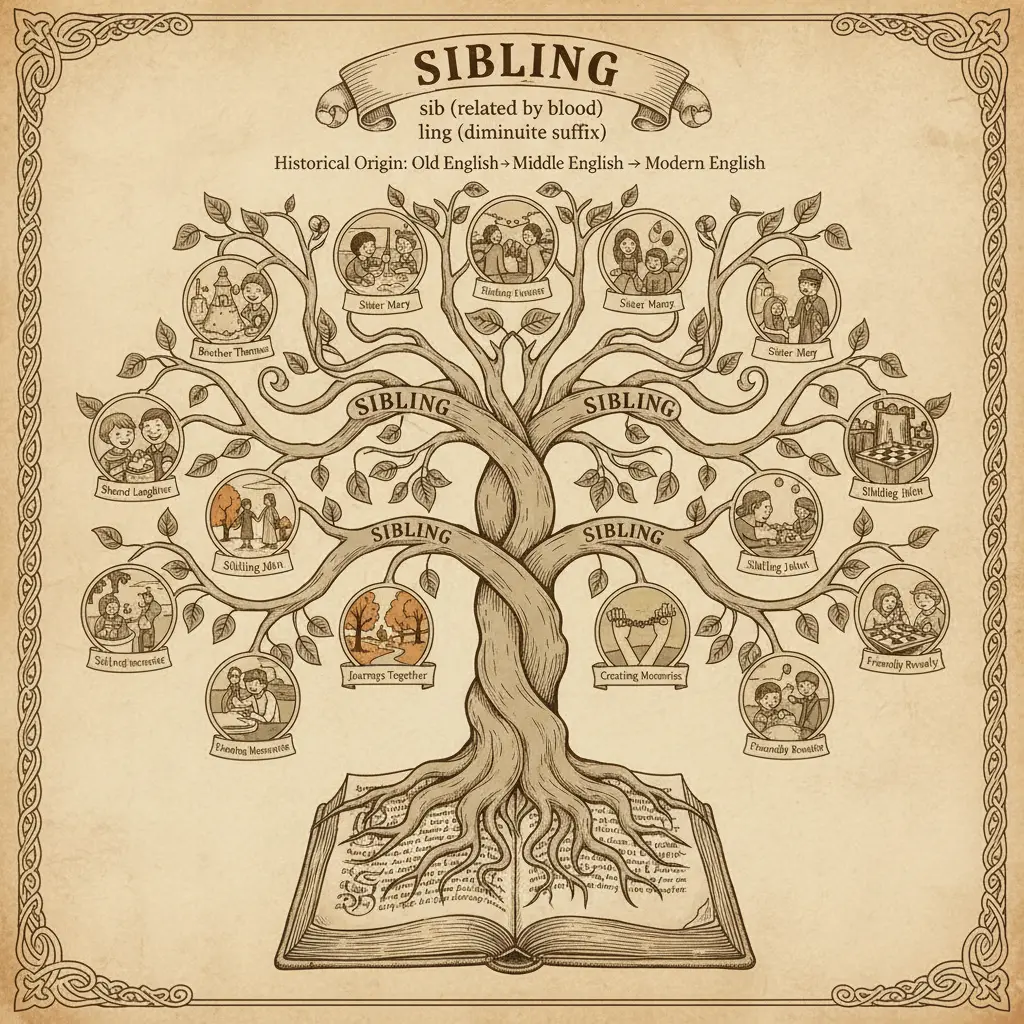
sibling = sib (related by blood) + ling (diminutive suffix). Historical origin: Old English → Middle English → Modern English. Memory image: Imagine a family tree where each branch represents a sibling, and the leaves symbolize shared experiences.
Note 1: These definitions and etymologies are not standard dictionary definitions, but extended explanations provided to help with memorization and understanding of the actual application of words. Through this background information, we strive to make words more vivid and easier to understand, and help you remember their meanings in real life.
Note 2: LexiTalk designs the learning flow around the linguistics principle of “Comprehensible Input.” When learners encounter material that is slightly above their level but still understandable from context, the brain naturally absorbs the language. That’s why we keep every word inside authentic contexts, using examples and associations to help you understand it and use it flexibly.
Read the FAQ explanation of Comprehensible InputI pick up a photo frame and move it a little to catch the light. I turn the frame toward the couch where my family sits, and I adjust my grip as I settle in. A picture of my sibling comes into view, and the scene makes the idea of kinship shift from memory to feeling. I hold the frame steady, let the moment speak, and keep the sense of connection alive as I talk about a sibling in real life.
A sibling is a brother or a sister, someone who shares at least one parent with you. The term is neutral and covers people of any age and gender. In everyday speech, you can say my sibling or a sibling is close to me. Siblings can be biological, adoptive, or step-siblings who grow up in the same family. In many cultures, siblings are expected to support one another, especially during tough times, but relationships vary widely. The concept also appears in phrases like older sibling and younger sibling, as well as sibling rivalry. Remember that sibling is gender-neutral, unlike sister or brother.
English speakers often view sibling as a broad, inclusive term that can cover any brother or sister, which can confuse learners who only know sister or brother terms. Be explicit when you want to distinguish gender or step/half relations.
Download LexiTalk app for personalized learning experience
Download AppCookies
We use cookies for essential site functions, analytics, and ads. You can accept, reject, or manage preferences. Privacy Policy