
silk - Master This Word
Master this word with our 5-step learning method – Learn English in English
Train English Through Brain Routes, Not Translation.
This page helps you stop memorizing isolated translations and start understanding a word through its shared mental image, native-style thinking, and practical training steps.
Master this word with our 5-step learning method – Learn English in English
Example sentences are the start of understanding. Don't rush to memorize. First feel how the word works in a sentence.
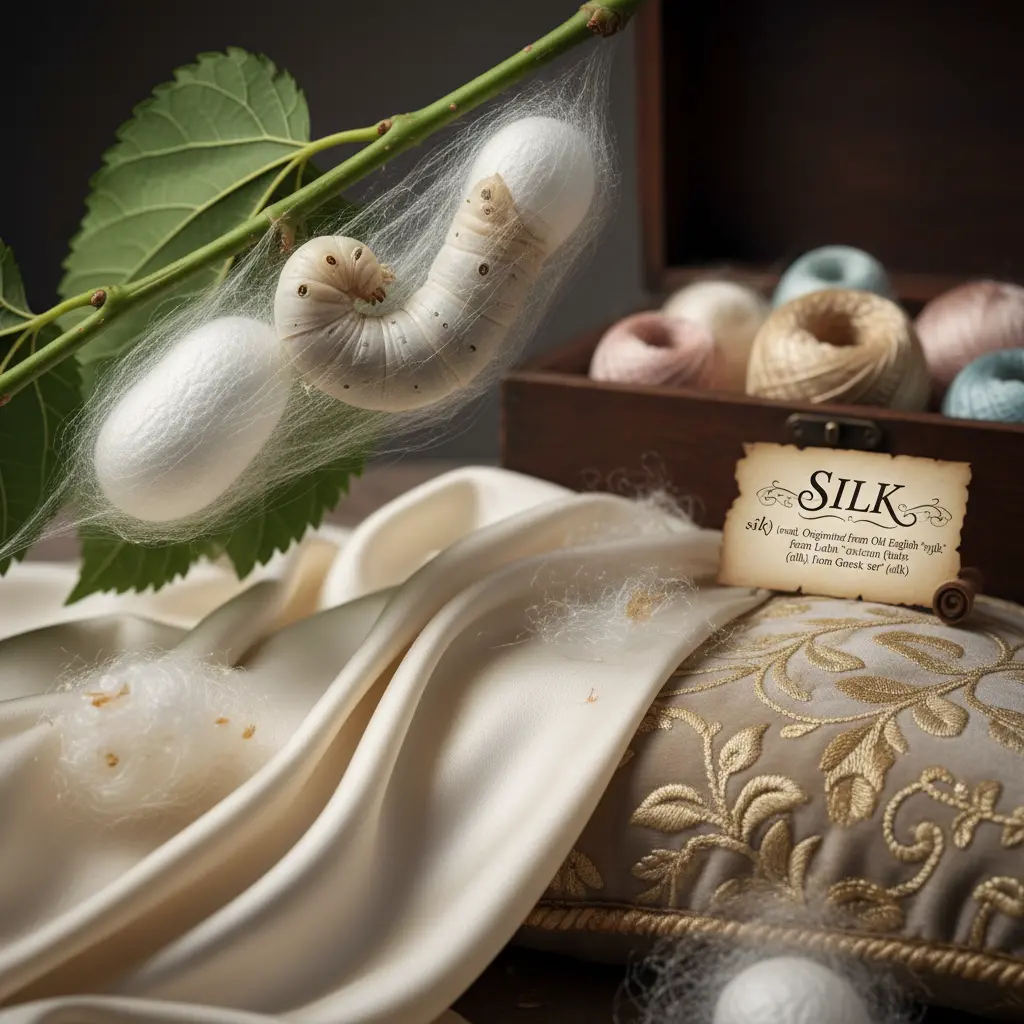
silk = sīl(k) (root). Originated from Old English 'sylk', from Latin 'sericum' (silk), from Greek 'sēr' (silk). Picture a silkworm spinning its delicate threads, representing luxury and softness.
Note 1: These definitions and etymologies are not standard dictionary definitions, but extended explanations provided to help with memorization and understanding of the actual application of words. Through this background information, we strive to make words more vivid and easier to understand, and help you remember their meanings in real life.
Note 2: LexiTalk designs the learning flow around the linguistics principle of “Comprehensible Input.” When learners encounter material that is slightly above their level but still understandable from context, the brain naturally absorbs the language. That’s why we keep every word inside authentic contexts, using examples and associations to help you understand it and use it flexibly.
Read the FAQ explanation of Comprehensible InputI lift a thin strip of silk between my fingers and hold it loose, then slowly move the edge to align with the seam. I feel the fabric give a little as I pull, and I adjust my grip to keep it from slipping. The silk changes under the touch—cool at first, then warm as light plays along its surface—until I turn it to catch a better angle. In use, I let it drape and settle just so, a small, quiet luxury I keep within reach.
Silk is a fine, soft fabric created by the cocoon-spinning larvae of the silkworms. Historically associated with luxury and long trade routes, silk remains prized for its smooth feel and subtle sheen. In everyday English, silk is used both as a material you wear or use and as a metaphor for something delicate, precious, or luxurious. People also describe colors or fabrics as silk-like, or refer to 'silk smooth' surfaces. The term can function as a countable material or a mass noun, depending on the context.
To an English speaker, silk often signals luxury, fashion, and a tactile sense of smoothness, so learners may overgeneralize to other fabrics or misplace silk with its adjective form silky.
What is the meaning of the word 'silk'?
In which sentence is 'silk' used correctly?
Which word is a synonym of 'silk'?
Which word is an opposite of 'silk'?
In what real-life context would you find 'silk'?
Download LexiTalk app for personalized learning experience
Download AppCookies
We use cookies for essential site functions, analytics, and ads. You can accept, reject, or manage preferences. Privacy Policy