since - Master This Word
Master this word with our 5-step learning method – Learn English in English
Train English Through Brain Routes, Not Translation.
This page helps you stop memorizing isolated translations and start understanding a word through its shared mental image, native-style thinking, and practical training steps.
Master this word with our 5-step learning method – Learn English in English
Example sentences are the start of understanding. Don't rush to memorize. First feel how the word works in a sentence.
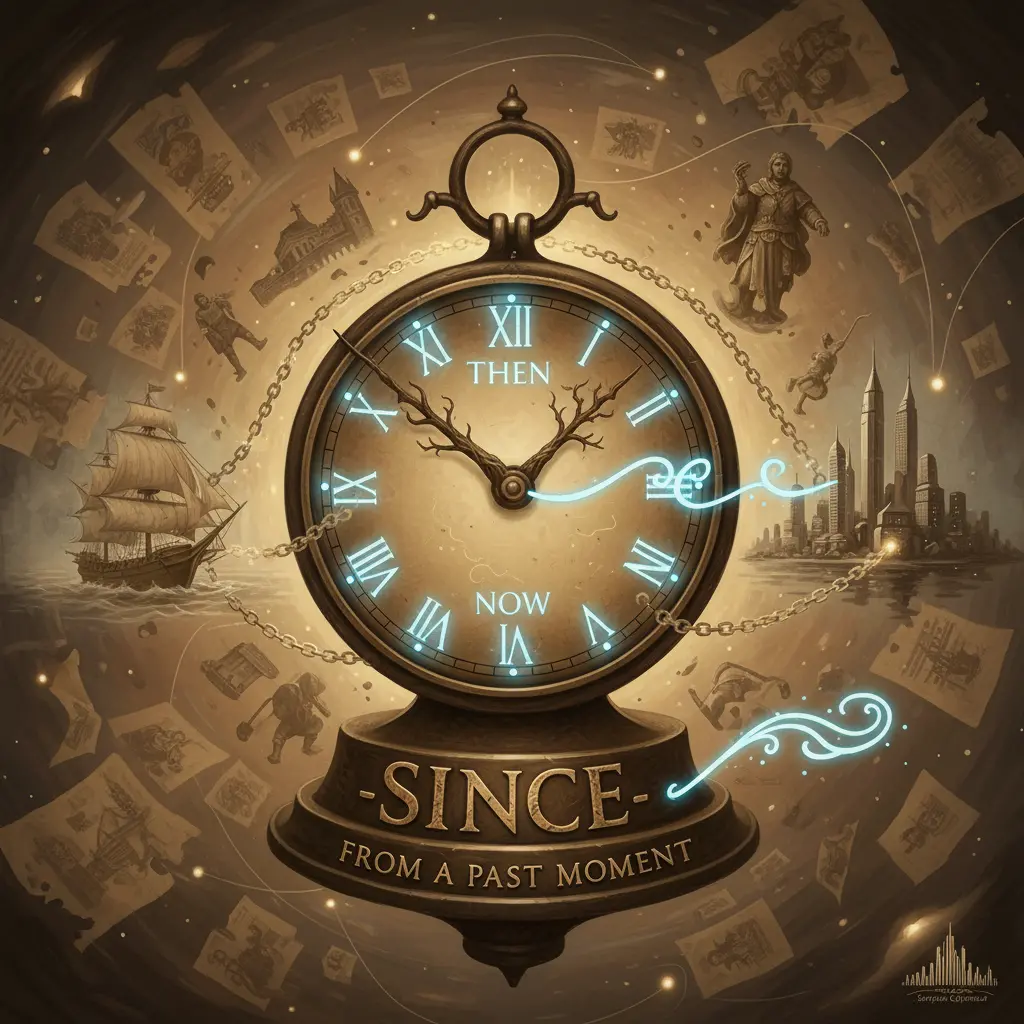
Since: 'sinc-' (from a root meaning 'away' or 'from') + 'ce' (an archaic suffix for time). Historical Origin: Old English ‘sīðe’ → Middle English ‘sithen’ → Modern English. Memory Image: Imagine a clock that has been counting down from a past moment, marking the link between then and now, emphasizing continuity.
Note 1: These definitions and etymologies are not standard dictionary definitions, but extended explanations provided to help with memorization and understanding of the actual application of words. Through this background information, we strive to make words more vivid and easier to understand, and help you remember their meanings in real life.
Note 2: LexiTalk designs the learning flow around the linguistics principle of “Comprehensible Input.” When learners encounter material that is slightly above their level but still understandable from context, the brain naturally absorbs the language. That’s why we keep every word inside authentic contexts, using examples and associations to help you understand it and use it flexibly.
Read the FAQ explanation of Comprehensible InputFirst I push the chair back, shift my gaze to the clock, and turn the minute hand a notch. I keep a steady pace and adjust my plan, letting the day unfold since sunrise. Each small move of the timer changes the room's rhythm, and I feel the effort of staying on track. By the time the light thins, the thread of time from that early moment to now is obvious, guiding what I do next.
Since can introduce a time period from a point in the past up to the present, and it can also introduce a clause that gives a reason. It is used with specific time expressions such as since 2010 or since yesterday, and with clauses like since you arrived, you should try the local dishes. Because the sense of continuity is often emphasized, since signals that the situation continues into the present. Avoid using since to describe future events; use a future-oriented structure instead. When the dependent clause comes first, put a comma before the main clause; when the main clause comes first, the comma is optional. Distinguish it from for, which marks duration, not start point.
In English, since is often used for two distinct ideas—time from a past start point to now, and a reason. Learners who translate directly may treat it only as a causal word, or only as a clock to the past, missing the present continuity. Native speakers also enjoy using since in phrases like since then. The key mistakes are applying since to future events and mixing up with for. Practice by labeling each use as time-start or reason-start and check the comma rules.
What is the meaning of the word 'since'?
Which sentence below uses 'since' correctly?
Which word is most similar to 'since'?
What is the opposite of 'since'?
Can you think of a real-life context for the word 'since'?
Download LexiTalk app for personalized learning experience
Download AppCookies
We use cookies for essential site functions, analytics, and ads. You can accept, reject, or manage preferences. Privacy Policy