slash - Master This Word
Master this word with our 5-step learning method – Learn English in English
Train English Through Brain Routes, Not Translation.
This page helps you stop memorizing isolated translations and start understanding a word through its shared mental image, native-style thinking, and practical training steps.
Master this word with our 5-step learning method – Learn English in English
Example sentences are the start of understanding. Don't rush to memorize. First feel how the word works in a sentence.
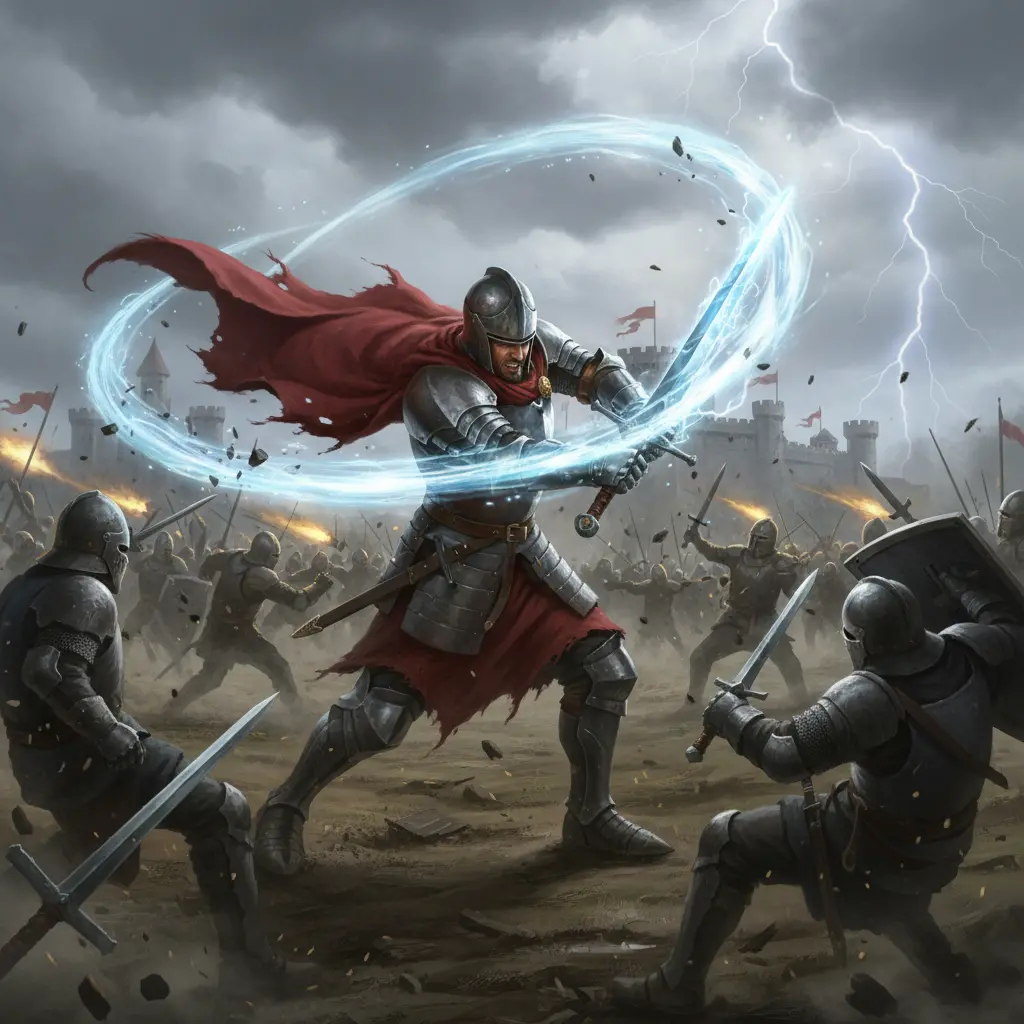
From Middle English 'slashen' (to cut) + '-sh' derivation. Originated from Old Norse 'slasa' (to strike). Imagine a fierce knight slashing through the air with a sword, cutting down enemies in one swift motion.
Note 1: These definitions and etymologies are not standard dictionary definitions, but extended explanations provided to help with memorization and understanding of the actual application of words. Through this background information, we strive to make words more vivid and easier to understand, and help you remember their meanings in real life.
Note 2: LexiTalk designs the learning flow around the linguistics principle of “Comprehensible Input.” When learners encounter material that is slightly above their level but still understandable from context, the brain naturally absorbs the language. That’s why we keep every word inside authentic contexts, using examples and associations to help you understand it and use it flexibly.
Read the FAQ explanation of Comprehensible InputI grip the pencil, move my hand, push and pull to draw a clean slash across the page. The line slides through the blank, changing what I can say with it. It feels sharp and controlled, a small effort to adjust my grip and keep the motion steady. That quick slash shows up in real writing as a way to break ideas, mark a boundary, or signal a bold turn in the text.
Slash has three main senses in English: a punctuation mark and symbol, often called the slash or forward slash; a verb meaning to cut with a sharp instrument; and a colloquial verb meaning to criticize severely or to cut prices. The symbol / appears in writing, computing paths, dates, and fractions; it also appears in web addresses to separate segments. As a verb, slash implies swift, clean action, matching the etymology from slashen in Middle English and Old Norse slasa. Learners should note that slash can indicate alternatives (and/or) in some styles, and that its meaning shifts with context.
Explain to an English speaker that slash has multiple meanings across writing, pricing, and critique; emphasize context cues.
What is the meaning of the word 'slash'?
Which of the following sentences uses 'slash' correctly?
Choose the synonym for 'slash':
What is the opposite of 'slash'?
In what real-life context would you use the word 'slash'?
Download LexiTalk app for personalized learning experience
Download AppCookies
We use cookies for essential site functions, analytics, and ads. You can accept, reject, or manage preferences. Privacy Policy