
spain - Master This Word
Master this word with our 5-step learning method – Learn English in English
Train English Through Brain Routes, Not Translation.
This page helps you stop memorizing isolated translations and start understanding a word through its shared mental image, native-style thinking, and practical training steps.
Master this word with our 5-step learning method – Learn English in English
Example sentences are the start of understanding. Don't rush to memorize. First feel how the word works in a sentence.
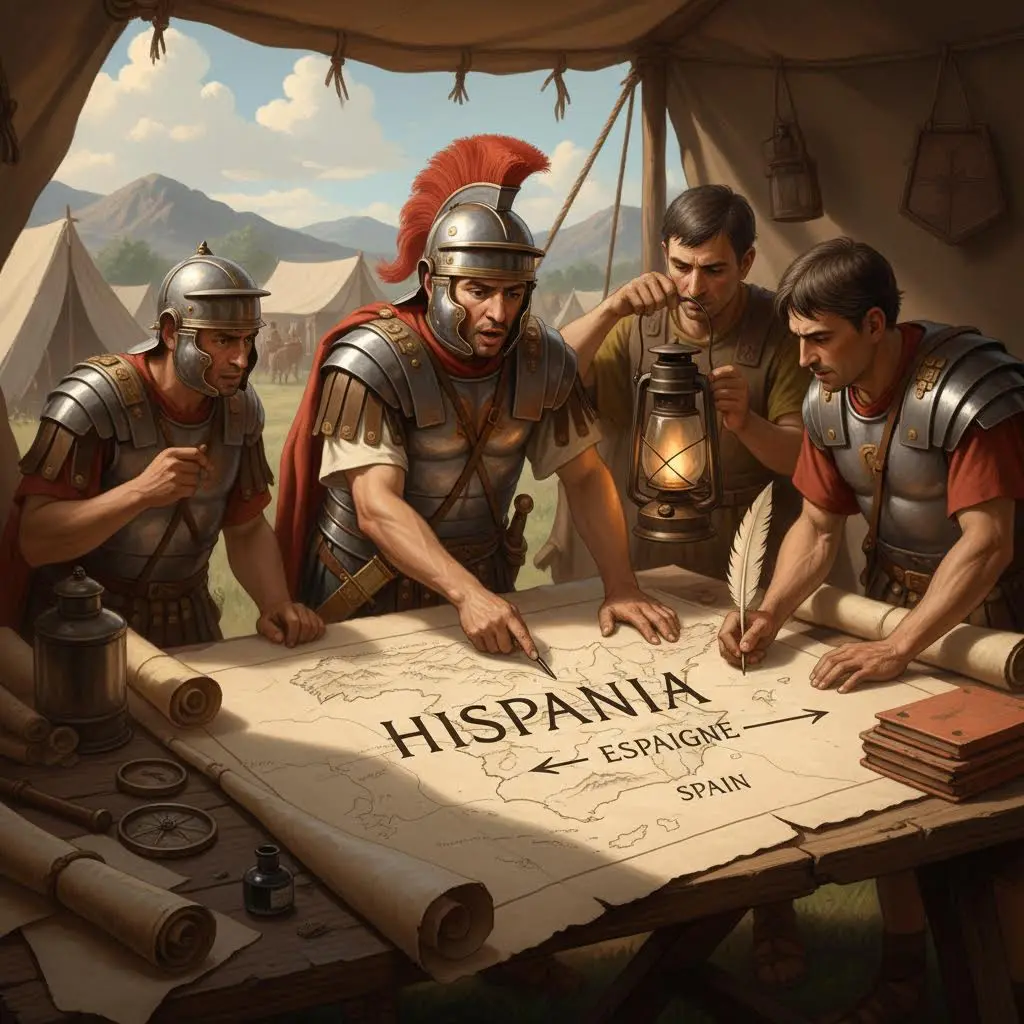
(a) Root decomposition: no prefix or suffix; the root is the toponym Spain, ultimately derived from Latin Hispania. (b) Historical origin: Hispania (Latin) → Espaigne/Espaigne (Old French) → Spain (English); the exact origin may trace to pre-Roman Iberian or Phoenician sources and is debated. (c) Memory image: visualize Roman soldiers marking the Iberian Peninsula on a map and naming the land Hispania, a name later borrowed into English as Spain.
Note 1: These definitions and etymologies are not standard dictionary definitions, but extended explanations provided to help with memorization and understanding of the actual application of words. Through this background information, we strive to make words more vivid and easier to understand, and help you remember their meanings in real life.
Note 2: LexiTalk designs the learning flow around the linguistics principle of “Comprehensible Input.” When learners encounter material that is slightly above their level but still understandable from context, the brain naturally absorbs the language. That’s why we keep every word inside authentic contexts, using examples and associations to help you understand it and use it flexibly.
Read the FAQ explanation of Comprehensible InputSpain is the name of a country in southwestern Europe on the Iberian Peninsula, with Madrid as its capital. It is a sovereign nation known for its regional diversity, history, and vibrant culture. When people picture Spain, they often imagine sunlit beaches, flamenco music and dancing, tapas, and festive traditions across regions like Andalusia, Catalonia, and Galicia. In English, the word Spain is always capitalized as a proper noun, and the related adjective is Spanish. The name traces back to Hispania, the Latin term used by the Romans, and it evolved into the English form Spain over many centuries. This context highlights geography, governance, and cultural imagery.
English treats Spain as a single country with a capital, but many learners forget its regional diversity and distinct regions.
What is the meaning of the word 'spain'?
Choose the sentence that uses 'spain' correctly.
Which word is most similar to 'spain'?
What is the opposite of 'spain'?
Can you think of a real-life context involving 'spain'?
Download LexiTalk app for personalized learning experience
Download AppCookies
We use cookies for essential site functions, analytics, and ads. You can accept, reject, or manage preferences. Privacy Policy