spectator - Master This Word
Master this word with our 5-step learning method – Learn English in English
Train English Through Brain Routes, Not Translation.
This page helps you stop memorizing isolated translations and start understanding a word through its shared mental image, native-style thinking, and practical training steps.
Master this word with our 5-step learning method – Learn English in English
Example sentences are the start of understanding. Don't rush to memorize. First feel how the word works in a sentence.
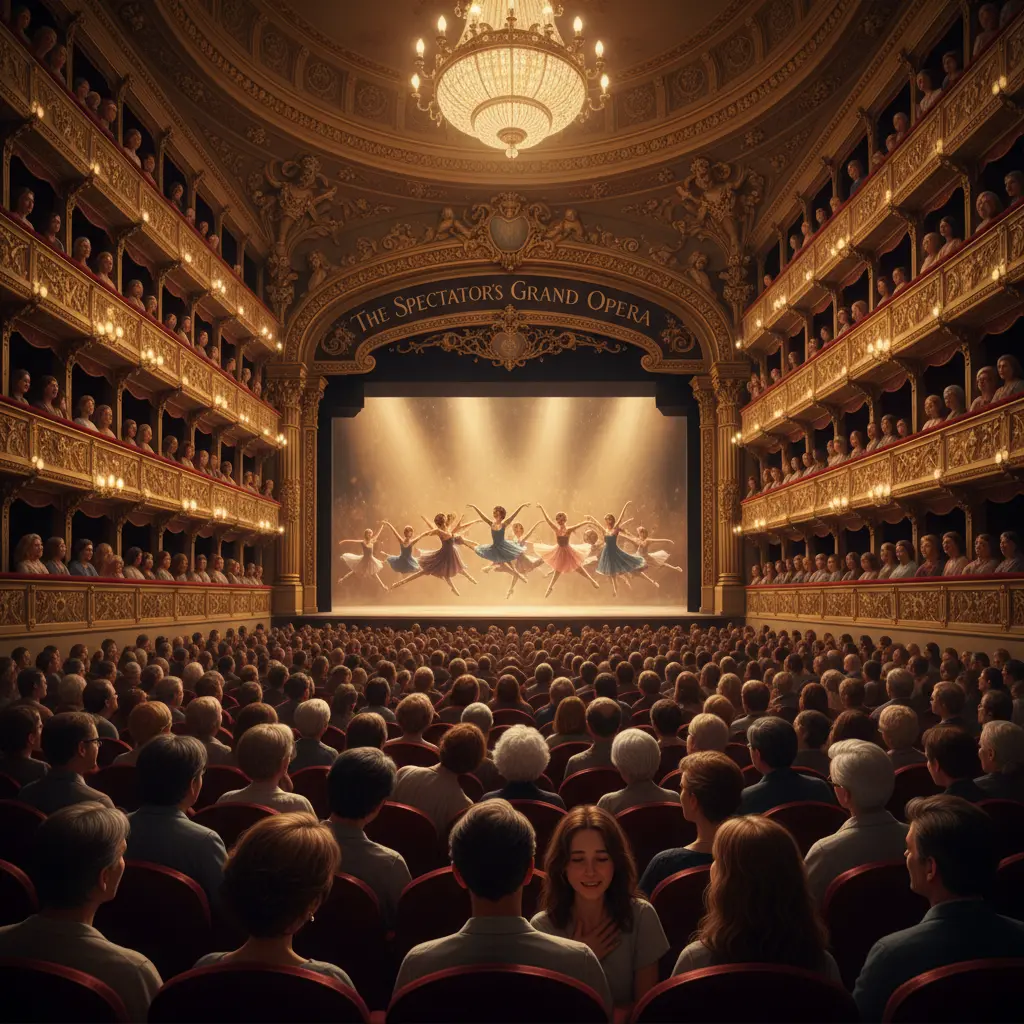
From Latin 'spectator' (from 'spectare' = to look at, + 'tor' = agent), evolved through Old French before entering English. Imagine a grand theater with an audience gazing in awe at the performance, each spectator making a personal connection to the art.
Note 1: These definitions and etymologies are not standard dictionary definitions, but extended explanations provided to help with memorization and understanding of the actual application of words. Through this background information, we strive to make words more vivid and easier to understand, and help you remember their meanings in real life.
Note 2: LexiTalk designs the learning flow around the linguistics principle of “Comprehensible Input.” When learners encounter material that is slightly above their level but still understandable from context, the brain naturally absorbs the language. That’s why we keep every word inside authentic contexts, using examples and associations to help you understand it and use it flexibly.
Read the FAQ explanation of Comprehensible InputI settle into my seat, lean forward, and adjust my grip on the rail. Watching, I move my eyes across the crowd as the game begins. I hold still and keep a careful frame, choosing what to notice rather than join in. As the action shifts, I adjust where I focus, letting the moment unfold through my view.
Spectator is a neutral term for someone who watches an event, game, performance, or show without taking part in the action. It describes the experience from a distance, with attention focused on what unfolds on stage or field. In English, you often hear spectator used with sport or theatre but it can apply to concerts, ceremonies, or even online streams. The word contrasts with participant or player, and with viewer in contexts emphasizing visual perception. Some synonyms like observer or onlooker carry slightly different tones. Remember that a spectator might cheer, critique, or simply observe quietly, but does not join the event.
Think of spectator as a passive watcher in settings like sports or theatre; focus is on seeing, not doing.
What does 'spectator' mean?
Which of the following sentences uses 'spectator' correctly?
What could be a synonym for 'spectator'?
What could be an opposite for 'spectator'?
In what real-life context would you find a spectator?
Download LexiTalk app for personalized learning experience
Download AppCookies
We use cookies for essential site functions, analytics, and ads. You can accept, reject, or manage preferences. Privacy Policy