spontaneous - Master This Word
Master this word with our 5-step learning method – Learn English in English
Train English Through Brain Routes, Not Translation.
This page helps you stop memorizing isolated translations and start understanding a word through its shared mental image, native-style thinking, and practical training steps.
Master this word with our 5-step learning method – Learn English in English
Example sentences are the start of understanding. Don't rush to memorize. First feel how the word works in a sentence.
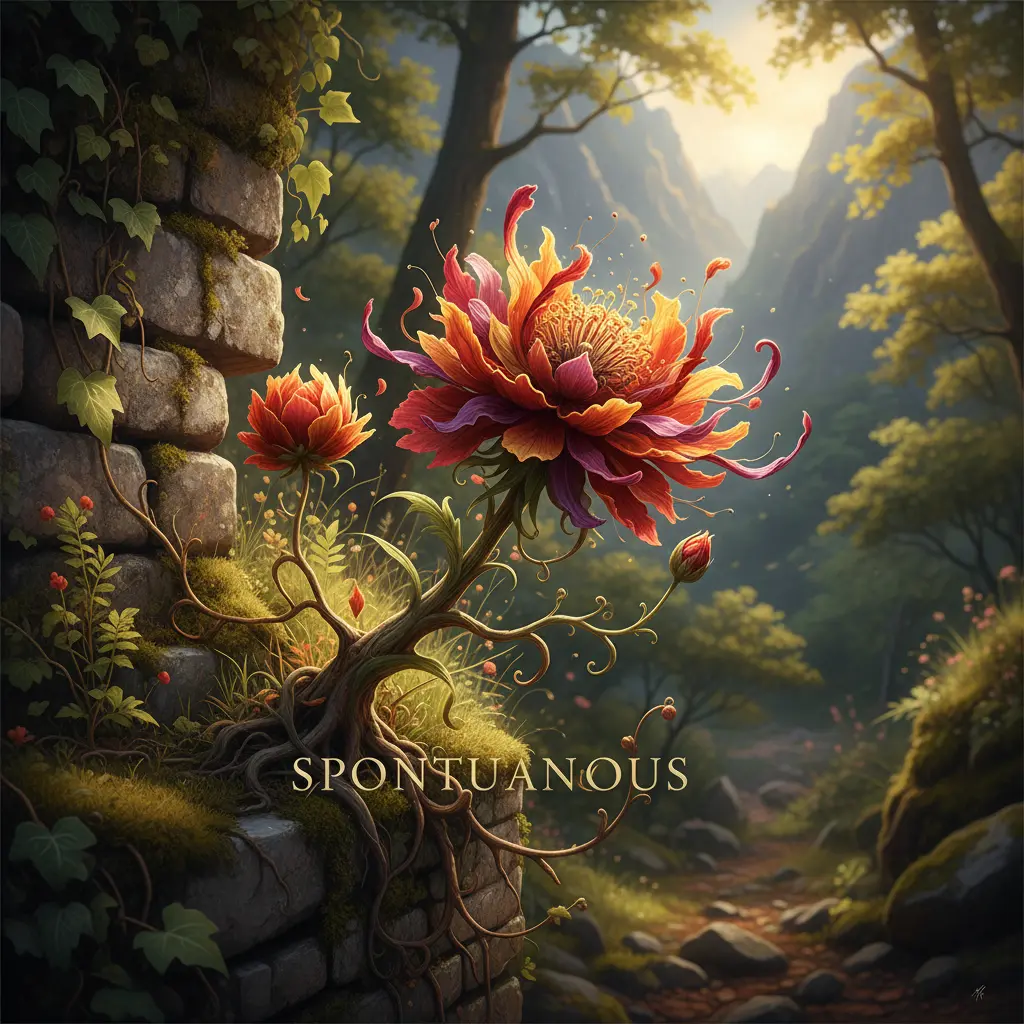
Root decomposition: sponta- = spontaneous, -neous = nature; Historical origin: Latin 'spontaneus' → Old French 'spontane' → English; Memory image: Picture a flower blooming wildly in the wild, growing without any guidance.
Note 1: These definitions and etymologies are not standard dictionary definitions, but extended explanations provided to help with memorization and understanding of the actual application of words. Through this background information, we strive to make words more vivid and easier to understand, and help you remember their meanings in real life.
Note 2: LexiTalk designs the learning flow around the linguistics principle of “Comprehensible Input.” When learners encounter material that is slightly above their level but still understandable from context, the brain naturally absorbs the language. That’s why we keep every word inside authentic contexts, using examples and associations to help you understand it and use it flexibly.
Read the FAQ explanation of Comprehensible InputSpontaneous describes events that arise naturally, without prior planning or deliberation, capturing actions or reactions that feel unforced and alive in the moment, often reflecting inner impulses rather than careful design, such as a spontaneous joke that lightens a tense room, a spontaneous road trip that starts from a last‑minute idea, or a spontaneous decision made when an opportunity suddenly appears; in everyday use it fits creative bursts, unpremeditated responses, and things done on a whim; be careful not to confuse it with reckless behavior, as context will reveal whether the spontaneity is positive, charming, or potentially imprudent.
Explain to an English speaker: Spontaneous emphasizes natural, in-the-moment occurrence and can carry positive, creative energy or risk depending on context; learners often confuse it with impulsive or reckless actions, so stress the nuance that spontaneity is about ease and immediacy in expression rather than disregard for consequences.
What is the meaning of the word 'spontaneous'?
Which of the following sentences uses 'spontaneous' correctly?
Which word is a synonym of 'spontaneous'?
In what situation would someone be described as 'spontaneous'?
How would you use 'spontaneous' in a real-life scenario?
English Learning Listening Content
Listen NowDownload LexiTalk app for personalized learning experience
Download AppCookies
We use cookies for essential site functions, analytics, and ads. You can accept, reject, or manage preferences. Privacy Policy