statues - Master This Word
Master this word with our 5-step learning method – Learn English in English
Train English Through Brain Routes, Not Translation.
This page helps you stop memorizing isolated translations and start understanding a word through its shared mental image, native-style thinking, and practical training steps.
Master this word with our 5-step learning method – Learn English in English
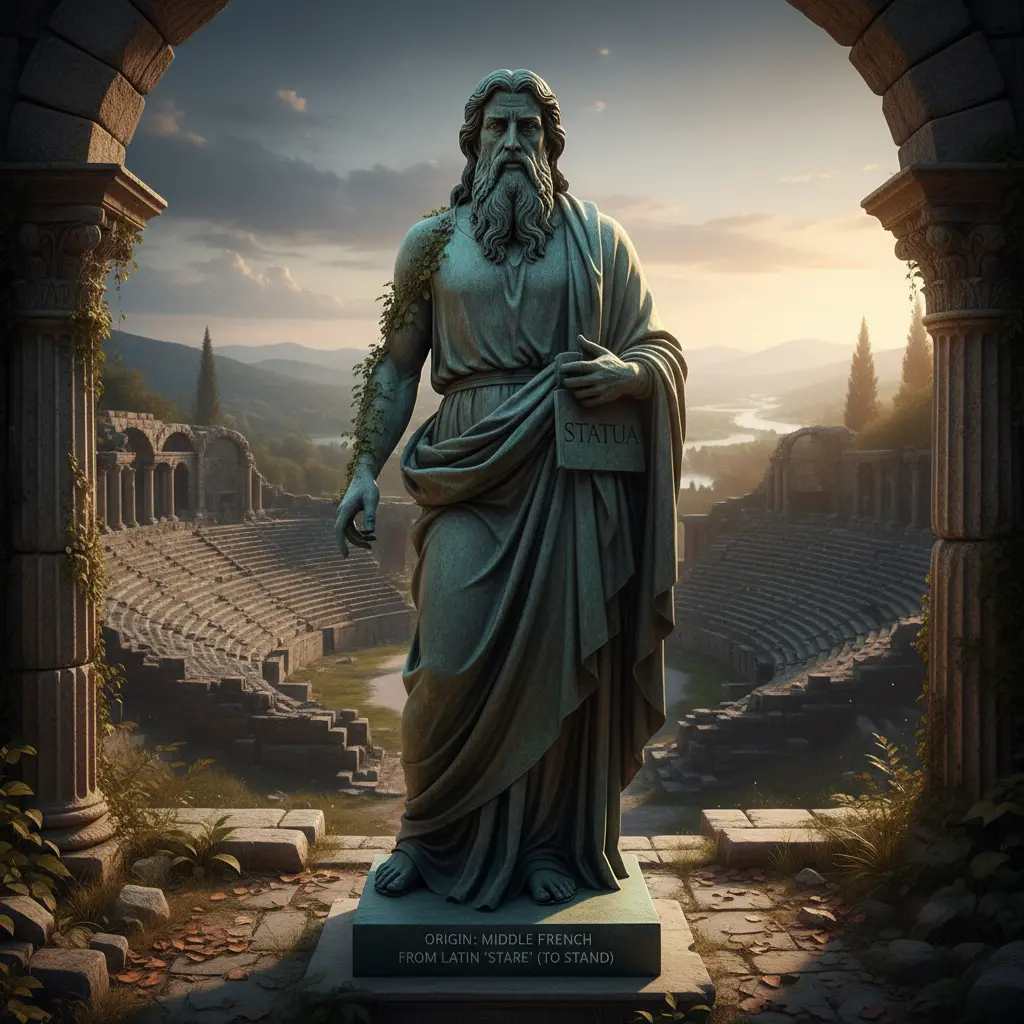
Example sentences are the start of understanding. Don't rush to memorize. First feel how the word works in a sentence.
Statue comes from Latin 'statua' (to stand) from 'stare' = to stand. It originated in Middle French before entering English. Imagine a statue, proud and tall, standing still, almost alive in its stillness, like a guardian watching over time.
Note 1: These definitions and etymologies are not standard dictionary definitions, but extended explanations provided to help with memorization and understanding of the actual application of words. Through this background information, we strive to make words more vivid and easier to understand, and help you remember their meanings in real life.
Note 2: LexiTalk designs the learning flow around the linguistics principle of “Comprehensible Input.” When learners encounter material that is slightly above their level but still understandable from context, the brain naturally absorbs the language. That’s why we keep every word inside authentic contexts, using examples and associations to help you understand it and use it flexibly.
Read the FAQ explanation of Comprehensible InputFirst I step closer and place my palm on the cool stone, feeling the chill travel up my fingers. My eyes move along the lines, tracing the statue from head to toe as if I’m listening to its quiet story. I adjust my stance, shift my weight, and let the memory of a person or animal rise from the form. The longer I hold still and observe, the more the figure feels like a small memory I can carry, not just a sculpture.
Statue is a carved or cast figure of a person or animal, a three-dimensional representation of an object, or a symbol or memorial typically made of stone. Statues are placed in parks, museums, streets, or public squares to honor historical figures, myths, events, or ideas. They can be realistic or abstract and are designed to be viewed from multiple angles, giving a sense of permanence and presence. The word statue often collocates with phrases such as the statue of X and with verbs related to standing or guarding. Because statues are physical objects, learners frequently confuse statue with sculpture, which refers to the broader art form rather than a specific figure.
In English, statue signals a concrete, viewable object and often triggers associations with permanence and public memory; learners may overlook the nuance that sculpture is the broader art form and that the phrase the statue of introduces a specific subject.
Download LexiTalk app for personalized learning experience
Download AppCookies
We use cookies for essential site functions, analytics, and ads. You can accept, reject, or manage preferences. Privacy Policy