stream - Master This Word
Master this word with our 5-step learning method – Learn English in English
Train English Through Brain Routes, Not Translation.
This page helps you stop memorizing isolated translations and start understanding a word through its shared mental image, native-style thinking, and practical training steps.
Master this word with our 5-step learning method – Learn English in English
Example sentences are the start of understanding. Don't rush to memorize. First feel how the word works in a sentence.
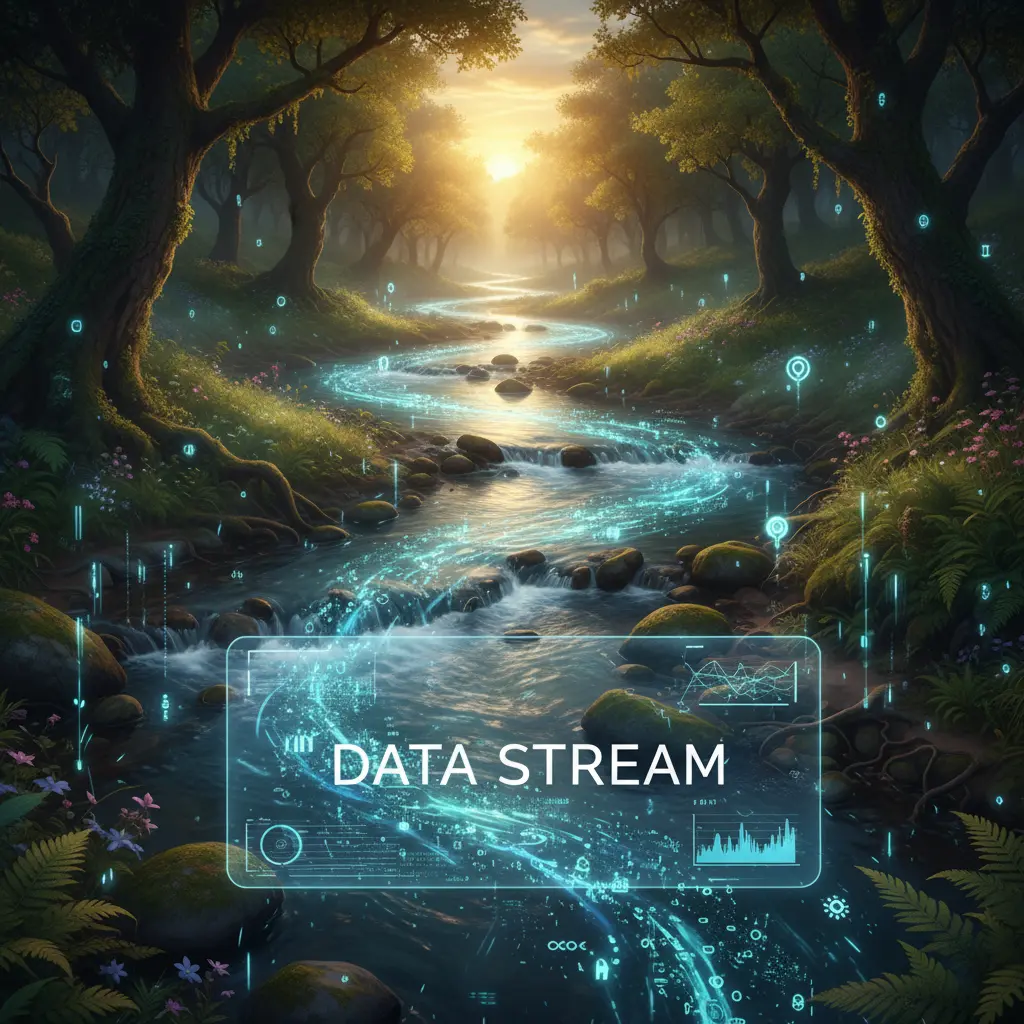
stream: stream (noun) comes from Old English 'stream', meaning 'a flowing creature'. The vivid image is that of a river flowing steadily, signifying continuous movement, just as data streams in technology flow seamlessly.
Note 1: These definitions and etymologies are not standard dictionary definitions, but extended explanations provided to help with memorization and understanding of the actual application of words. Through this background information, we strive to make words more vivid and easier to understand, and help you remember their meanings in real life.
Note 2: LexiTalk designs the learning flow around the linguistics principle of “Comprehensible Input.” When learners encounter material that is slightly above their level but still understandable from context, the brain naturally absorbs the language. That’s why we keep every word inside authentic contexts, using examples and associations to help you understand it and use it flexibly.
Read the FAQ explanation of Comprehensible InputI reach for the faucet handle and start to twist it slowly, feeling the valve respond as the liquid moves. A tiny push here, a careful pull there, and the stream settles into a steady rhythm. I hold the line, adjust my grip, and let the flow move where I want it, sensing control tightening like a small habit forming. When the stream becomes a familiar pattern—water, air, or a sequence of events—I notice a calm rhythm that fits into everyday action.
Stream has several related meanings, all tied to movement in a steady flow. As a noun, it can refer to a continuous flow of liquid, air, or gas, or, more figuratively, a stream of data, events, or people. In computing and media, a stream is a sequence of data delivered in real time or on demand. As a verb, to stream means to send or receive data as a continuous flow, often for viewing or listening without downloading. The word carries connotations of smooth, uninterrupted progression, but learners should note phrasal uses like stream of consciousness, stream in, stream out, and streaming-related terms which require context to convey exact nuance.
English tends to emphasize stream as both a physical flow and a digital flow, with clear splits between noun and verb senses. Learners should note the common tech phrases and the metaphorical uses, which can differ from natural idioms in other languages.
What is the meaning of the word 'stream'?
How is the word 'stream' used in a sentence?
Which of the following is a similar word to 'stream'?
What is the opposite of 'stream'?
In what real-life context would you find a stream?
Technology & Social Media
Listen NowEnglish Learning Listening Content
Listen NowDownload LexiTalk app for personalized learning experience
Download AppCookies
We use cookies for essential site functions, analytics, and ads. You can accept, reject, or manage preferences. Privacy Policy