
sufficiently - Master This Word
Master this word with our 5-step learning method – Learn English in English
Train English Through Brain Routes, Not Translation.
This page helps you stop memorizing isolated translations and start understanding a word through its shared mental image, native-style thinking, and practical training steps.
Master this word with our 5-step learning method – Learn English in English
Example sentences are the start of understanding. Don't rush to memorize. First feel how the word works in a sentence.
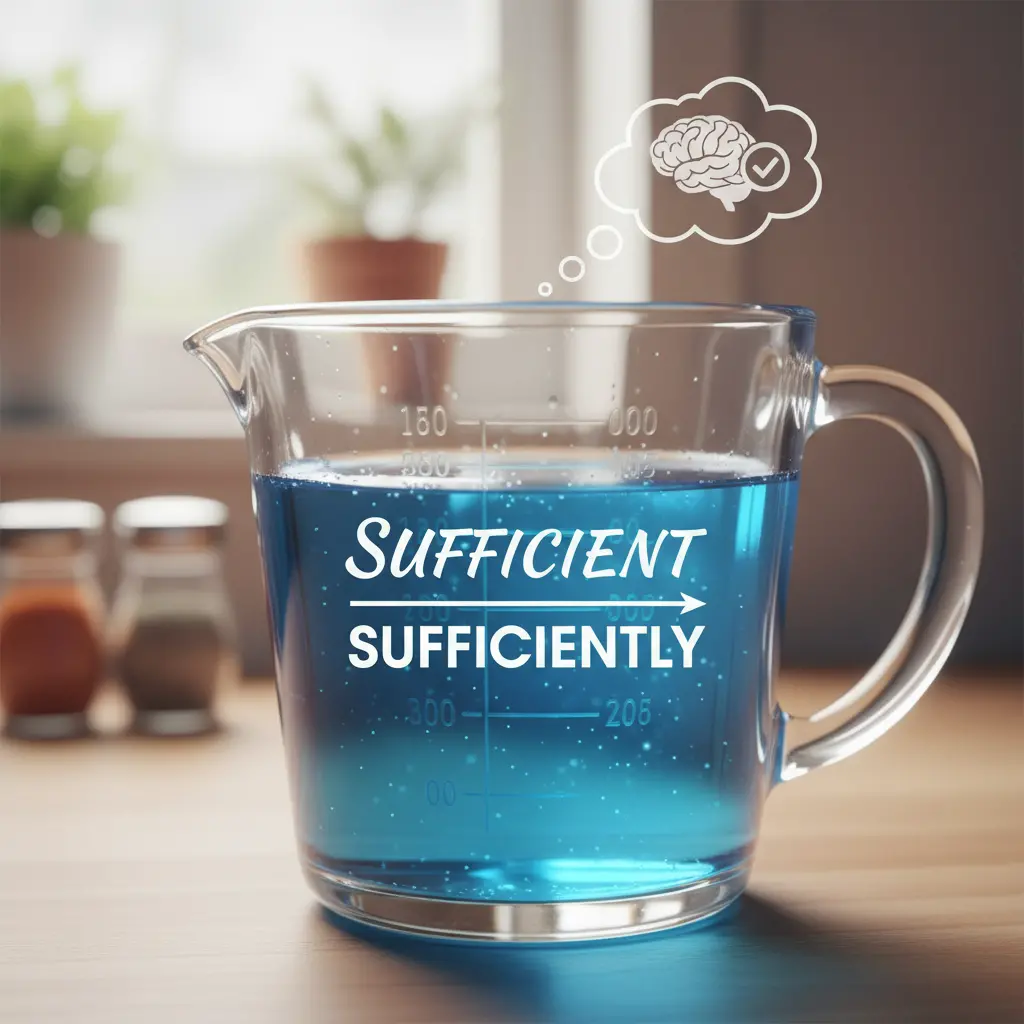
(a) Suffix -ly attaches to the adjective sufficient to form the adverb; the root is sufficient, meaning 'enough'. (b) From Latin sufficiens 'sufficient, adequate' via Old French suffisant, into English; the -ly adverb form was added later. (c) Memory: imagine a measuring cup that is just full enough to reach the mark; that image helps you recall 'sufficient' and its adverbial sense.
Note 1: These definitions and etymologies are not standard dictionary definitions, but extended explanations provided to help with memorization and understanding of the actual application of words. Through this background information, we strive to make words more vivid and easier to understand, and help you remember their meanings in real life.
Note 2: LexiTalk designs the learning flow around the linguistics principle of “Comprehensible Input.” When learners encounter material that is slightly above their level but still understandable from context, the brain naturally absorbs the language. That’s why we keep every word inside authentic contexts, using examples and associations to help you understand it and use it flexibly.
Read the FAQ explanation of Comprehensible InputI place my hand on the thermostat and push gently, watching the numbers shift. I adjust the settings, turning the dial and holding it steady for a beat. When the reading settles, it feels sufficiently close to the target, like it will do the job. I keep testing with small tweaks to confirm it meets the needed level.
To sufficiently means to a degree that is adequate for a specific purpose. It is a formal adverb that emphasizes the level of adequacy, usually before adjectives, past participles, or adverbs (for example, sufficiently strong, sufficiently clear, or sufficiently quickly). It distinguishes from simply saying 'enough' in that it highlights the sufficiency as a formal standard rather than a casual threshold. In everyday speech, speakers often prefer 'enough' because it sounds more natural; 'sufficiently' tends to appear in academic, technical, or written contexts. Learners commonly confuse it with 'sufficient' (an adjective) or with double forms like sufficiently enough, which are incorrect in standard English. Use it when you want to mark adequacy for a purpose, not just abundance.
English tends to reserve sufficiently for formal or careful writing; learners often try to push it into casual speech or confuse it with enough, which sounds less formal.
What is the meaning of 'sufficiently'?
In which sentence is 'sufficiently' used correctly?
Select the antonym of 'sufficiently':
In what real-life scenario would you need to be 'sufficiently' prepared?
Reflect on a situation where being 'sufficiently' diligent would benefit you.
Download LexiTalk app for personalized learning experience
Download AppCookies
We use cookies for essential site functions, analytics, and ads. You can accept, reject, or manage preferences. Privacy Policy