swimming - Master This Word
Master this word with our 5-step learning method – Learn English in English
Train English Through Brain Routes, Not Translation.
This page helps you stop memorizing isolated translations and start understanding a word through its shared mental image, native-style thinking, and practical training steps.
Master this word with our 5-step learning method – Learn English in English
Example sentences are the start of understanding. Don't rush to memorize. First feel how the word works in a sentence.
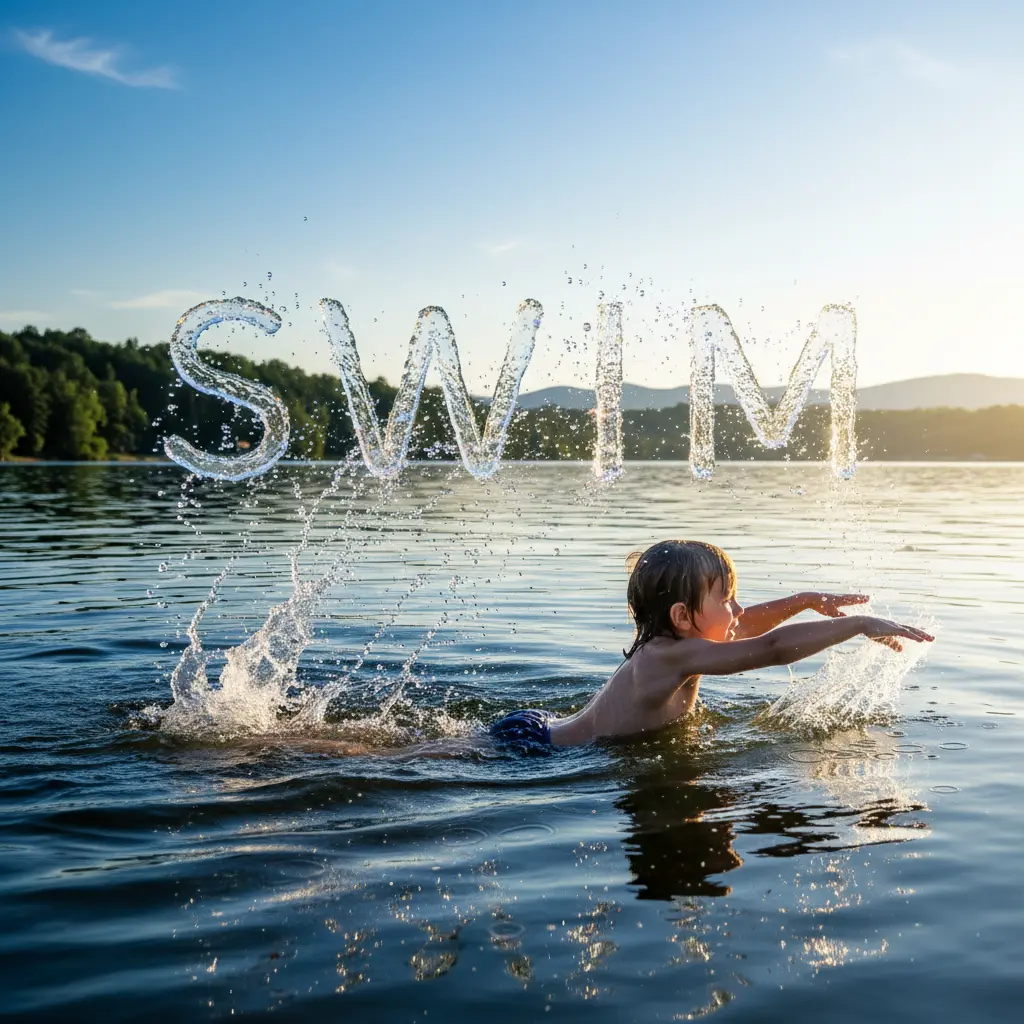
(a) Root decomposition: suffix -ing attached to the verb root swim. (b) Historical origin: from Proto-Germanic *swim-, Old English swīman, Middle English swim, Modern English swim. (c) Memory image: imagine a child gliding across a sunlit lake, each stroke sending droplets sparkling like tiny letters forming the word swim.
Note 1: These definitions and etymologies are not standard dictionary definitions, but extended explanations provided to help with memorization and understanding of the actual application of words. Through this background information, we strive to make words more vivid and easier to understand, and help you remember their meanings in real life.
Note 2: LexiTalk designs the learning flow around the linguistics principle of “Comprehensible Input.” When learners encounter material that is slightly above their level but still understandable from context, the brain naturally absorbs the language. That’s why we keep every word inside authentic contexts, using examples and associations to help you understand it and use it flexibly.
Read the FAQ explanation of Comprehensible InputI place my feet, push off the wall and move through the water with a steady rhythm. I turn my head to breathe, adjust my stroke, and keep the pace when the lane line pulls at me. The effort tightens my focus as I hold the line, then loosen it to glide. By the time I reach the end, the act feels like a skill learned through breath and balance, and swimming begins to feel like the rhythm of moving through a world that asks for steady pace.
Swimming is the act of moving through water using the arms and legs, a skill learned in childhood and practiced throughout life. It can be casual recreation, a competitive sport, or a lifesaving technique. In everyday English, swimming functions as both a noun (the activity) and a verb form in phrases like swimming laps or I am swimming. The term also appears in many idioms, especially the figurative sense of being surrounded by a lot of something, such as money. The etymology traces back to Proto-Germanic roots and Old English, and the mental image of a child gliding across a sunlit lake helps recall the word swim.
In English, swimming is a gerund that can function as a noun or a verb form; many languages either use a noun for the activity (natation, nuotata, etc.) or require a different construction to express ongoing action, which can confuse learners when choosing between swim vs swimming or when forming phrases like 'swimming pool'.
What is the meaning of the word 'swimming'?
Which of the following sentences uses 'swimming' correctly?
What is a synonym for 'swimming'?
What is the opposite of 'swimming'?
In what real-life context would you most likely engage in 'swimming'?
Download LexiTalk app for personalized learning experience
Download AppCookies
We use cookies for essential site functions, analytics, and ads. You can accept, reject, or manage preferences. Privacy Policy