supreme - Master This Word
Master this word with our 5-step learning method – Learn English in English
Train English Through Brain Routes, Not Translation.
This page helps you stop memorizing isolated translations and start understanding a word through its shared mental image, native-style thinking, and practical training steps.
Master this word with our 5-step learning method – Learn English in English
Example sentences are the start of understanding. Don't rush to memorize. First feel how the word works in a sentence.
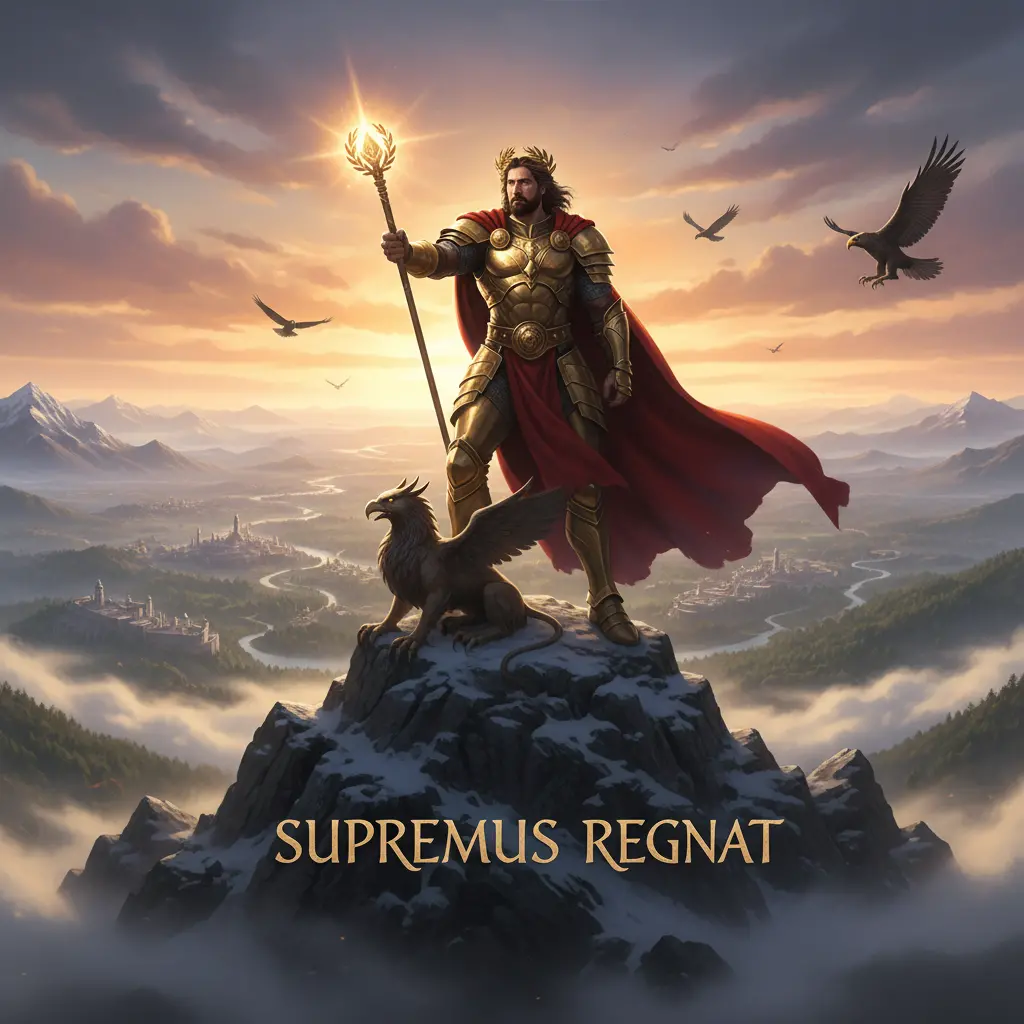
supreme = super- (above) + emere (to take) → Latin 'supremus' → Old French → English. Imagine a king atop a mountain, reigning over all below, symbolizing the highest authority.
Note 1: These definitions and etymologies are not standard dictionary definitions, but extended explanations provided to help with memorization and understanding of the actual application of words. Through this background information, we strive to make words more vivid and easier to understand, and help you remember their meanings in real life.
Note 2: LexiTalk designs the learning flow around the linguistics principle of “Comprehensible Input.” When learners encounter material that is slightly above their level but still understandable from context, the brain naturally absorbs the language. That’s why we keep every word inside authentic contexts, using examples and associations to help you understand it and use it flexibly.
Read the FAQ explanation of Comprehensible InputWith a steady breath I move my eyes upward and set my gaze on the highest point. I push aside small doubts and adjust my grip on what matters most, letting the top item come into reach. The effort lands as a quiet power, a feeling of keeping the best at the front, as if supreme is the moment you choose to hold the peak.
Supreme describes the highest rank, authority, or final stage in a hierarchy. In English, it often carries formal weight and implies a officially recognized peak rather than merely excellent. The word commonly collocates with nouns like court, leader, decision, authority, or power to signal ultimate status. Learners sometimes confuse it with 'super' (which means very good) or 'ultimate' (which can suggest finality in a process). The nuance is subtle: supremum connotes an uncontested uppermost position within a system; it does not usually function as a casual intensifier. Also note that 'supreme' can appear in titles, institutions, or legal contexts.
For English learners, supreme is a precise, formal term that marks the top of a hierarchy. It is not a casual synonym for very or great, unlike the common intensifier super. Learners often confuse supreme with ultimate or extreme; remember supreme implies a highest rank within a system, while ultimate can mean final in a process. Also note fixed phrases like supreme court or supreme leader are institutional holders, not generic descriptors.
What is the best definition of the word 'supreme'?
Which sentence uses 'supreme' correctly?
Which word is most similar in meaning to 'supreme'?
Which word is the opposite of 'supreme'?
Can you think of a real-life context where this word would be appropriate?
Download LexiTalk app for personalized learning experience
Download AppCookies
We use cookies for essential site functions, analytics, and ads. You can accept, reject, or manage preferences. Privacy Policy