mountain - Master This Word
Master this word with our 5-step learning method – Learn English in English
Train English Through Brain Routes, Not Translation.
This page helps you stop memorizing isolated translations and start understanding a word through its shared mental image, native-style thinking, and practical training steps.
Master this word with our 5-step learning method – Learn English in English
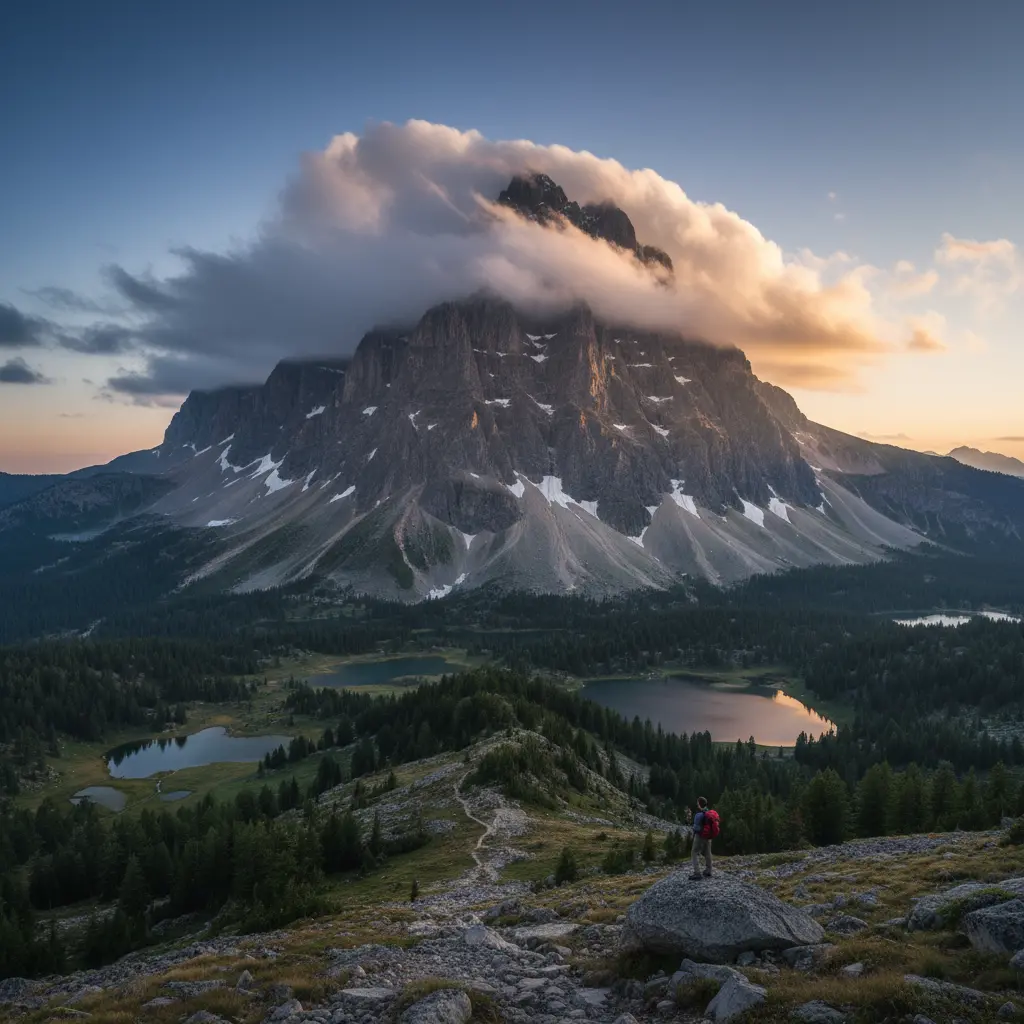
Example sentences are the start of understanding. Don't rush to memorize. First feel how the word works in a sentence.
mountain = mound + -ain; from Latin 'mons' (mountain) → Old French 'mont' → Middle English; imagine a towering peak rising majestically, with clouds swirling around its summit.
Note 1: These definitions and etymologies are not standard dictionary definitions, but extended explanations provided to help with memorization and understanding of the actual application of words. Through this background information, we strive to make words more vivid and easier to understand, and help you remember their meanings in real life.
Note 2: LexiTalk designs the learning flow around the linguistics principle of “Comprehensible Input.” When learners encounter material that is slightly above their level but still understandable from context, the brain naturally absorbs the language. That’s why we keep every word inside authentic contexts, using examples and associations to help you understand it and use it flexibly.
Read the FAQ explanation of Comprehensible InputFoot by foot, I move toward the edge of a trail, grip the railing, and push my breath to match the rhythm of my steps. The path shifts beneath my feet as I adjust my pace, a small turn here, a clearer view there. Every inch makes the ground feel taller, and I keep going, letting the mountain in my mind rise with the real one. The climb becomes a goal I set for myself, a peak I keep pursuing.
Mountains are the most recognizable natural elevations on Earth, rising above the surrounding landscape and often forming dramatic silhouettes. As a noun, mountain refers to a large, rocky peak, but the word is also used metaphorically to describe a very large amount, such as a mountain of work. The term can denote a specific summit or a larger range, depending on context. Etymologically, mountain traces back to mound and mont, through Old French mont and Middle English. Imagine a towering peak rising above the clouds. Learners should note the distinction from hill and peak, and remember that the article is used with singular countable mentions and with plural for generic landscapes.
Mountains serve as both concrete geography and broader metaphor in English. Learners often assume mountain always means a single peak and struggle with articles and countability when talking about landscapes or large quantities.
What is the meaning of the word 'mountain'?
In which of the following sentences is 'mountain' used correctly?
Which word is similar to 'mountain'?
What is the opposite of 'mountain'?
In what context would you most likely hear the word 'mountain'?
Environment & Pollution
Listen NowDownload LexiTalk app for personalized learning experience
Download AppCookies
We use cookies for essential site functions, analytics, and ads. You can accept, reject, or manage preferences. Privacy Policy