survived - Master This Word
Master this word with our 5-step learning method – Learn English in English
Train English Through Brain Routes, Not Translation.
This page helps you stop memorizing isolated translations and start understanding a word through its shared mental image, native-style thinking, and practical training steps.
Master this word with our 5-step learning method – Learn English in English
Example sentences are the start of understanding. Don't rush to memorize. First feel how the word works in a sentence.
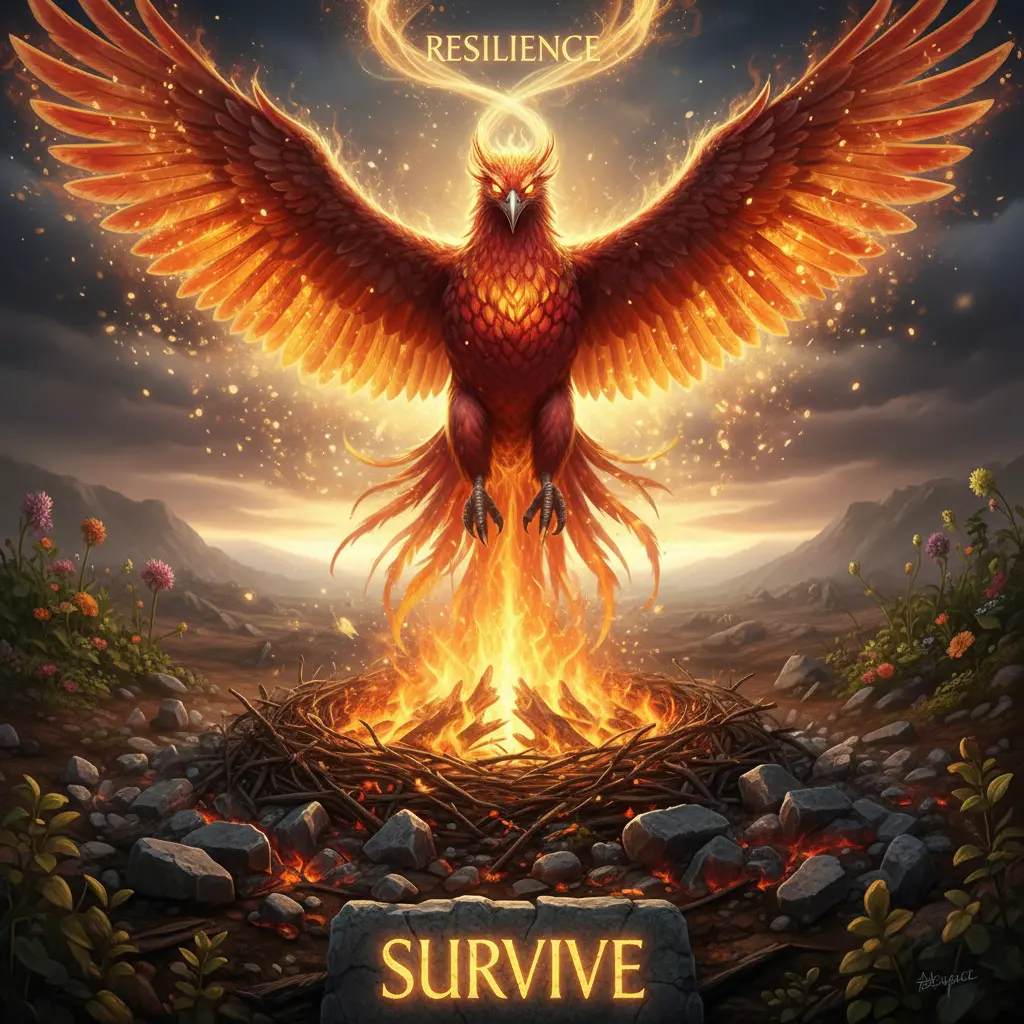
sur- = over, vive = live; Latin: 'supervivere' → Old French: 'survivre' → English. Imagine a phoenix rising from the ashes and continuing to live, symbolizing resilience in tough times.
Note 1: These definitions and etymologies are not standard dictionary definitions, but extended explanations provided to help with memorization and understanding of the actual application of words. Through this background information, we strive to make words more vivid and easier to understand, and help you remember their meanings in real life.
Note 2: LexiTalk designs the learning flow around the linguistics principle of “Comprehensible Input.” When learners encounter material that is slightly above their level but still understandable from context, the brain naturally absorbs the language. That’s why we keep every word inside authentic contexts, using examples and associations to help you understand it and use it flexibly.
Read the FAQ explanation of Comprehensible InputI set both feet, feel the car lean, and I push against the seat to steady myself. A quick shift of mind and a careful turn of the wheel keep the car on the road as wind howls outside. The moment stretches, my chest tight, but I keep breathing and adjusting with every small move. When the storm passes, I realize surviving is about staying present and choosing what to do next.
Survive is a versatile verb that describes staying alive or continuing to exist in the face of danger, hardship, or overwhelming odds. It emphasizes endurance rather than triumph; a person, animal, or thing survives when it is able to withstand threats, injuries, or losses and maintain life or operation. The sense can be literal—such as surviving a storm, an illness, or an accident—or figurative, as in surviving a difficult period, a crisis, or layoff by adapting, persevering, and keeping hope. In addition to physical life, survive can refer to continuing to exist after the death of someone you loved, or to outlasting competition or another era through resilience and resourcefulness.
Explain to an English speaker (meta, keep short)
What is the meaning of 'survived'?
Which sentence correctly uses the word 'survived'?
Which word is most similar to 'survived'?
What is the opposite of 'survived'?
Can you think of a real-life context where someone might use 'survived' in a sentence?
Download LexiTalk app for personalized learning experience
Download AppCookies
We use cookies for essential site functions, analytics, and ads. You can accept, reject, or manage preferences. Privacy Policy