telescopes - Master This Word
Master this word with our 5-step learning method – Learn English in English
Train English Through Brain Routes, Not Translation.
This page helps you stop memorizing isolated translations and start understanding a word through its shared mental image, native-style thinking, and practical training steps.
Master this word with our 5-step learning method – Learn English in English
Example sentences are the start of understanding. Don't rush to memorize. First feel how the word works in a sentence.
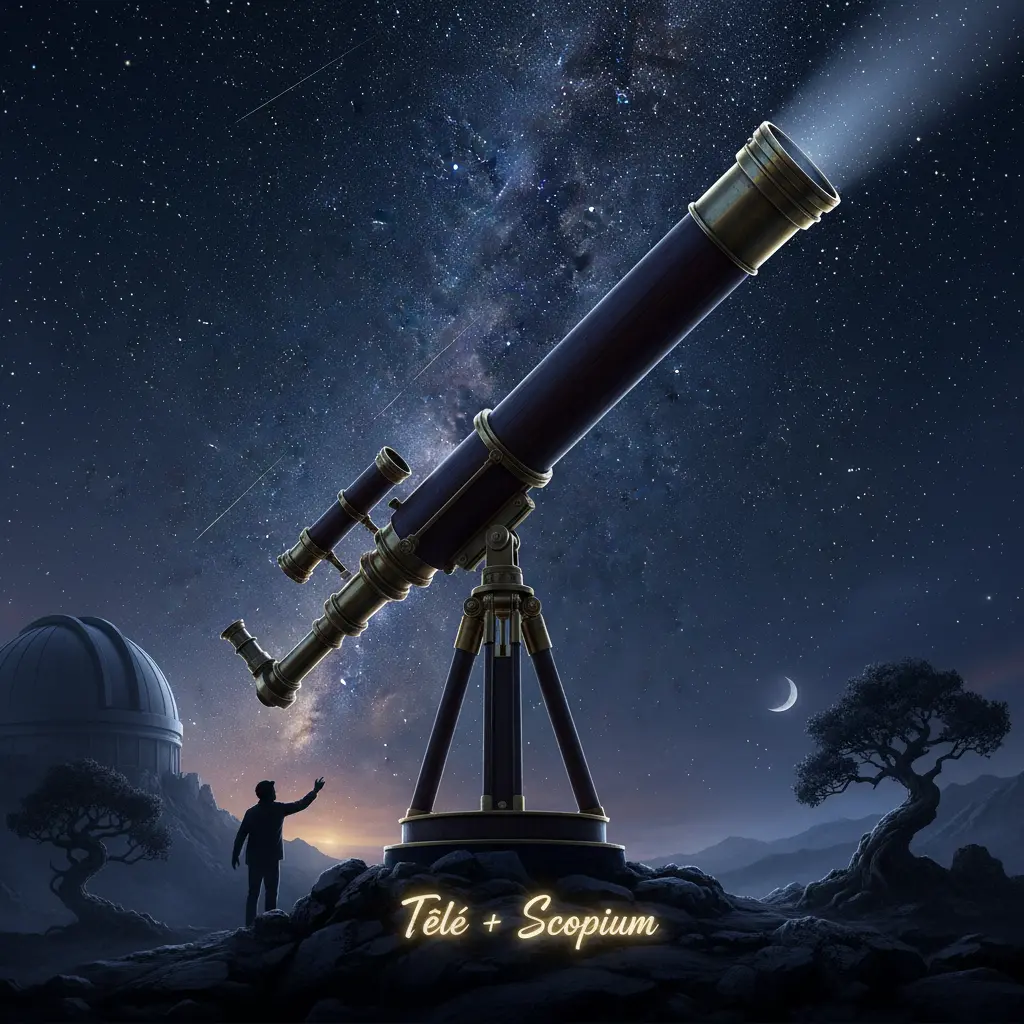
From 'tele-' (far) + 'scope' (to see) → Greek 'tēle' → Latin 'telescopium' → English 'telescope'. Imagine a long tube that allows you to see the stars, as if reaching out to touch the sky with your eyes.
Note 1: These definitions and etymologies are not standard dictionary definitions, but extended explanations provided to help with memorization and understanding of the actual application of words. Through this background information, we strive to make words more vivid and easier to understand, and help you remember their meanings in real life.
Note 2: LexiTalk designs the learning flow around the linguistics principle of “Comprehensible Input.” When learners encounter material that is slightly above their level but still understandable from context, the brain naturally absorbs the language. That’s why we keep every word inside authentic contexts, using examples and associations to help you understand it and use it flexibly.
Read the FAQ explanation of Comprehensible InputA telescope is an optical instrument that makes distant objects appear larger and closer. It uses lenses or mirrors to collect light and focus it into an eyepiece, sometimes with a tripod to steady the view. In astronomy, telescopes help scientists study stars, planets, and galaxies, while in everyday life people use small telescopes or binoculars for birdwatching, stargazing, or sightseeing from a far distance. The word telescope also appears in figurative language, suggesting a way to bring faraway ideas into sharper focus. When teaching, teachers explain how the tube length and objective lens affect magnification, field of view, and image clarity.
Explain to an English speaker (meta, keep short)
Download LexiTalk app for personalized learning experience
Download AppCookies
We use cookies for essential site functions, analytics, and ads. You can accept, reject, or manage preferences. Privacy Policy