terrible - Master This Word
Master this word with our 5-step learning method – Learn English in English
Train English Through Brain Routes, Not Translation.
This page helps you stop memorizing isolated translations and start understanding a word through its shared mental image, native-style thinking, and practical training steps.
Master this word with our 5-step learning method – Learn English in English
Example sentences are the start of understanding. Don't rush to memorize. First feel how the word works in a sentence.
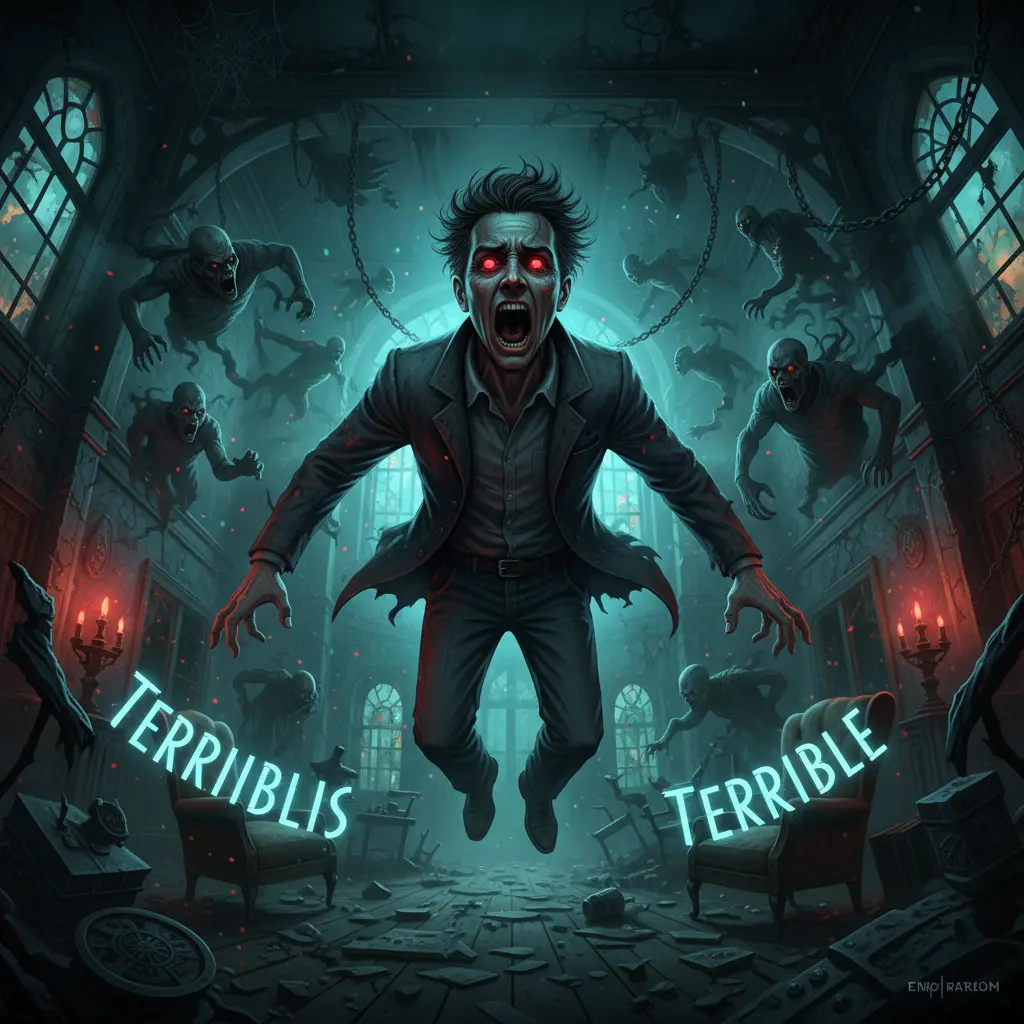
terrible = terrib- (from terror) + -le (suffix indicating quality) → Latin terribilis → Old French terribe → English. Imagine a person in a haunted house, terrifyingly screaming, embodying the essence of horror.
Note 1: These definitions and etymologies are not standard dictionary definitions, but extended explanations provided to help with memorization and understanding of the actual application of words. Through this background information, we strive to make words more vivid and easier to understand, and help you remember their meanings in real life.
Note 2: LexiTalk designs the learning flow around the linguistics principle of “Comprehensible Input.” When learners encounter material that is slightly above their level but still understandable from context, the brain naturally absorbs the language. That’s why we keep every word inside authentic contexts, using examples and associations to help you understand it and use it flexibly.
Read the FAQ explanation of Comprehensible InputI place my hand on the wheel and push it a notch to the left. The car shifts as I turn, and the road rattles through the seat. I keep my grip, adjust my posture, and the moment feels terrible—cold air bites my cheeks and every bump jolts my nerves. By the time I pull into the curb, I recognize how terrible can describe something that hits you hard, a mood you carry into the rest of the day.
Terrible is a versatile word in English, often used as an adjective but also appearing in informal adverbial use. As an adjective it describes something exceptionally bad, frightening, or disagreeable, and as an adverb it can mean in a terrible way or as a strong intensifier in casual speech (often spelling as terribly in formal writing). For learners, the key nuance is tone: terrible emphasizes the degree of badness and can carry emotional charge, so it can feel overly strong in neutral contexts. People sometimes confuse terrible with synonyms like awful or dreadful; choosing the right word depends on how dramatic you want the impression to be.
In English, terrible leans on strong emotional tone; learners should watch for its informal adverbial use and prefer terribly in formal writing.
What is the meaning of the word 'terrible'?
In which sentence is 'terrible' used correctly?
Which word is similar to 'terrible'?
Which word is the opposite of 'terrible'?
In what real-life situation would you use the word 'terrible'?
English Learning Listening Content
Listen NowDownload LexiTalk app for personalized learning experience
Download AppCookies
We use cookies for essential site functions, analytics, and ads. You can accept, reject, or manage preferences. Privacy Policy