
terrorist - Master This Word
Master this word with our 5-step learning method – Learn English in English
Train English Through Brain Routes, Not Translation.
This page helps you stop memorizing isolated translations and start understanding a word through its shared mental image, native-style thinking, and practical training steps.
Master this word with our 5-step learning method – Learn English in English
Example sentences are the start of understanding. Don't rush to memorize. First feel how the word works in a sentence.
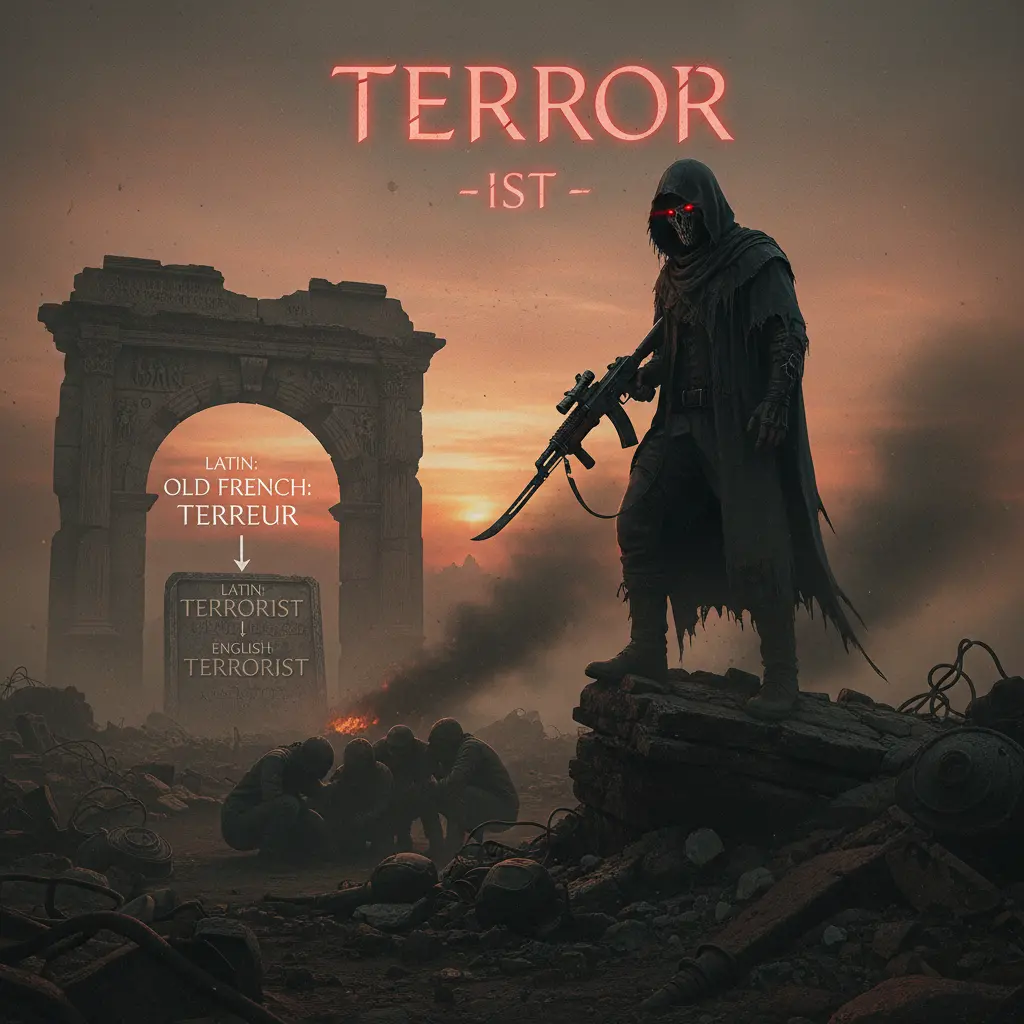
terror + -ist: 'terror' meaning 'great fear', derived from Latin; 'ist' denotes a person. Historical origin: Latin 'terror' → Old French 'terreur' → English 'terrorist'. Memory image: Imagine a person wielding a weapon, instilling fear, highlighting their role in creating terror.
Note 1: These definitions and etymologies are not standard dictionary definitions, but extended explanations provided to help with memorization and understanding of the actual application of words. Through this background information, we strive to make words more vivid and easier to understand, and help you remember their meanings in real life.
Note 2: LexiTalk designs the learning flow around the linguistics principle of “Comprehensible Input.” When learners encounter material that is slightly above their level but still understandable from context, the brain naturally absorbs the language. That’s why we keep every word inside authentic contexts, using examples and associations to help you understand it and use it flexibly.
Read the FAQ explanation of Comprehensible InputI tighten my grip on the strap, take a slow breath, and move my gaze to the crowd. In the chatter around me, the word terrorist lands as a label for someone who uses violence to push political aims, and the room seems to tilt a fraction. My heart pounds and then settles as I adjust my distance, keeping my pace steady. That small shift of focus makes the word feel less like a global mystery and more like a tag I learn to handle with care in conversation.
Terrorist is a noun describing a person who uses violence to pursue political aims, or someone who carries out violent acts to intimidate a population. The term appears frequently in news, legal texts, and security discussions, but it is highly charged and can be controversial depending on who is labeling whom. Learners should note that the label signals intent to coerce through fear, not merely engaging in criminal violence. Context matters: different governments, organizations, or scholars may designate groups as terrorists for some acts but not others. Pronunciation is TER-uh-rist; a useful memory image is a person brandishing a weapon to spread fear. Use with nuance and evidence.
Terrorist is a charged label in English that emphasizes intent to coerce through fear for political aims; learners often mix it with extremist or criminal, and may overgeneralize from a single act.
What is the meaning of the word 'terrorist'?
How is the word 'terrorist' used in a sentence?
Which word is similar to 'terrorist'?
Which word is the opposite of 'terrorist'?
In what real-life context would you hear the word 'terrorist'?
Download LexiTalk app for personalized learning experience
Download AppCookies
We use cookies for essential site functions, analytics, and ads. You can accept, reject, or manage preferences. Privacy Policy