theatre - Master This Word
Master this word with our 5-step learning method – Learn English in English
Train English Through Brain Routes, Not Translation.
This page helps you stop memorizing isolated translations and start understanding a word through its shared mental image, native-style thinking, and practical training steps.
Master this word with our 5-step learning method – Learn English in English
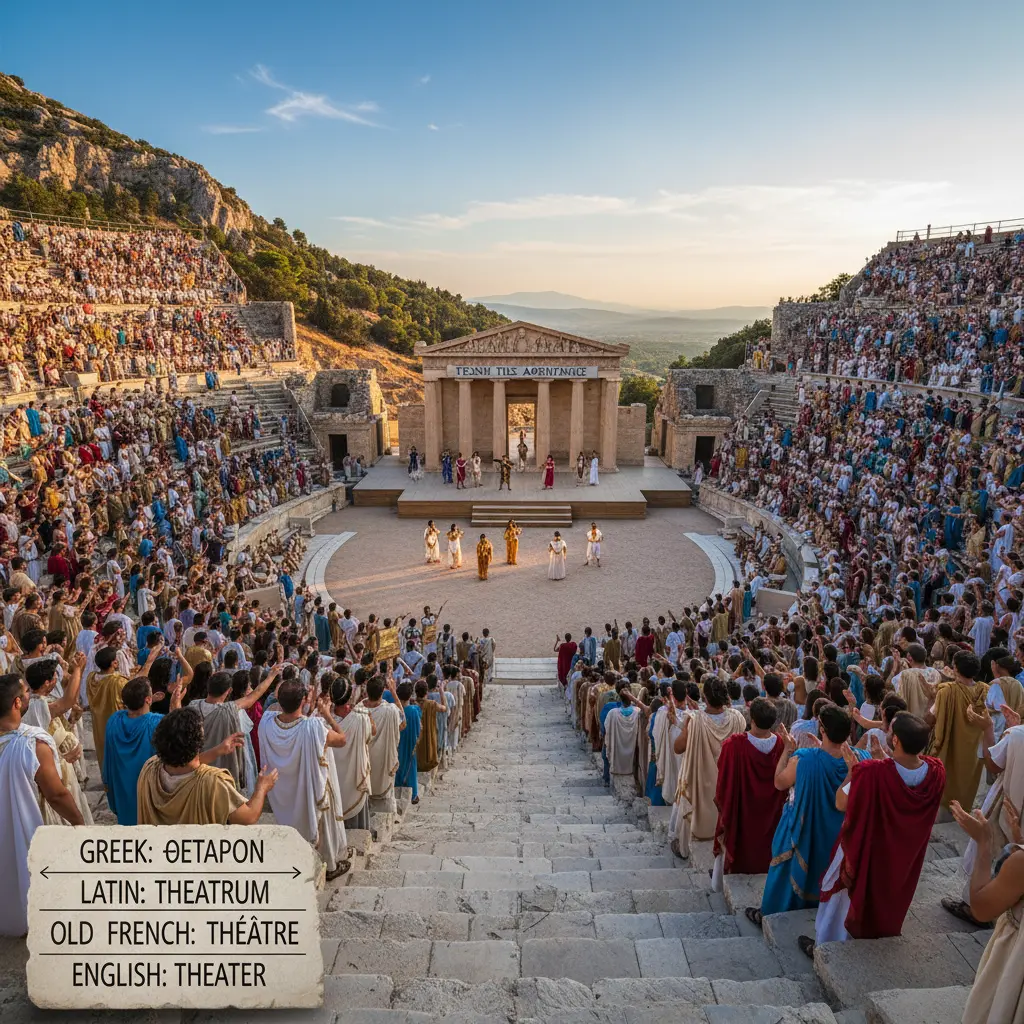
Example sentences are the start of understanding. Don't rush to memorize. First feel how the word works in a sentence.
The root is from the Greek 'theatron' (the place for viewing), through Latin 'theatrum', to Old French 'theatre', and into English. Picture an ancient Greek amphitheater filled with spectators eager to see dramatic performances, which conveys an ongoing appreciation for the art of storytelling.
Note 1: These definitions and etymologies are not standard dictionary definitions, but extended explanations provided to help with memorization and understanding of the actual application of words. Through this background information, we strive to make words more vivid and easier to understand, and help you remember their meanings in real life.
Note 2: LexiTalk designs the learning flow around the linguistics principle of “Comprehensible Input.” When learners encounter material that is slightly above their level but still understandable from context, the brain naturally absorbs the language. That’s why we keep every word inside authentic contexts, using examples and associations to help you understand it and use it flexibly.
Read the FAQ explanation of Comprehensible InputI push open the theatre doors and step into the dim glow. The seats settle as people arrive, and the room seems to shift around me. I adjust my mood, imagining how a story can move on this stage. This is a place where plays and performances live, and I sit, letting the feeling grow.
theatre refers to both a building where live performances are shown and, more broadly, to the art of writing and staging plays. In everyday usage, it often means the venue for plays and dramatic events, while cinema or film would use terms like theater or cinema. In the US, theater is the common spelling for both the venue and the art, but many British writers prefer theatre for the stage and theater for other uses; UK usage can vary. The distinction matters when you discuss media or art history. When talking about films, people usually say film or movie and cinema rather than theatre; for live performances, theatre is the standard word.
Theatre is a culturally loaded term in English, with a clear split between live-stage spaces and the broader arts of drama; learners should note the US/theater vs UK/theatre distinction and avoid applying cinema senses to theatre contexts.
What is the meaning of the word 'theatre'?
Identify the correctly used sentence with the word 'theatre'.
Which word is most similar to 'theatre'?
What is the opposite of 'theatre'?
Can you think of a real-life scenario where a theatre might be involved?
Download LexiTalk app for personalized learning experience
Download AppCookies
We use cookies for essential site functions, analytics, and ads. You can accept, reject, or manage preferences. Privacy Policy