
thrifty - Master This Word
Master this word with our 5-step learning method – Learn English in English
Train English Through Brain Routes, Not Translation.
This page helps you stop memorizing isolated translations and start understanding a word through its shared mental image, native-style thinking, and practical training steps.
Master this word with our 5-step learning method – Learn English in English
Example sentences are the start of understanding. Don't rush to memorize. First feel how the word works in a sentence.
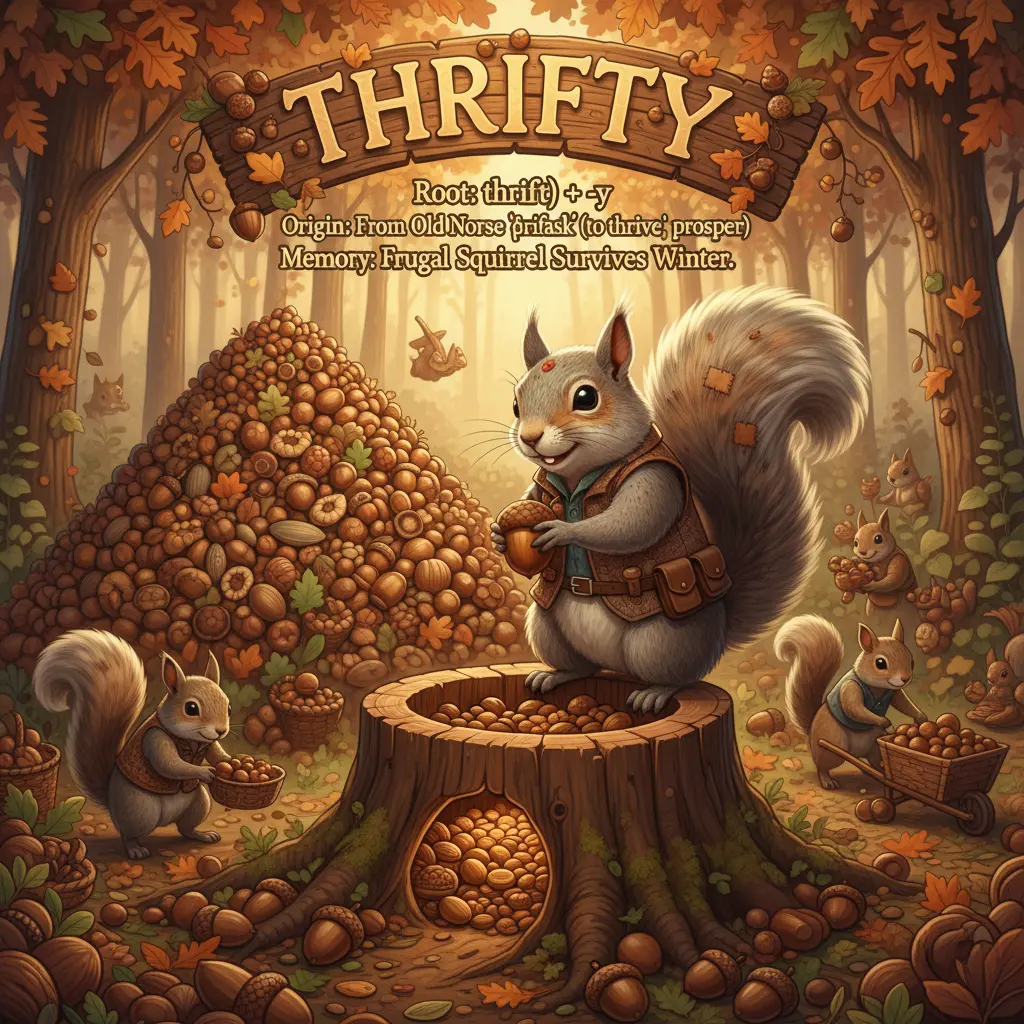
Root: thrif(t) + -y (adjective suffix). Origin: Middle English, from Old Norse 'þrifask', meaning to thrive or prosper. Memory image: Imagine a frugal squirrel gathering acorns all summer to survive the winter, representing resourcefulness.
Note 1: These definitions and etymologies are not standard dictionary definitions, but extended explanations provided to help with memorization and understanding of the actual application of words. Through this background information, we strive to make words more vivid and easier to understand, and help you remember their meanings in real life.
Note 2: LexiTalk designs the learning flow around the linguistics principle of “Comprehensible Input.” When learners encounter material that is slightly above their level but still understandable from context, the brain naturally absorbs the language. That’s why we keep every word inside authentic contexts, using examples and associations to help you understand it and use it flexibly.
Read the FAQ explanation of Comprehensible InputThrifty describes someone who is careful with money and resources, choosing to spend thoughtfully rather than wastefully. It often carries a positive tone, emphasizing prudence, planning, and long-term benefit. In everyday English, you might say a family is thrifty if they budget meals, shop for sales, and repair rather than replace. The nuance lies between being frugal in a smart, proactive way and being stingy if the person avoids necessary expenses. Learners should note that thrifty is largely about prudent management rather than denying oneself essential comforts; context and tone matter for whether it feels admirable or negative.
In English, thrifty is commonly praised when describing budgeting intelligence but can sound critical if aimed at a person rather than a habit. Learners should note that the positive sense often accompanies actions (shopping smart, repairing) rather than emotions. Beware subtlety: thrift implies prudence, not denying basic comfort.
What does the word 'thrifty' mean?
Choose the sentence that uses 'thrifty' correctly.
Which word is most similar to 'thrifty'?
What is the opposite of 'thrifty'?
Can you think of a real-life scenario where someone is careful with their spending?
Download LexiTalk app for personalized learning experience
Download AppCookies
We use cookies for essential site functions, analytics, and ads. You can accept, reject, or manage preferences. Privacy Policy