
tickled - Master This Word
Master this word with our 5-step learning method – Learn English in English
Train English Through Brain Routes, Not Translation.
This page helps you stop memorizing isolated translations and start understanding a word through its shared mental image, native-style thinking, and practical training steps.
Master this word with our 5-step learning method – Learn English in English
Example sentences are the start of understanding. Don't rush to memorize. First feel how the word works in a sentence.
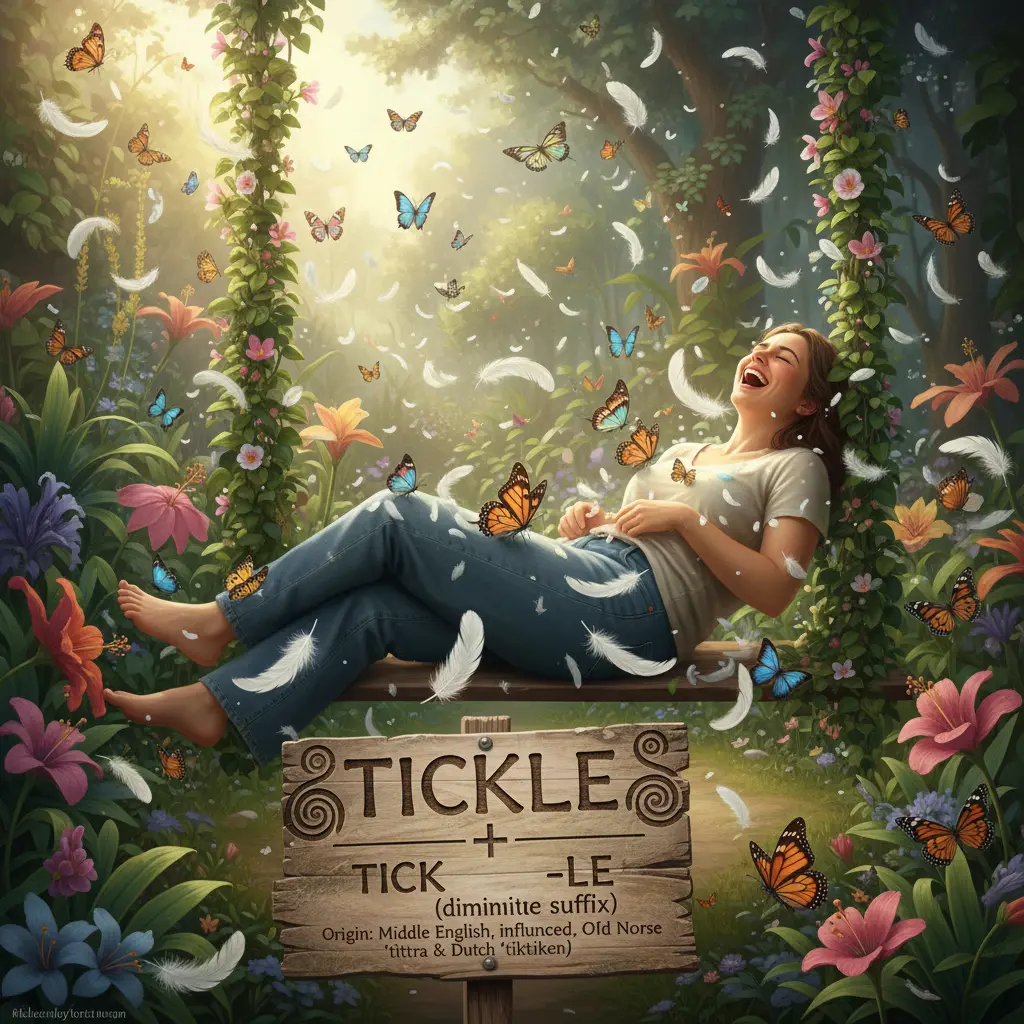
tickle = tick + -le (a diminutive suffix); Origin: Middle English, influenced by Old Norse 'tittra' and potentially Dutch 'tiktiken'. Memory image: Imagine the soft, light touch of feathers making you giggle in a butterfly garden.
Note 1: These definitions and etymologies are not standard dictionary definitions, but extended explanations provided to help with memorization and understanding of the actual application of words. Through this background information, we strive to make words more vivid and easier to understand, and help you remember their meanings in real life.
Note 2: LexiTalk designs the learning flow around the linguistics principle of “Comprehensible Input.” When learners encounter material that is slightly above their level but still understandable from context, the brain naturally absorbs the language. That’s why we keep every word inside authentic contexts, using examples and associations to help you understand it and use it flexibly.
Read the FAQ explanation of Comprehensible InputTickle means to touch someone lightly in a way that causes laughter, especially on the sides, underarms, or feet. It also works metaphorically: to tickle someone’s sense of humor is to provoke amusement or curiosity. In everyday speech you might hear, that joke tickled my funny bone or tickle someone's imagination. The word comes from tickle + -le, a diminutive suffix, and traces back to Middle English with influence from Old Norse tittra. People remember a memory image of feathers brushing skin, in a sunny garden, provoking giggles. Use tickle judiciously with children or friends who consent.
In English, tickle spans physical humor and a set of light, playful metaphors. Learners often confuse it with general teasing or with the more formal or sexual connotations of similar verbs. Remember that tickling is typically a consensual, gentle act, and not everyone enjoys it. The phrase tickle your funny bone is metaphorical and safe in casual speech, but not every culture uses tickling in the same social situations.
Download LexiTalk app for personalized learning experience
Download AppCookies
We use cookies for essential site functions, analytics, and ads. You can accept, reject, or manage preferences. Privacy Policy