tolerance - Master This Word
Master this word with our 5-step learning method – Learn English in English
Train English Through Brain Routes, Not Translation.
This page helps you stop memorizing isolated translations and start understanding a word through its shared mental image, native-style thinking, and practical training steps.
Master this word with our 5-step learning method – Learn English in English
Example sentences are the start of understanding. Don't rush to memorize. First feel how the word works in a sentence.
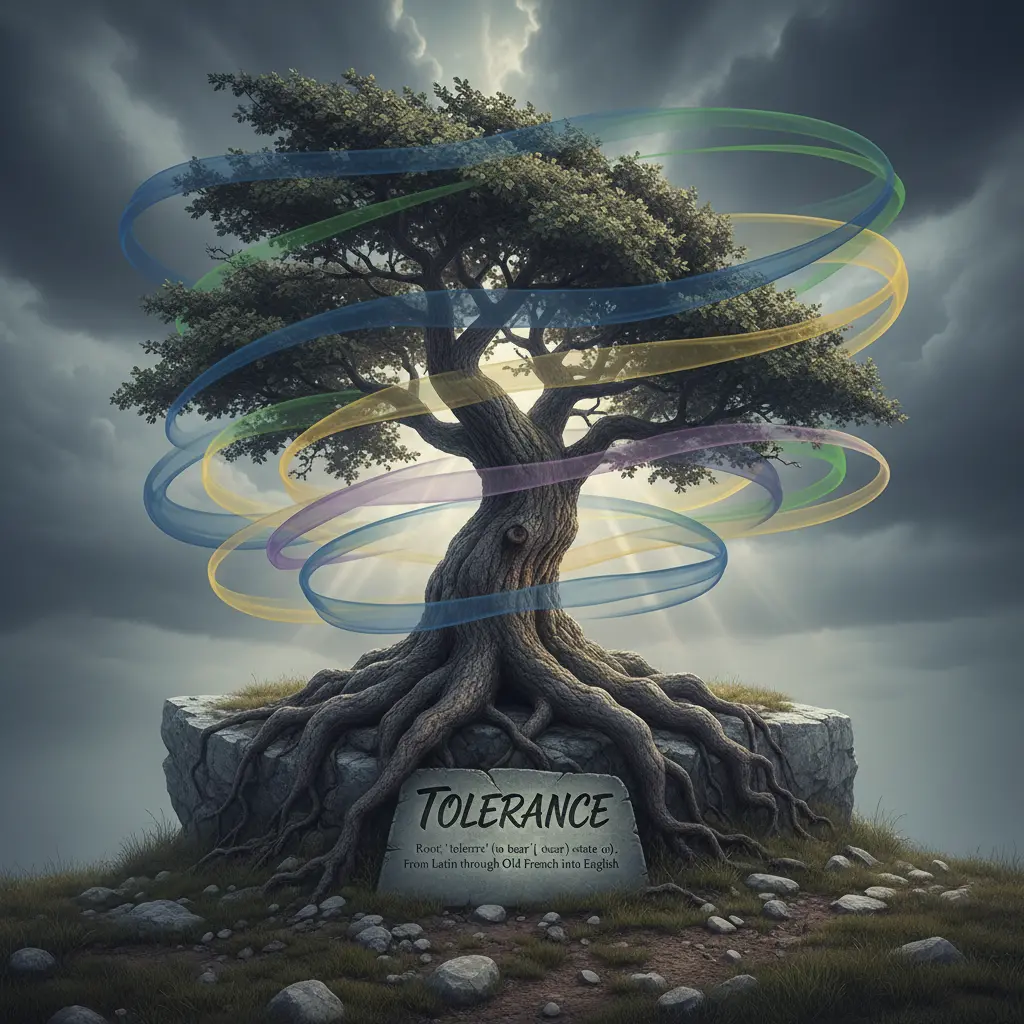
Root: 'tolerare' (to bear) + 'ance' (state of) → From Latin through Old French into English. Picture yourself standing tall and unyielding like a tree in a storm, embodying the essence of tolerance as you withstand the varied winds.
Note 1: These definitions and etymologies are not standard dictionary definitions, but extended explanations provided to help with memorization and understanding of the actual application of words. Through this background information, we strive to make words more vivid and easier to understand, and help you remember their meanings in real life.
Note 2: LexiTalk designs the learning flow around the linguistics principle of “Comprehensible Input.” When learners encounter material that is slightly above their level but still understandable from context, the brain naturally absorbs the language. That’s why we keep every word inside authentic contexts, using examples and associations to help you understand it and use it flexibly.
Read the FAQ explanation of Comprehensible InputTake a slow breath and shift my weight in the chair, hands resting on the table as I listen. I move from quick reactions to pausing, letting the other person’s words land before I reply. That pause is a bit tense, but I keep my posture open and my voice calm, and it feels like I’m choosing fairness. With each small move and adjust, tolerance grows, helping me stay fair when opinions differ.
Tolerance is the ability to accept differences in people, ideas, and situations without feeling threatened or dismissive. It does not mean you automatically agree with every perspective; it means you give others room to hold their views while you maintain your own standards. Tolerance also includes enduring discomfort or pain with resilience, such as enduring a difficult project or weathering a long wait without snapping. In daily life, tolerance helps communities stay peaceful when opinions vary, and it supports fair, objective judging in contentious debates. Developing tolerance often requires active listening, curiosity, and humility, recognizing that no one has a monopoly on truth.
In English, tolerance is often framed as openness to differences plus a sense of endurance; learners may conflate tolerance with mere politeness or with agreement, so focus on distinguishing acceptance from endorsement.
What is the meaning of 'tolerance'?
Which sentence uses 'tolerance' correctly?
What is a synonym for 'tolerance'?
What is an antonym for 'tolerance'?
In what real-life scenario would 'tolerance' be important?
Download LexiTalk app for personalized learning experience
Download AppCookies
We use cookies for essential site functions, analytics, and ads. You can accept, reject, or manage preferences. Privacy Policy