toll - Master This Word
Master this word with our 5-step learning method – Learn English in English
Train English Through Brain Routes, Not Translation.
This page helps you stop memorizing isolated translations and start understanding a word through its shared mental image, native-style thinking, and practical training steps.
Master this word with our 5-step learning method – Learn English in English
Example sentences are the start of understanding. Don't rush to memorize. First feel how the word works in a sentence.
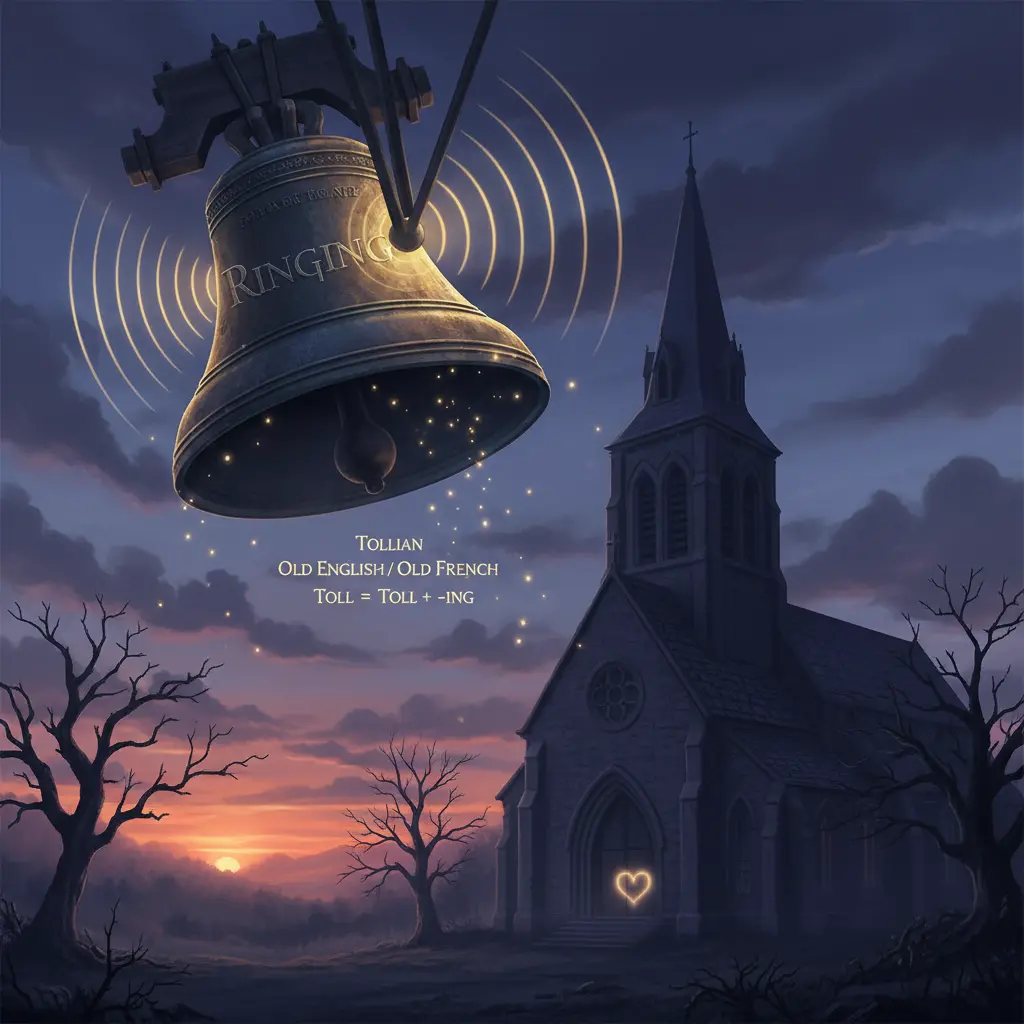
toll = toll + -ing (ringing); Origin: Old English 'tollian' via Old French; Imagine a large bell tolling at a darkened church, announcing the time or a significant event, leaving an echo in your heart.
Note 1: These definitions and etymologies are not standard dictionary definitions, but extended explanations provided to help with memorization and understanding of the actual application of words. Through this background information, we strive to make words more vivid and easier to understand, and help you remember their meanings in real life.
Note 2: LexiTalk designs the learning flow around the linguistics principle of “Comprehensible Input.” When learners encounter material that is slightly above their level but still understandable from context, the brain naturally absorbs the language. That’s why we keep every word inside authentic contexts, using examples and associations to help you understand it and use it flexibly.
Read the FAQ explanation of Comprehensible InputGripping the steering wheel, I ease the car toward the toll booth and hover my foot over the brake. I shift my gaze to the screen, place a card, and adjust the payment setup. The machine hums, and a bell-like toll flickers through my senses as the barrier crawls up. I keep rolling, letting the road open ahead, and the moment shifts from cost to passage.
Toll is a versatile word in English that covers three distinct ideas. First, as a noun it refers to a fee charged for using a bridge, road, or tunnel, often collected at the point of entry. It can also mean the amount paid or the total cost of passage. Second, toll can mean the sound or act of ringing a bell to mark time or an event, such as a church bell tolling at midnight. Third, toll is used in the phrase 'the toll of' to describe damage, loss, or casualties in a calculation of impact, for example, 'the toll of the storm.' The etymology traces back to Old English tollian via Old French. Learners should watch out for plurals 'tolls' and the verb forms 'toll' and 'tolling'.
English learners often rely on toll as a money-related word but may miss its bell‑ring sense or the metaphorical 'the toll of' usage.
What does the word 'toll' mean?
In which of the following sentences is 'toll' used correctly?
Which word is most similar to 'toll'?
What is the opposite of 'toll'?
How does the concept of 'toll' apply in real-life situations?
Download LexiTalk app for personalized learning experience
Download AppCookies
We use cookies for essential site functions, analytics, and ads. You can accept, reject, or manage preferences. Privacy Policy