tourism - Master This Word
Master this word with our 5-step learning method – Learn English in English
Train English Through Brain Routes, Not Translation.
This page helps you stop memorizing isolated translations and start understanding a word through its shared mental image, native-style thinking, and practical training steps.
Master this word with our 5-step learning method – Learn English in English
Example sentences are the start of understanding. Don't rush to memorize. First feel how the word works in a sentence.
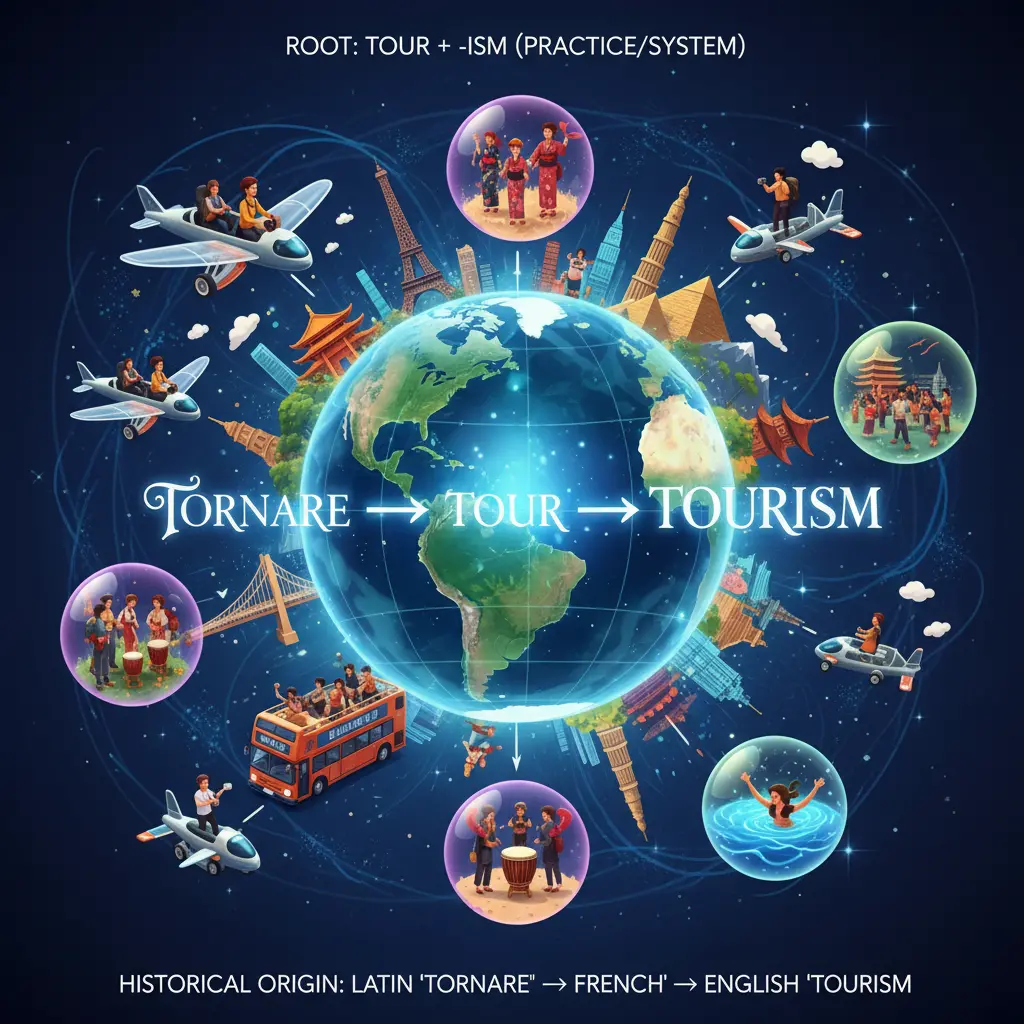
Root: tour + -ism (indicates a practice or system). Historical origin: from Latin 'tornare' (to turn) → Middle French 'tour' → English 'tourism'. Memory image: Picture a globe spinning as people tour the world, enjoying diverse cultures and experiences.
Note 1: These definitions and etymologies are not standard dictionary definitions, but extended explanations provided to help with memorization and understanding of the actual application of words. Through this background information, we strive to make words more vivid and easier to understand, and help you remember their meanings in real life.
Note 2: LexiTalk designs the learning flow around the linguistics principle of “Comprehensible Input.” When learners encounter material that is slightly above their level but still understandable from context, the brain naturally absorbs the language. That’s why we keep every word inside authentic contexts, using examples and associations to help you understand it and use it flexibly.
Read the FAQ explanation of Comprehensible InputI step off the curb and push off with my toes, letting the day lay its color on the street. I set a small plan, then shift as the map changes and adjust my pace toward a museum or a market. The city feels like a living thread I pull, a steady move that asks attention and quick decisions. Tourism grows from this rhythm of move, choice, and letting experiences unfold.
Tourism refers to the practice of traveling for pleasure, business, or education, and the industry that supports travelers with services such as transport, accommodation, and attractions. It encompasses planning trips, choosing destinations, and engaging in activities like sightseeing, cultural exchange, and outdoor recreation. Tourism has grown into a major global sector, shaping economies, employment, and urban development while raising concerns about sustainability and overtourism. Understanding tourism involves considering consumer motivations, seasonality, infrastructure, and the balance between welcoming visitors and preserving local communities. In everyday use, people may say 'tourism has changed the city' or 'the tourism industry offers jobs'.
Think of tourism as both a practice and an industry, not just a trip. Learners often treat it like vacation alone and miss the broader economic and cultural contexts.
What is the meaning of 'tourism'?
Which sentence uses 'tourism' correctly?
Select the synonym for 'tourism':
Select the opposite of 'tourism':
In what real-life context might you encounter 'tourism'?
Download LexiTalk app for personalized learning experience
Download AppCookies
We use cookies for essential site functions, analytics, and ads. You can accept, reject, or manage preferences. Privacy Policy