toxic - Master This Word
Master this word with our 5-step learning method – Learn English in English
Train English Through Brain Routes, Not Translation.
This page helps you stop memorizing isolated translations and start understanding a word through its shared mental image, native-style thinking, and practical training steps.
Master this word with our 5-step learning method – Learn English in English
Example sentences are the start of understanding. Don't rush to memorize. First feel how the word works in a sentence.
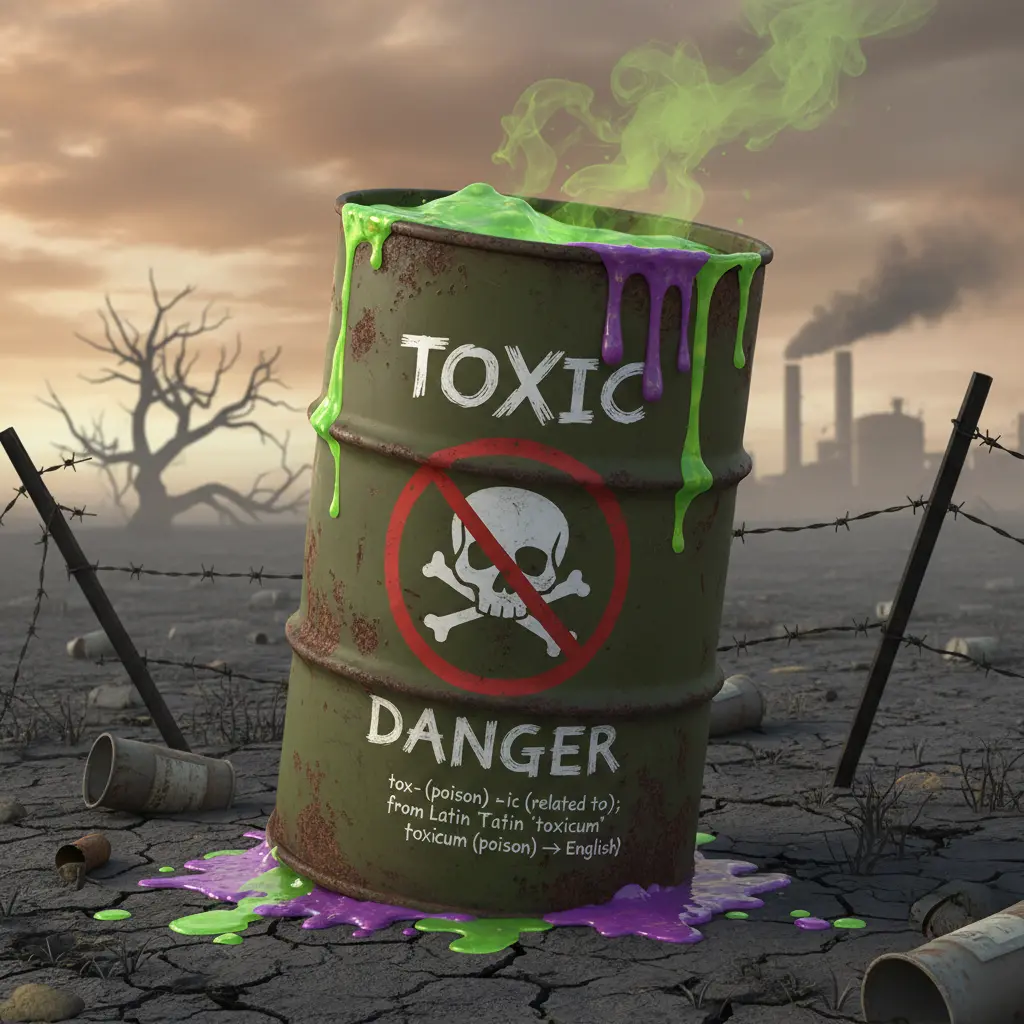
toxic = tox- (poison) + -ic (related to); from Latin 'toxicum' (poison) → Old French → English. Imagine a toxic waste barrel, with a skull and crossbones, to remember how dangerous and harmful toxicity can be.
Note 1: These definitions and etymologies are not standard dictionary definitions, but extended explanations provided to help with memorization and understanding of the actual application of words. Through this background information, we strive to make words more vivid and easier to understand, and help you remember their meanings in real life.
Note 2: LexiTalk designs the learning flow around the linguistics principle of “Comprehensible Input.” When learners encounter material that is slightly above their level but still understandable from context, the brain naturally absorbs the language. That’s why we keep every word inside authentic contexts, using examples and associations to help you understand it and use it flexibly.
Read the FAQ explanation of Comprehensible InputI grip the bottle and move it toward the window to read the label without leaning in. I tilt it, adjust my stance, and a sharp chemical smell rises, making my eyes water. I push the bottle back, pull my hand away, and set it on the counter, keeping a safe distance. The air feels toxic in that moment, and I realize some things can be harmful.
Toxic is an adjective used to describe both substances that contain poison and effects that can harm health or well-being. It can refer to chemicals, fumes, waste, or other materials that are dangerous to touch, inhale, or ingest. In a figurative sense, toxic describes people, atmospheres, or situations that are harmful, hostile, or emotionally damaging. Common collocations include toxic chemicals, toxic waste, a toxic environment, or a toxic relationship. The word signals danger and lasting impact, so speakers choose it when they want to emphasize severity. Remember that toxicity varies by context, so you should consider exposure, dosage, and intent when applying the term.
English uses toxic for both literal poison and hostile situations with a strong emotional charge; learners should watch for context and avoid overgeneralizing to everyday negatives.
What is the meaning of the word 'toxic'?
Which sentence uses 'toxic' correctly?
What is a synonym for 'toxic'?
What is an antonym for 'toxic'?
In what real-life context might you encounter something toxic?
Download LexiTalk app for personalized learning experience
Download AppCookies
We use cookies for essential site functions, analytics, and ads. You can accept, reject, or manage preferences. Privacy Policy