tradition - Master This Word
Master this word with our 5-step learning method – Learn English in English
Train English Through Brain Routes, Not Translation.
This page helps you stop memorizing isolated translations and start understanding a word through its shared mental image, native-style thinking, and practical training steps.
Master this word with our 5-step learning method – Learn English in English
Example sentences are the start of understanding. Don't rush to memorize. First feel how the word works in a sentence.
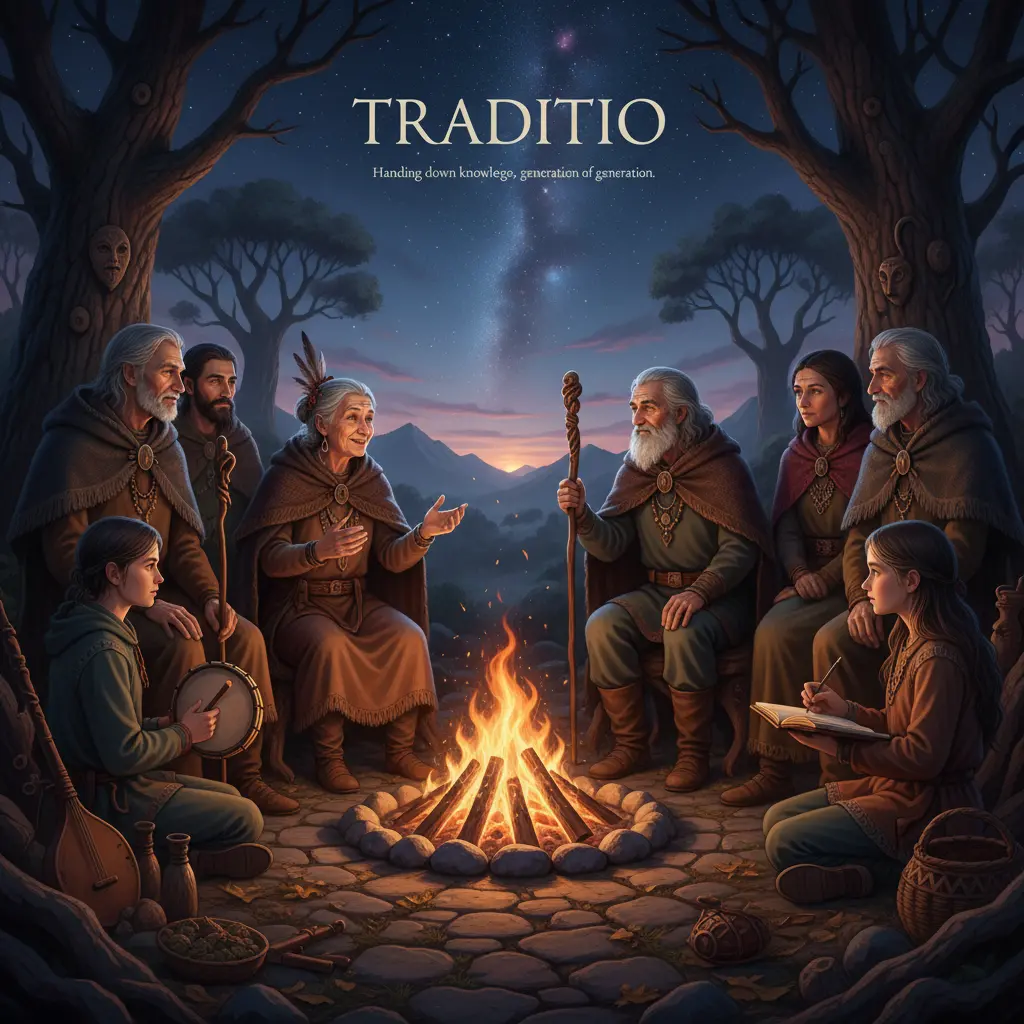
traditio = handing over, from the Latin verb tradere = to hand over, give up. The word evokes images of elders passing down knowledge around a fire, where stories and customs are shared and kept alive through the generations.
Note 1: These definitions and etymologies are not standard dictionary definitions, but extended explanations provided to help with memorization and understanding of the actual application of words. Through this background information, we strive to make words more vivid and easier to understand, and help you remember their meanings in real life.
Note 2: LexiTalk designs the learning flow around the linguistics principle of “Comprehensible Input.” When learners encounter material that is slightly above their level but still understandable from context, the brain naturally absorbs the language. That’s why we keep every word inside authentic contexts, using examples and associations to help you understand it and use it flexibly.
Read the FAQ explanation of Comprehensible InputI shift the kettle on the stove and watch the steam rise, a quiet start to a Sunday ritual. I adjust the saucer to fit the familiar cup, then hold my breath a moment as the tea pours and settles. The room tightens to the rhythm of careful gestures, and I keep this small act moving from one generation to the next. It isn't about where it began, but about letting the moment carry what we've always done.
Tradition refers to long-established customs and beliefs that are passed down from one generation to the next. It can be a social norm, a rite, a festive practice, or a way of speaking or cooking that a community preserves. Traditions provide identity, continuity, and stability, yet they can also adapt over time as communities reinterpret them. When learning English, the word often signals both a cultural practice and the act of handing down knowledge: a family tradition of storytelling around a fire, a national tradition of celebrating a holiday, or a local tradition of a weekly market. The plural, traditions, points to the variety of practices across cultures.
For English speakers, tradition often emphasizes transmission across generations and identity, but learners should note that not all traditions are old or rigid; many evolve with society. Mistakes include assuming every tradition is religious, thinking it only refers to the distant past, or using tradition where custom or habit would be more accurate.
What is the meaning of the word 'tradition'?
In which sentence is 'tradition' used correctly?
Which word is a synonym for 'tradition'?
What is the opposite of 'tradition'?
How is the concept of 'tradition' important in a family gathering?
Download LexiTalk app for personalized learning experience
Download AppCookies
We use cookies for essential site functions, analytics, and ads. You can accept, reject, or manage preferences. Privacy Policy