trapped - Master This Word
Master this word with our 5-step learning method – Learn English in English
Train English Through Brain Routes, Not Translation.
This page helps you stop memorizing isolated translations and start understanding a word through its shared mental image, native-style thinking, and practical training steps.
Master this word with our 5-step learning method – Learn English in English
Example sentences are the start of understanding. Don't rush to memorize. First feel how the word works in a sentence.
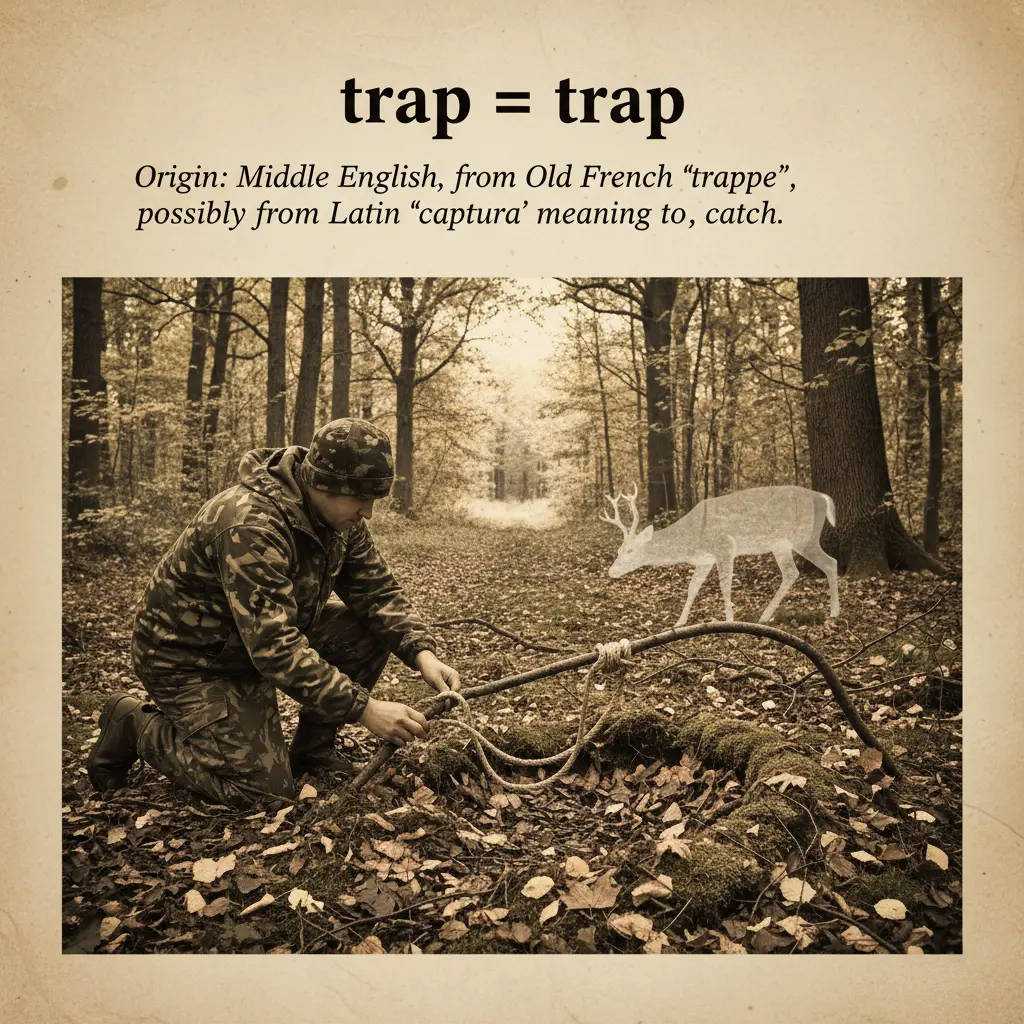
trap = trap; Origin: Middle English, from Old French 'trappe', possibly from Latin 'captura' meaning 'to catch'. Memory image: envision a hunter setting a clever trap in the forest, camouflaged with leaves and branches, waiting for an unsuspecting animal to wander in.
Note 1: These definitions and etymologies are not standard dictionary definitions, but extended explanations provided to help with memorization and understanding of the actual application of words. Through this background information, we strive to make words more vivid and easier to understand, and help you remember their meanings in real life.
Note 2: LexiTalk designs the learning flow around the linguistics principle of “Comprehensible Input.” When learners encounter material that is slightly above their level but still understandable from context, the brain naturally absorbs the language. That’s why we keep every word inside authentic contexts, using examples and associations to help you understand it and use it flexibly.
Read the FAQ explanation of Comprehensible InputI crouch, steady my hands, and set a trap in the damp grass. The wire shifts as I adjust it, a tiny promise of what might happen if it triggers. I hold my breath, feeling the tension tighten and my eyes stay fixed on the narrow path. The moment it snaps shut, the scene tightens around me, and I sense how a careful move can trap you in a new kind of moment.
Trap has two core meanings in English: a literal device used to capture animals or objects, and a figurative situation in which someone is caught unexpectedly or is put in a difficult bind. As a verb, to trap means to catch or ensnare. You’ll see phrases like set a trap, fall into a trap, spring a trap, and booby trap, which adds nuance about danger or deception. Traps can be physical, such as snares or tripwires, or abstract, like a trap in a plan or a misleading offer. For learners, it’s helpful to distinguish the concrete sense from metaphorical uses, and to note collocations that signal intention (bait, spring, escape). Memory aid: picture a hunter camouflaging a forest trap and waiting for an unwary animal to step in.
Trap is a versatile word with literal and metaphorical uses that can subtly shift tone. Learners often overemphasize the physical sense or misapply trap in abstract contexts, so they may say trap a plan or fall into a trap without the natural collocations that native speakers expect.
Download LexiTalk app for personalized learning experience
Download AppCookies
We use cookies for essential site functions, analytics, and ads. You can accept, reject, or manage preferences. Privacy Policy