trend - Master This Word
Master this word with our 5-step learning method – Learn English in English
Train English Through Brain Routes, Not Translation.
This page helps you stop memorizing isolated translations and start understanding a word through its shared mental image, native-style thinking, and practical training steps.
Master this word with our 5-step learning method – Learn English in English
Example sentences are the start of understanding. Don't rush to memorize. First feel how the word works in a sentence.
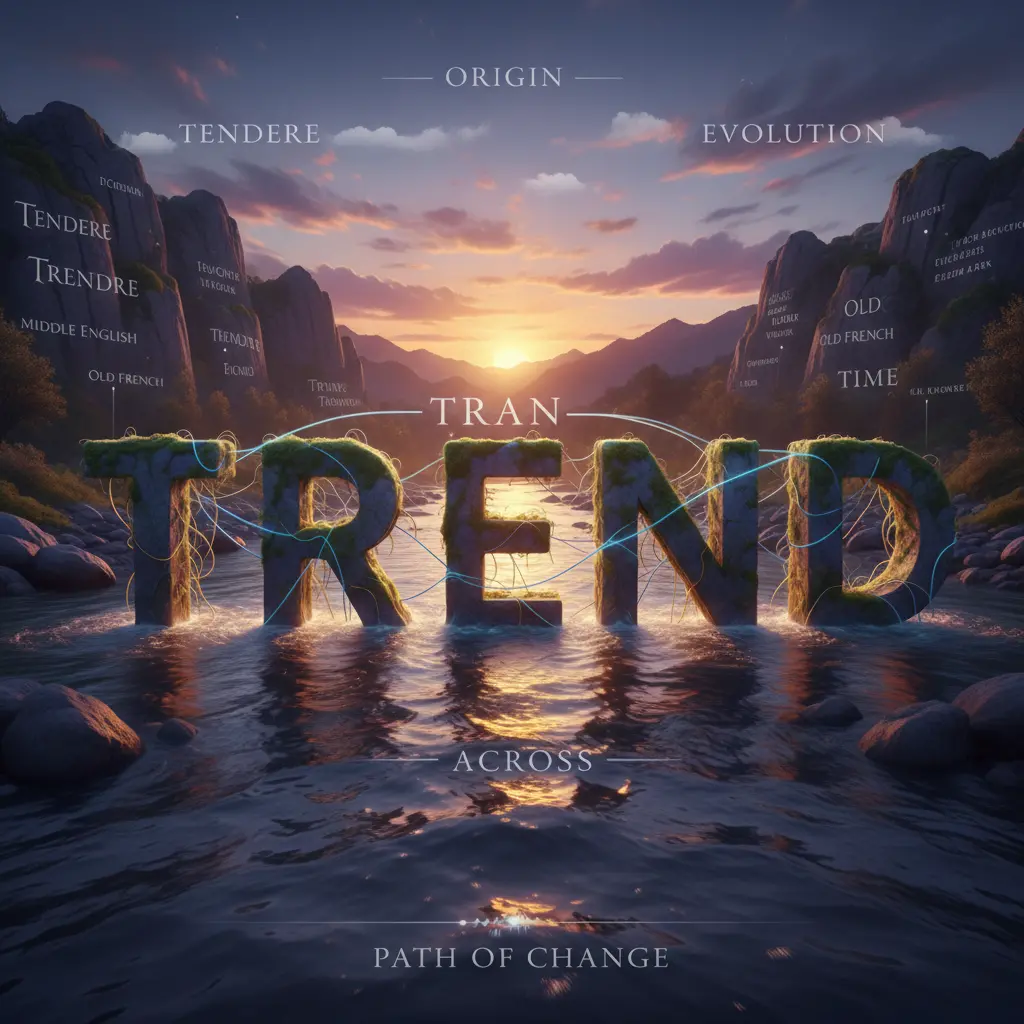
The word 'trend' is composed of the root 'tend' meaning to stretch or extend, with the prefix 'tran-' indicating across or beyond. Its historical origin traces back to Middle English from the Old French 'trendre', derived from Latin 'tendere'. Picture a river flowing steadily in a certain direction, illustrating how trends indicate the path of change over time.
Note 1: These definitions and etymologies are not standard dictionary definitions, but extended explanations provided to help with memorization and understanding of the actual application of words. Through this background information, we strive to make words more vivid and easier to understand, and help you remember their meanings in real life.
Note 2: LexiTalk designs the learning flow around the linguistics principle of “Comprehensible Input.” When learners encounter material that is slightly above their level but still understandable from context, the brain naturally absorbs the language. That’s why we keep every word inside authentic contexts, using examples and associations to help you understand it and use it flexibly.
Read the FAQ explanation of Comprehensible InputI lean in and push the edge of the page, letting my finger move along a line. The graph line shifts as weeks pass, and I feel the pace tighten as I adjust to the change. I turn my head a little to keep the future in view, and I hold steady as new data lands. The sense of a trend grows from this small, lived movement, a direction you feel before you can name it.
Trend is a versatile word used to describe a general direction in which something is developing or changing. It can refer to broad movements, like a trend in technology or consumer behavior, or to a specific fashion or style that becomes popular for a time. In business, trends help predict what customers might want next, guiding decisions about products, marketing, and strategy. In everyday speech, people talk about a trend when they notice a pattern that seems likely to continue. A trend can start slowly and gain momentum, or it can be short-lived, lasting only a season or two.
English speakers often frame trend as a measurable directional pattern over time, whereas some languages may emphasize social or practical implications of a pattern rather than just a numeric trajectory. Learners may overfocus on fashion senses of trend and miss longer-term directional use.
What is the meaning of the word 'trend'?
How is the word 'trend' used in a sentence?
Which word is similar to 'trend'?
Which word is the opposite of 'trend'?
Can you provide a real-life example of a 'trend'?
English Learning Listening Content
Listen NowDownload LexiTalk app for personalized learning experience
Download AppCookies
We use cookies for essential site functions, analytics, and ads. You can accept, reject, or manage preferences. Privacy Policy