understood - Master This Word
Master this word with our 5-step learning method – Learn English in English
Train English Through Brain Routes, Not Translation.
This page helps you stop memorizing isolated translations and start understanding a word through its shared mental image, native-style thinking, and practical training steps.
Master this word with our 5-step learning method – Learn English in English
Example sentences are the start of understanding. Don't rush to memorize. First feel how the word works in a sentence.
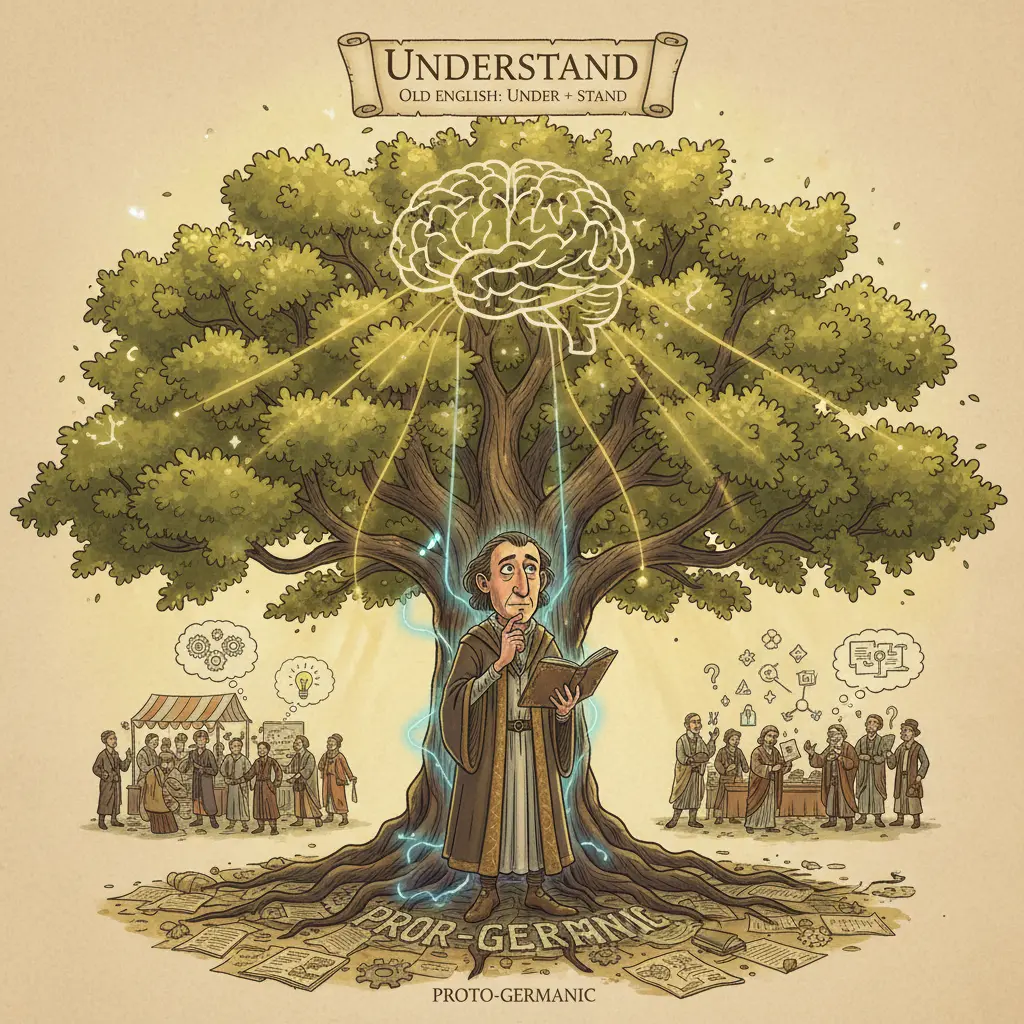
under- = among/between + stand = to stand. Historical origin: Old English 'understandan' from Proto-Germanic. Memory image: Picture someone standing under a tree, gaining insights by observing surroundings and people.
Note 1: These definitions and etymologies are not standard dictionary definitions, but extended explanations provided to help with memorization and understanding of the actual application of words. Through this background information, we strive to make words more vivid and easier to understand, and help you remember their meanings in real life.
Note 2: LexiTalk designs the learning flow around the linguistics principle of “Comprehensible Input.” When learners encounter material that is slightly above their level but still understandable from context, the brain naturally absorbs the language. That’s why we keep every word inside authentic contexts, using examples and associations to help you understand it and use it flexibly.
Read the FAQ explanation of Comprehensible InputFirst I move a finger over the page, nudging my eyes toward the line and listening for what the sentence really means. I shift my attention from surface words to the idea behind them, letting the clues settle in my mind. When the meaning clicks, it feels like a small turn inside me, a shift from guesswork to something I can trust. I keep testing it against what I already know, and understanding grows from the action of looking, comparing, and feeling, not from a rulebook.
Understand is a versatile verb that covers mental grasp, cognitive comprehension, and empathy. It goes beyond simply hearing words to grasping their meaning, intent, and emotional undertones. Learners often confuse understand with know or realize, or use understand where empathize is intended. In practice you can say I understand the instructions, I understand why you feel that way, or I understand what the author is saying, but not always substitute with realize. Contexts vary: academic texts emphasize cognitive grasp, everyday speech may require empathy with someone’s feelings. Keeping these distinctions in mind helps you choose the right word and avoid overgeneralizing across tenses.
Explain to an English speaker (meta, keep short)
What is the meaning of the word 'understood'?
Identify the correctly used sentence of 'understood'.
Which word is most similar to 'understood'?
What is the opposite of 'understood'?
Can you think of a real-life context where someone felt understood?
Download LexiTalk app for personalized learning experience
Download AppCookies
We use cookies for essential site functions, analytics, and ads. You can accept, reject, or manage preferences. Privacy Policy