utopian - Master This Word
Master this word with our 5-step learning method – Learn English in English
Train English Through Brain Routes, Not Translation.
This page helps you stop memorizing isolated translations and start understanding a word through its shared mental image, native-style thinking, and practical training steps.
Master this word with our 5-step learning method – Learn English in English
Example sentences are the start of understanding. Don't rush to memorize. First feel how the word works in a sentence.
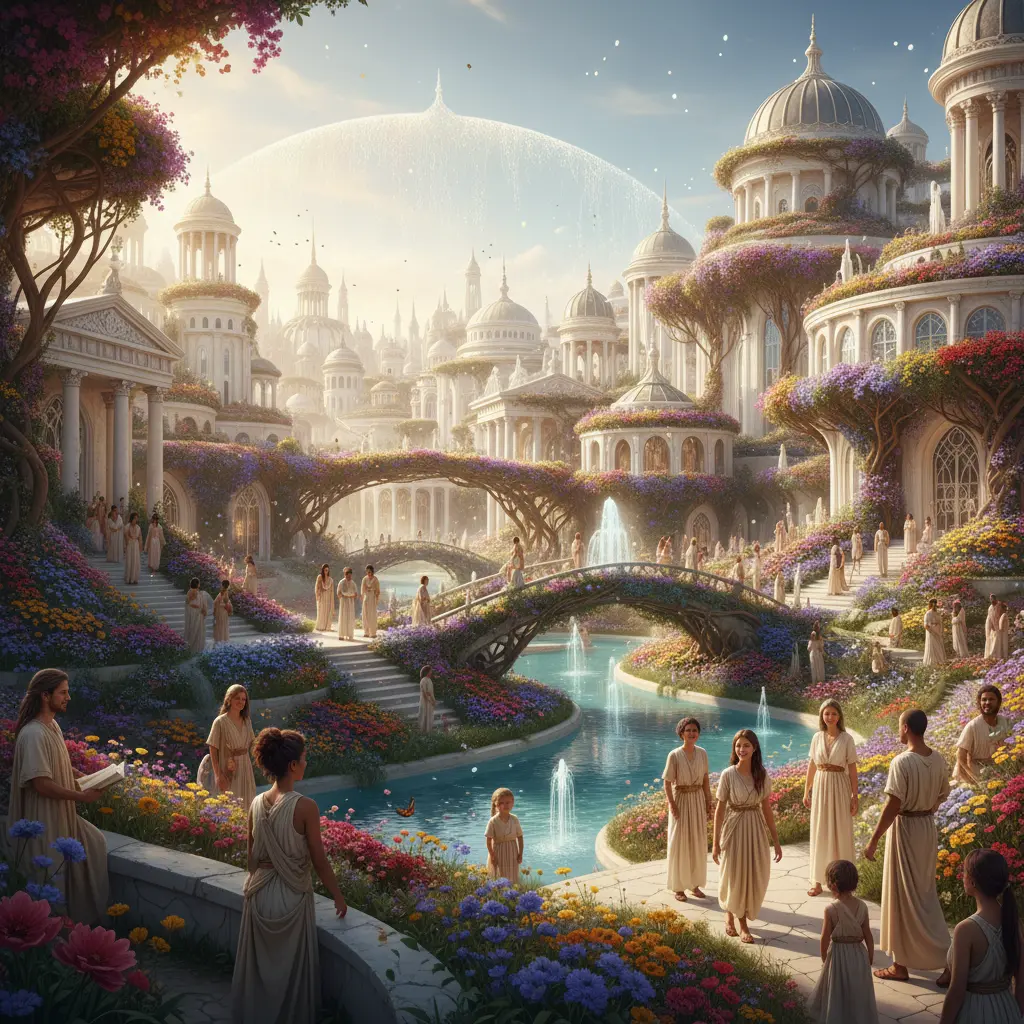
Root: 'u-' (not) + 'topos' (place). Origin: From Greek, via Latin, and Old French to English. Memory image: Imagine a beautiful city where everyone is happy and all the gardens are in full bloom, illustrating a perfect and unreachable society.
Note 1: These definitions and etymologies are not standard dictionary definitions, but extended explanations provided to help with memorization and understanding of the actual application of words. Through this background information, we strive to make words more vivid and easier to understand, and help you remember their meanings in real life.
Note 2: LexiTalk designs the learning flow around the linguistics principle of “Comprehensible Input.” When learners encounter material that is slightly above their level but still understandable from context, the brain naturally absorbs the language. That’s why we keep every word inside authentic contexts, using examples and associations to help you understand it and use it flexibly.
Read the FAQ explanation of Comprehensible InputUtopian describes ideas, projects, or places that imagine a perfectly just, peaceful, and prosperous society. It often refers to visions that seem desirable in theory but are difficult to realize in practice. In everyday use, people say a policy is utopian, meaning it is idealistic and perhaps impractical. The noun utopia refers to the imagined perfect place, while utopian describes the quality or someone who favors such ideals. The word carries both admiration and critique: it signals noble aims but also skepticism about feasibility. In literature, utopian worlds explore harmony and abundance, while dystopian works remind us why perfection remains elusive.
English learners often treat utopian as a neutral descriptor of ideal plans, but the word can carry a critique of practicality. People may confuse utopian with feasible or practical; emphasize the aspirational gap and the implied skepticism about feasibility.
What is the meaning of 'utopian'?
Which sentence uses 'utopian' correctly?
Which word is most similar to 'utopian'?
What is the opposite of 'utopian'?
Can you think of a real-life scenario of a perfect society?
English Learning Listening Content
Listen NowDownload LexiTalk app for personalized learning experience
Download AppCookies
We use cookies for essential site functions, analytics, and ads. You can accept, reject, or manage preferences. Privacy Policy