valleys - Master This Word
Master this word with our 5-step learning method – Learn English in English
Train English Through Brain Routes, Not Translation.
This page helps you stop memorizing isolated translations and start understanding a word through its shared mental image, native-style thinking, and practical training steps.
Master this word with our 5-step learning method – Learn English in English
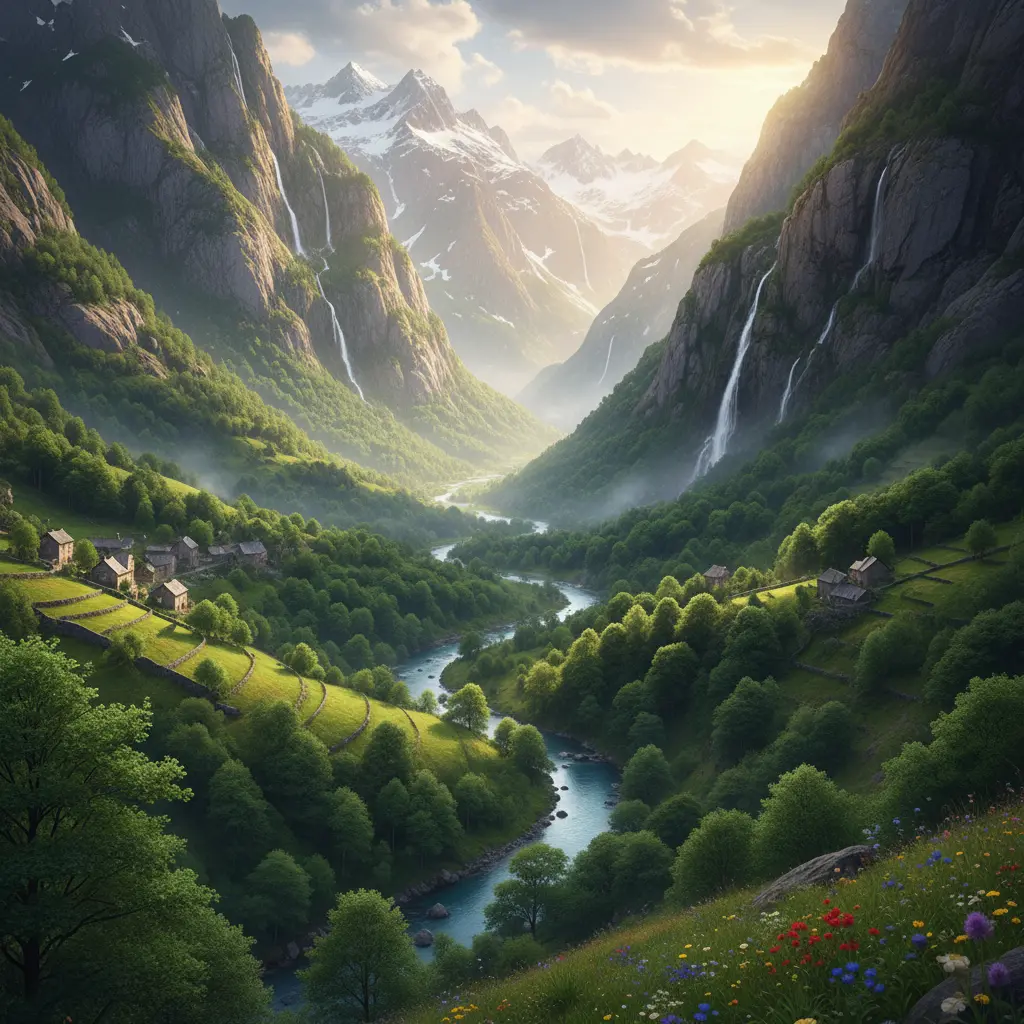
Example sentences are the start of understanding. Don't rush to memorize. First feel how the word works in a sentence.
valley = vallis (Latin for 'a valley') → Old French 'vallee' → English. Imagine a lush, green valley between towering mountains, a serene escape filled with beauty.
Note 1: These definitions and etymologies are not standard dictionary definitions, but extended explanations provided to help with memorization and understanding of the actual application of words. Through this background information, we strive to make words more vivid and easier to understand, and help you remember their meanings in real life.
Note 2: LexiTalk designs the learning flow around the linguistics principle of “Comprehensible Input.” When learners encounter material that is slightly above their level but still understandable from context, the brain naturally absorbs the language. That’s why we keep every word inside authentic contexts, using examples and associations to help you understand it and use it flexibly.
Read the FAQ explanation of Comprehensible InputI push my hiking pack forward, feet finding the trail as the land rolls down. I step into a shaded dip where the hills press in on either side, and the path settles into a quiet hollow. The air changes—cool in the shade, lighter in the lower stretch—as I keep my balance and adjust my pace. Walking deeper, the scene feels like a long, gentle corridor carved by water, a valley shaping the way I move and think about the land.
A valley is a low area between hills or mountains, typically containing rivers or streams and fertile soil. Valleys come in many shapes, from wide U-shaped corridors carved by glaciers to narrow, winding dales shaped by rivers. People often settle in valleys because their soils are good for farming and the shelter from winds. The term valley is from vallis in Latin, passed through Old French vallee into English. Imagining a lush, green valley between towering peaks helps many learners remember the sense of enclosure and quiet, contrast with hills, plateaus, or plains, and the way a valley supports communities and ecosystems.
Think of valley as a geographic feature with a sense of enclosure and shelter, often with life-giving water. Learners may picture valleys only as flat plains or confuse them with canyons; remember formation is by erosion or glacial activity and that valleys host towns and farms.
What does the word 'valleys' mean?
Which sentence uses 'valleys' correctly?
Which word is most similar to 'valleys'?
What is the opposite of 'valleys'?
Can you think of a real-life context where valleys are significant?
Download LexiTalk app for personalized learning experience
Download AppCookies
We use cookies for essential site functions, analytics, and ads. You can accept, reject, or manage preferences. Privacy Policy