village - Master This Word
Master this word with our 5-step learning method – Learn English in English
Train English Through Brain Routes, Not Translation.
This page helps you stop memorizing isolated translations and start understanding a word through its shared mental image, native-style thinking, and practical training steps.
Master this word with our 5-step learning method – Learn English in English
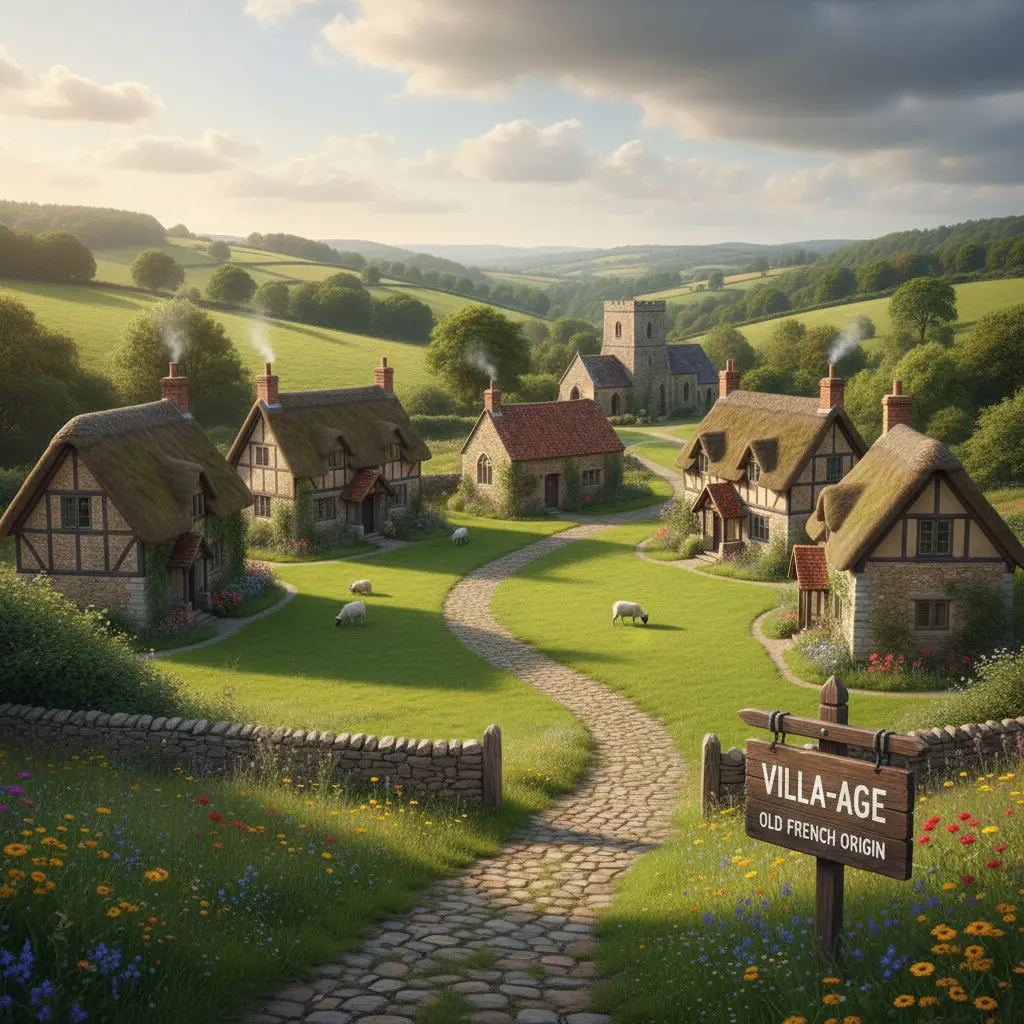
Example sentences are the start of understanding. Don't rush to memorize. First feel how the word works in a sentence.
village = vil (from Latin villa = country house) + lage (originating from Old French) → Latin/Old French → English. Imagine a charming country scene with a handful of quaint houses clustered around a central green space, embodying the harmony and simplicity of village life.
Note 1: These definitions and etymologies are not standard dictionary definitions, but extended explanations provided to help with memorization and understanding of the actual application of words. Through this background information, we strive to make words more vivid and easier to understand, and help you remember their meanings in real life.
Note 2: LexiTalk designs the learning flow around the linguistics principle of “Comprehensible Input.” When learners encounter material that is slightly above their level but still understandable from context, the brain naturally absorbs the language. That’s why we keep every word inside authentic contexts, using examples and associations to help you understand it and use it flexibly.
Read the FAQ explanation of Comprehensible InputI step out of my door and move along the path toward the village. My feet find the loose gravel as I slow down, shift my weight, and turn a corner between the trees. The air feels quiet, and I adjust my pace, letting the small lanes and faces register as I approach. This little settlement—centered around a church and a few houses—begins to feel familiar, enough to call it home in my mind.
A village is a small, rural community typically smaller than a town, often centered around a church or common green. The term emphasizes a compact cluster of houses and farms where neighbors know each other, and daily life moves at a slower pace than in cities. In everyday English, village can refer to a real place or be used metaphorically to describe a quaint, traditional setting, or even a distant, unsophisticated locale. Learners should distinguish village from town and city, noting that a village usually lacks extensive services and a formal town center, but can still have shops, a school, and a church.
In English, village often conveys a picturesque, intimate rural image and contrasts with city life; learners may overuse 'village' for any small town or rural place.
What is the meaning of the word 'village'?
Which sentence uses the word 'village' correctly?
Which word is most similar to 'village'?
What is the opposite of 'village'?
Can you give an example of a real-life scenario involving a small community of houses?
Banking Basics
Listen NowDownload LexiTalk app for personalized learning experience
Download AppCookies
We use cookies for essential site functions, analytics, and ads. You can accept, reject, or manage preferences. Privacy Policy