
webs - Master This Word
Master this word with our 5-step learning method – Learn English in English
Train English Through Brain Routes, Not Translation.
This page helps you stop memorizing isolated translations and start understanding a word through its shared mental image, native-style thinking, and practical training steps.
Master this word with our 5-step learning method – Learn English in English
Example sentences are the start of understanding. Don't rush to memorize. First feel how the word works in a sentence.
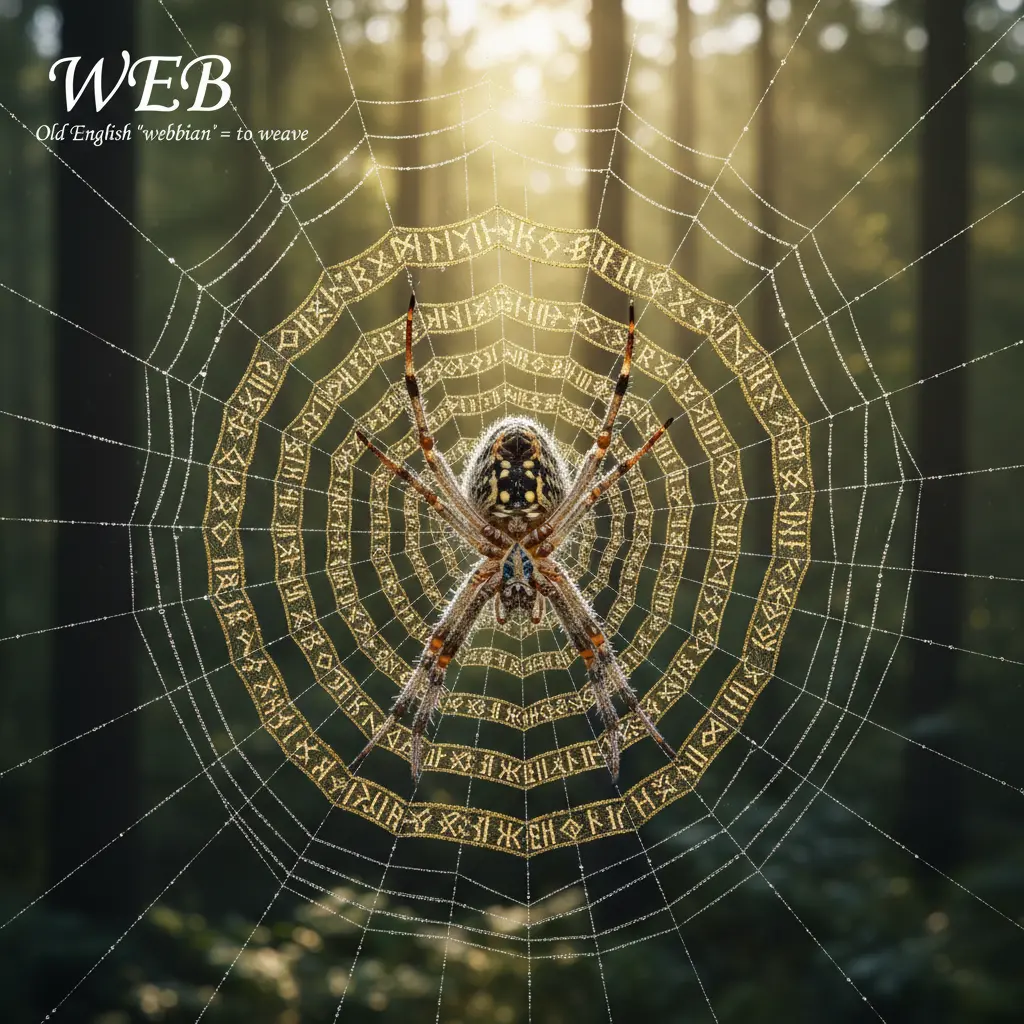
web = thread + (Old English) 'webbian' = to weave. Originating from Germanic roots, it evokes an image of intricate designs woven together. Picture a spider meticulously crafting its spun threads in a beautiful pattern.
Note 1: These definitions and etymologies are not standard dictionary definitions, but extended explanations provided to help with memorization and understanding of the actual application of words. Through this background information, we strive to make words more vivid and easier to understand, and help you remember their meanings in real life.
Note 2: LexiTalk designs the learning flow around the linguistics principle of “Comprehensible Input.” When learners encounter material that is slightly above their level but still understandable from context, the brain naturally absorbs the language. That’s why we keep every word inside authentic contexts, using examples and associations to help you understand it and use it flexibly.
Read the FAQ explanation of Comprehensible InputI reach for a spool of thread and move the needle across a tiny frame. I guide the line, pull it tight, then adjust the angles until a loose web starts to form in my hands. The grip changes as I shift from focusing on one thread to seeing how the lines connect, like pages linking in a browser. I smile as the pattern reveals itself, and the word web feels like a map of the small networks I can travel through in real life.
Web is a versatile word with two main meanings. It can describe a structure of fine threads or fibers, like a spider's web, or a network of interconnected elements, especially on the Internet. It can also be used as a verb meaning to construct or form a web-like structure. In everyday English, you might talk about a spider weaving a web, or a social web of relationships, or a complex web of links on a website. When learning, remember that web as a noun refers to both literal lattice and the broader network, and as a verb it emphasizes forming a connected, mesh-like pattern.
English speakers naturally separate literal spider webs from internet networks, and often distinguish between web as a noun and to web as a verb; learners should watch for collocations like web of connections and the phrase World Wide Web.
Download LexiTalk app for personalized learning experience
Download AppCookies
We use cookies for essential site functions, analytics, and ads. You can accept, reject, or manage preferences. Privacy Policy
