
weightlessness - Master This Word
Master this word with our 5-step learning method – Learn English in English
Train English Through Brain Routes, Not Translation.
This page helps you stop memorizing isolated translations and start understanding a word through its shared mental image, native-style thinking, and practical training steps.
Master this word with our 5-step learning method – Learn English in English
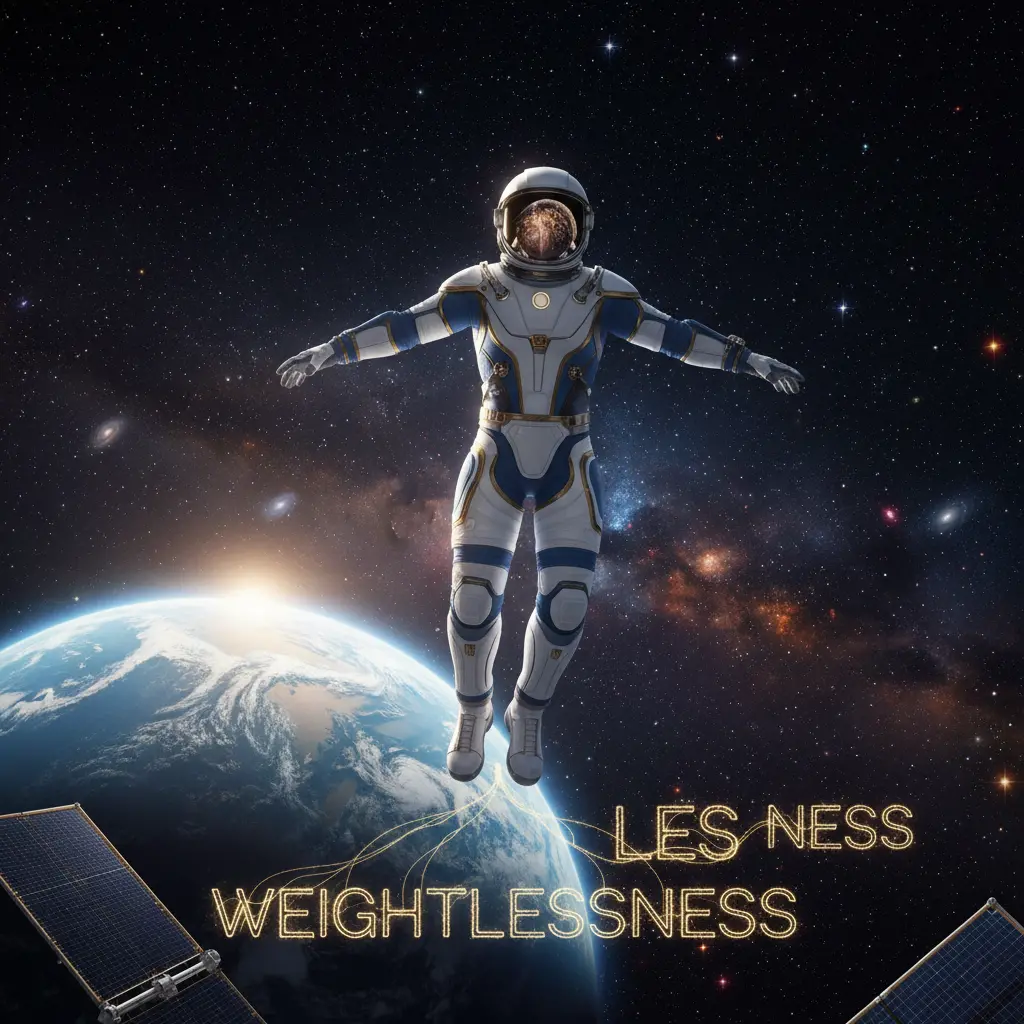
Example sentences are the start of understanding. Don't rush to memorize. First feel how the word works in a sentence.
weight (root) + less (suffix) + ness (suffix). Originated from Old English 'gewīht' and 'leas', through Middle English to the current form. Picture an astronaut floating in space, free from the pull of gravity, experiencing pure freedom.
Note 1: These definitions and etymologies are not standard dictionary definitions, but extended explanations provided to help with memorization and understanding of the actual application of words. Through this background information, we strive to make words more vivid and easier to understand, and help you remember their meanings in real life.
Note 2: LexiTalk designs the learning flow around the linguistics principle of “Comprehensible Input.” When learners encounter material that is slightly above their level but still understandable from context, the brain naturally absorbs the language. That’s why we keep every word inside authentic contexts, using examples and associations to help you understand it and use it flexibly.
Read the FAQ explanation of Comprehensible InputWeightlessness is the sensation or condition of having no weight. In physics, it occurs when an object is in free fall or is otherwise not accelerated by a supporting force relative to its local frame of reference. For humans, weightlessness is most familiar in space, where astronauts float inside a cabin, their muscles and bodily fluids shifting in response to the absence of gravity and everyday actions becoming counterintuitive. The word itself blends weight with less and ness, but the concept also appears in Earth-based demonstrations like parabolic flights or free-fall drops. In media and fiction, weightlessness often conveys freedom, exploration, or danger in contrast to the grounding pull of gravity we experience daily.
English often distills weightlessness as a concrete physical state or vivid sensation, while speakers may assume it means zero gravity everywhere or forever; learners should anchor it to specific contexts (space, parabolic flight) and use related terms like microgravity to avoid overgeneralization.
What does the word 'weightlessness' mean?
Which sentence correctly uses the word 'weightlessness'?
Which word is most similar to 'weightlessness'?
What is the opposite of 'weightlessness'?
Can you think of a real-life context where the concept of weightlessness is important?
Download LexiTalk app for personalized learning experience
Download AppCookies
We use cookies for essential site functions, analytics, and ads. You can accept, reject, or manage preferences. Privacy Policy