wetlands - Master This Word
Master this word with our 5-step learning method – Learn English in English
Train English Through Brain Routes, Not Translation.
This page helps you stop memorizing isolated translations and start understanding a word through its shared mental image, native-style thinking, and practical training steps.
Master this word with our 5-step learning method – Learn English in English
Example sentences are the start of understanding. Don't rush to memorize. First feel how the word works in a sentence.
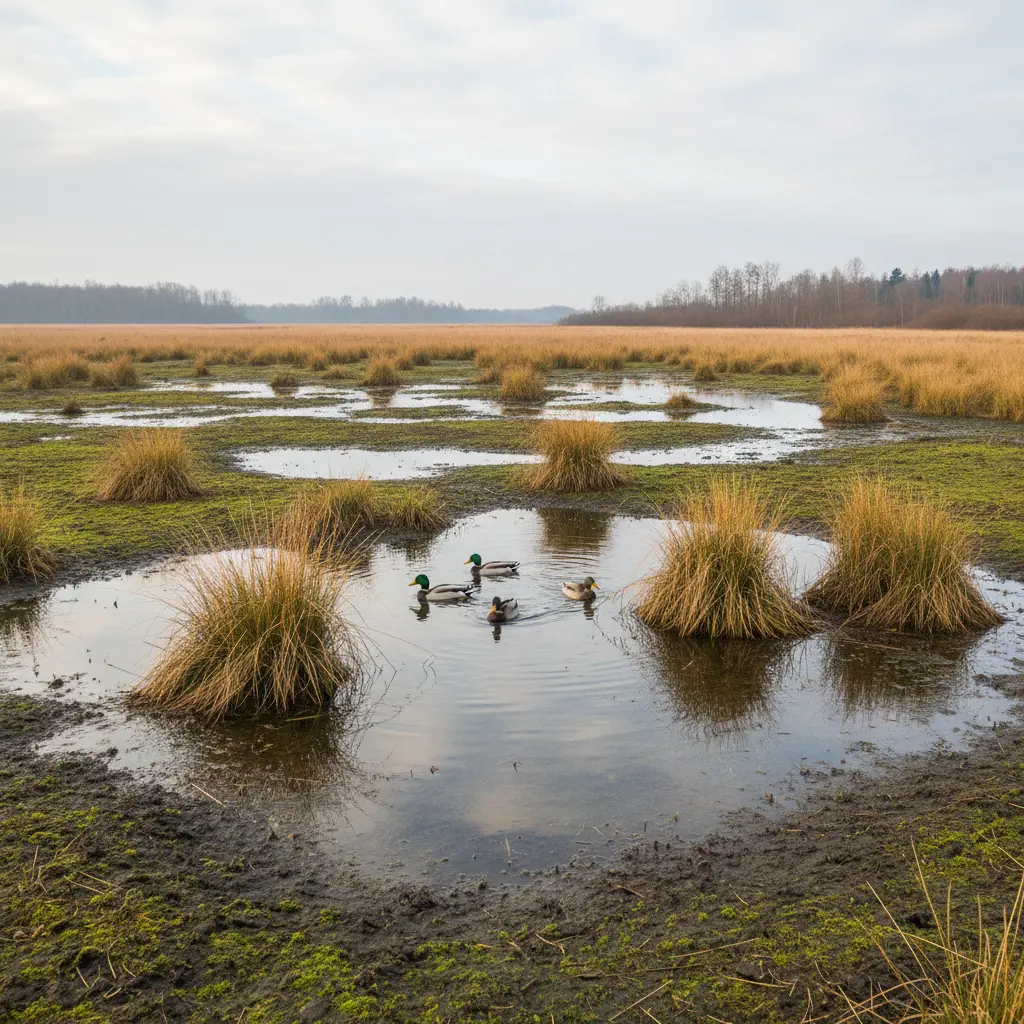
Root decomposition: prefix 'wet-' + root 'land' forms a compound meaning land that is wet. Historical origin: from Old English wet and land; a Germanic compound word formed in English. Memory image: imagine a flat, soggy plain where water pockets dot the ground and tall grasses bend as ducks drift by.
Note 1: These definitions and etymologies are not standard dictionary definitions, but extended explanations provided to help with memorization and understanding of the actual application of words. Through this background information, we strive to make words more vivid and easier to understand, and help you remember their meanings in real life.
Note 2: LexiTalk designs the learning flow around the linguistics principle of “Comprehensible Input.” When learners encounter material that is slightly above their level but still understandable from context, the brain naturally absorbs the language. That’s why we keep every word inside authentic contexts, using examples and associations to help you understand it and use it flexibly.
Read the FAQ explanation of Comprehensible InputWetlands are natural lands where the soil is saturated with water for at least part of the year, creating a waterlogged landscape that supports specially adapted plants and animals. Wetlands include marshes, swamps, bogs, and fens, and they occur at the edges of rivers and lakes as well as along coasts. They serve essential ecological functions such as flood moderation, water purification, carbon storage, and habitat connectivity for birds, amphibians, fish, and insects. Because they concentrate nutrients and filter runoff, wetlands also benefit nearby communities by reducing flood risk and improving water quality. Due to development and drainage, many wetlands have declined, underscoring the importance of conservation.
Wetland is a broad ecological term; learners may think it means only swamps or bogs. Emphasize diversity of types (marshes, swamps, bogs, fens) and ecosystem services such as flood control and water purification.
Download LexiTalk app for personalized learning experience
Download AppCookies
We use cookies for essential site functions, analytics, and ads. You can accept, reject, or manage preferences. Privacy Policy