
where - Master This Word
Master this word with our 5-step learning method – Learn English in English
Train English Through Brain Routes, Not Translation.
This page helps you stop memorizing isolated translations and start understanding a word through its shared mental image, native-style thinking, and practical training steps.
Master this word with our 5-step learning method – Learn English in English
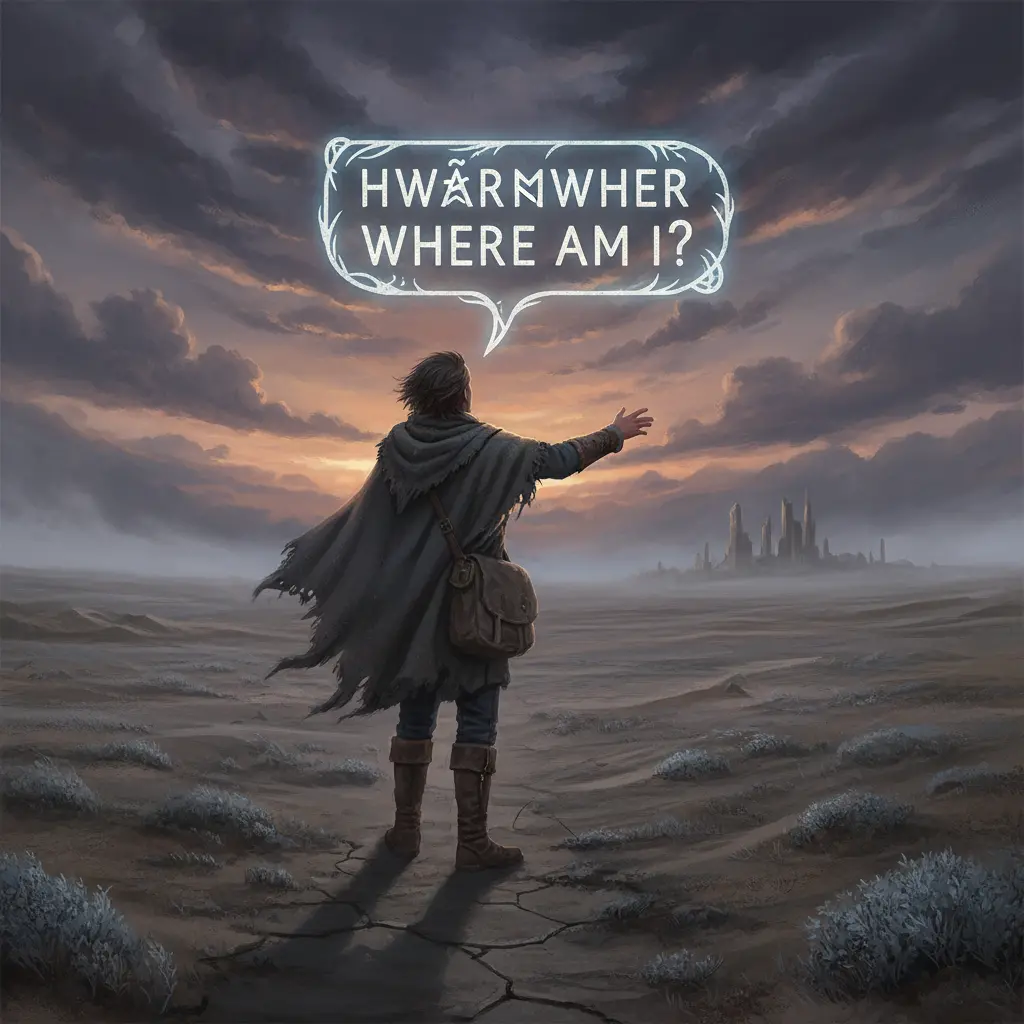
Example sentences are the start of understanding. Don't rush to memorize. First feel how the word works in a sentence.
where = 'hwere' (Old English) + root 'hwar' (Proto-Germanic) | Middle English 'wher' → Modern English 'where'. Imagine being lost in a vast land and asking, 'Where am I?' as you search for familiar landmarks.
Note 1: These definitions and etymologies are not standard dictionary definitions, but extended explanations provided to help with memorization and understanding of the actual application of words. Through this background information, we strive to make words more vivid and easier to understand, and help you remember their meanings in real life.
Note 2: LexiTalk designs the learning flow around the linguistics principle of “Comprehensible Input.” When learners encounter material that is slightly above their level but still understandable from context, the brain naturally absorbs the language. That’s why we keep every word inside authentic contexts, using examples and associations to help you understand it and use it flexibly.
Read the FAQ explanation of Comprehensible InputI lean forward and move my finger over the map, nudging a question toward the blank edge. I turn to my companion and ask, where is the cafe we talked about? I take a calm breath and adjust my grip on the map, waiting for the answer. The word slides into the moment naturally, and I let it anchor the place in the world for the next step.
Where is used to ask about the place or position of something, or to indicate a location or situation, and it can refer back to a place already mentioned. In questions, where combines with be forms such as where is, where are, and where was to locate people, objects, or spaces. It also appears in relative clauses like the town where I grew up, linking back to a place. Learners should note that where answers typically involve a location word (here, there) or a prepositional phrase (in, on, at, near). Common mistakes include confusing where with when, or placing where in the wrong position in a sentence. Practice with varied contexts to build flexible usage.
In English, where often anchors questions to a location with clear follow-up responses like 'here' or 'there.' Learners tend to overgeneralize about time with where or slip into asking about directions in the wrong tense. English uses be and locational prepositions tightly; mixing up the order of subject and verb in questions is a common stumble.
Which sentence below uses the word 'where' correctly?
Which word is most similar to 'where'?
What is the opposite of 'where'?
Can you think of a real-life context for the word 'where'?
Download LexiTalk app for personalized learning experience
Download AppCookies
We use cookies for essential site functions, analytics, and ads. You can accept, reject, or manage preferences. Privacy Policy