wild - Master This Word
Master this word with our 5-step learning method – Learn English in English
Train English Through Brain Routes, Not Translation.
This page helps you stop memorizing isolated translations and start understanding a word through its shared mental image, native-style thinking, and practical training steps.
Master this word with our 5-step learning method – Learn English in English
Example sentences are the start of understanding. Don't rush to memorize. First feel how the word works in a sentence.
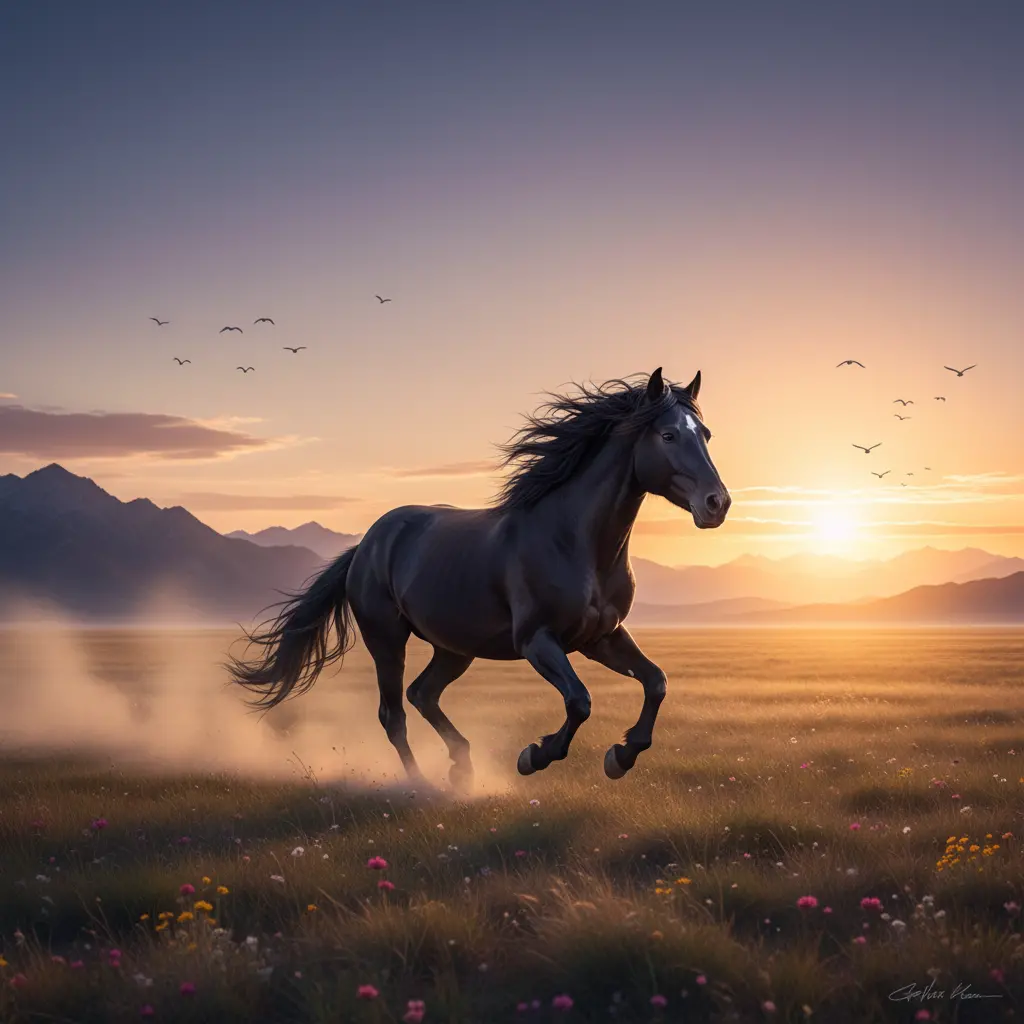
Wild: from Old English 'wild' which means 'untamed'. Think of a wild horse running free in an open field, symbolizing freedom and untamed nature.
Note 1: These definitions and etymologies are not standard dictionary definitions, but extended explanations provided to help with memorization and understanding of the actual application of words. Through this background information, we strive to make words more vivid and easier to understand, and help you remember their meanings in real life.
Note 2: LexiTalk designs the learning flow around the linguistics principle of “Comprehensible Input.” When learners encounter material that is slightly above their level but still understandable from context, the brain naturally absorbs the language. That’s why we keep every word inside authentic contexts, using examples and associations to help you understand it and use it flexibly.
Read the FAQ explanation of Comprehensible InputI step onto the trail and push through the brush, boots scuffing on loose soil and my breath coming slower. A branch snaps, I shift my weight and pull my jacket tighter as the wind brushes my skin. The forest feels wild, not tamed, with plants poking through and birds calling in bursts, and I keep walking, letting the moment tell me how far I can go.
Wild describes things that are not domesticated or tamed. In nature, wild animals and plants grow and live without human control, and they often retain a strong, untamed energy. The word also extends to situations or behavior that is uncontrolled or unruly, such as a wild storm, a wild party, or a wild idea that grows without limits. Learners should note that wild can take both concrete senses (wild animals, wildflowers, wild rivers) and more figurative senses (a wild imagination, a wild guess). In everyday English, you usually pair wild with nature terms or with verbs like go, run, or break loose. Distinctions with feral and untamed can be subtle but important for accuracy.
Wild is a core English adjective with literal and figurative uses; learners often conflate untamed nature with unruly behavior or misinterpret go wild as always dangerous.
What does the word 'wild' mean?
In which sentence is the word 'wild' used correctly?
Which word is similar to 'wild'?
Which word is opposite to 'wild'?
In what context would you use the word 'wild'?
Download LexiTalk app for personalized learning experience
Download AppCookies
We use cookies for essential site functions, analytics, and ads. You can accept, reject, or manage preferences. Privacy Policy