
wolf - Master This Word
Master this word with our 5-step learning method – Learn English in English
Train English Through Brain Routes, Not Translation.
This page helps you stop memorizing isolated translations and start understanding a word through its shared mental image, native-style thinking, and practical training steps.
Master this word with our 5-step learning method – Learn English in English
Example sentences are the start of understanding. Don't rush to memorize. First feel how the word works in a sentence.
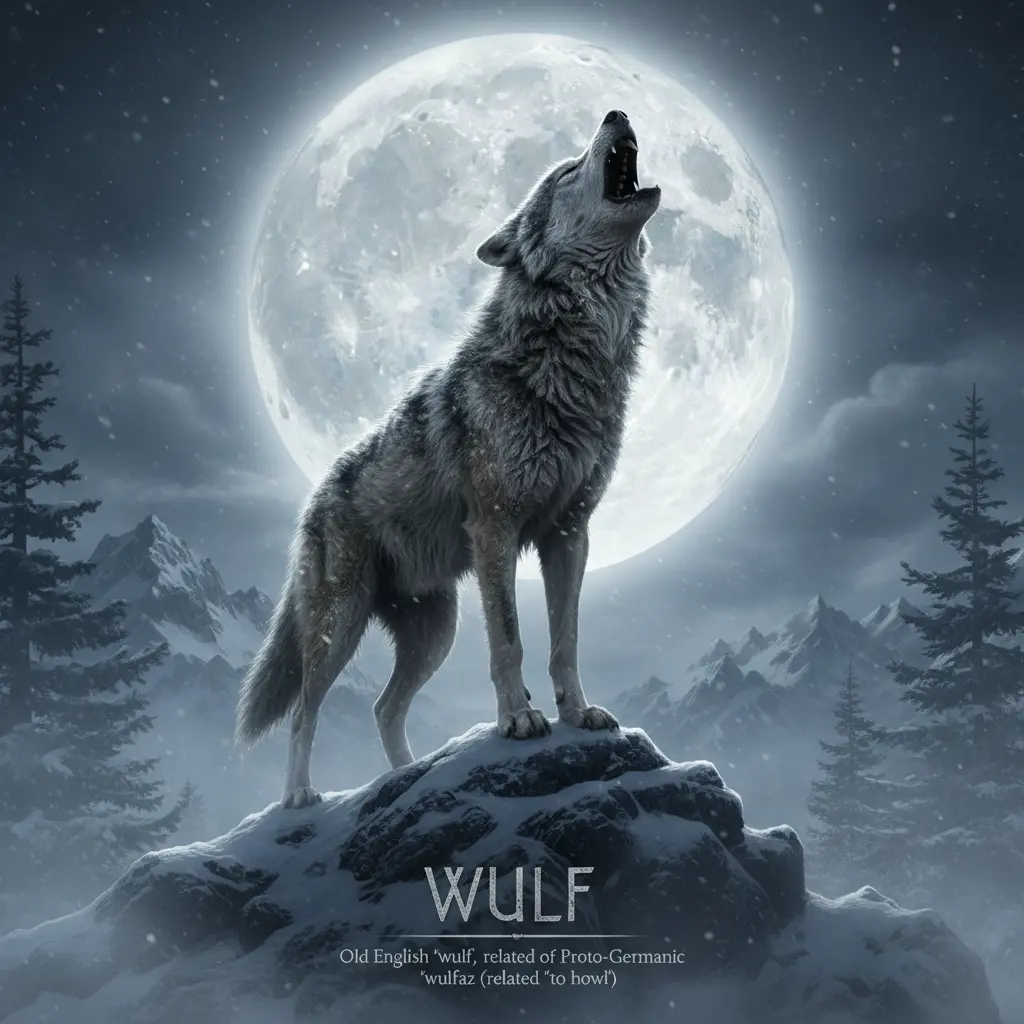
wolf: Old English 'wulf', related to Proto-Germanic 'wulfaz' (related to 'to howl'). Vivid picture: imagine a wolf howling at the moon, symbolizing both wilderness and the call of the wild.
Note 1: These definitions and etymologies are not standard dictionary definitions, but extended explanations provided to help with memorization and understanding of the actual application of words. Through this background information, we strive to make words more vivid and easier to understand, and help you remember their meanings in real life.
Note 2: LexiTalk designs the learning flow around the linguistics principle of “Comprehensible Input.” When learners encounter material that is slightly above their level but still understandable from context, the brain naturally absorbs the language. That’s why we keep every word inside authentic contexts, using examples and associations to help you understand it and use it flexibly.
Read the FAQ explanation of Comprehensible InputI shift my stance and move the flashlight along the path, keeping my breath even. A shadow slides into the beam—a wolf pausing to listen. My hands feel the weight of caution, and I adjust my pace to stay quiet. The moment makes the word feel real, like a scene you might describe in a story when a wolf crosses your path.
Wolf is a noun for a wild canid closely related to dogs, found in forests, mountains, and tundra. It can describe the animal itself as well as a person who preys on others or behaves aggressively to pursue a goal. In myth and literature, the wolf often stands for cunning, ferocity, independence, and the tension between staying with the pack and striking out alone. The image of a howling wolf evokes wilderness, night, and the call of the wild. Etymology: Old English wulf, from Proto-Germanic wulfaz, linked to howling and the wild. Visualizing a wolf under the moon can help memory connect the term to wild origins.
For English speakers, wolf often carries dual symbolism in one word: a real animal and a range of metaphorical meanings (predation, cunning, independence). English also marks plural irregularities (wolves). Learners may overgeneralize the animal sense to metaphor or misinterpret idioms; they may also forget the animal’s cultural resonance as both feared predator and noble survivor.
What is the meaning of the word 'wolf'?
Which sentence uses the word 'wolf' correctly?
What is the most similar word to 'wolf'?
What is the opposite of 'wolf'?
Can you give an example of a real-life scenario involving a 'wolf'?
Download LexiTalk app for personalized learning experience
Download AppCookies
We use cookies for essential site functions, analytics, and ads. You can accept, reject, or manage preferences. Privacy Policy