
workplace - Master This Word
Master this word with our 5-step learning method – Learn English in English
Train English Through Brain Routes, Not Translation.
This page helps you stop memorizing isolated translations and start understanding a word through its shared mental image, native-style thinking, and practical training steps.
Master this word with our 5-step learning method – Learn English in English
Example sentences are the start of understanding. Don't rush to memorize. First feel how the word works in a sentence.
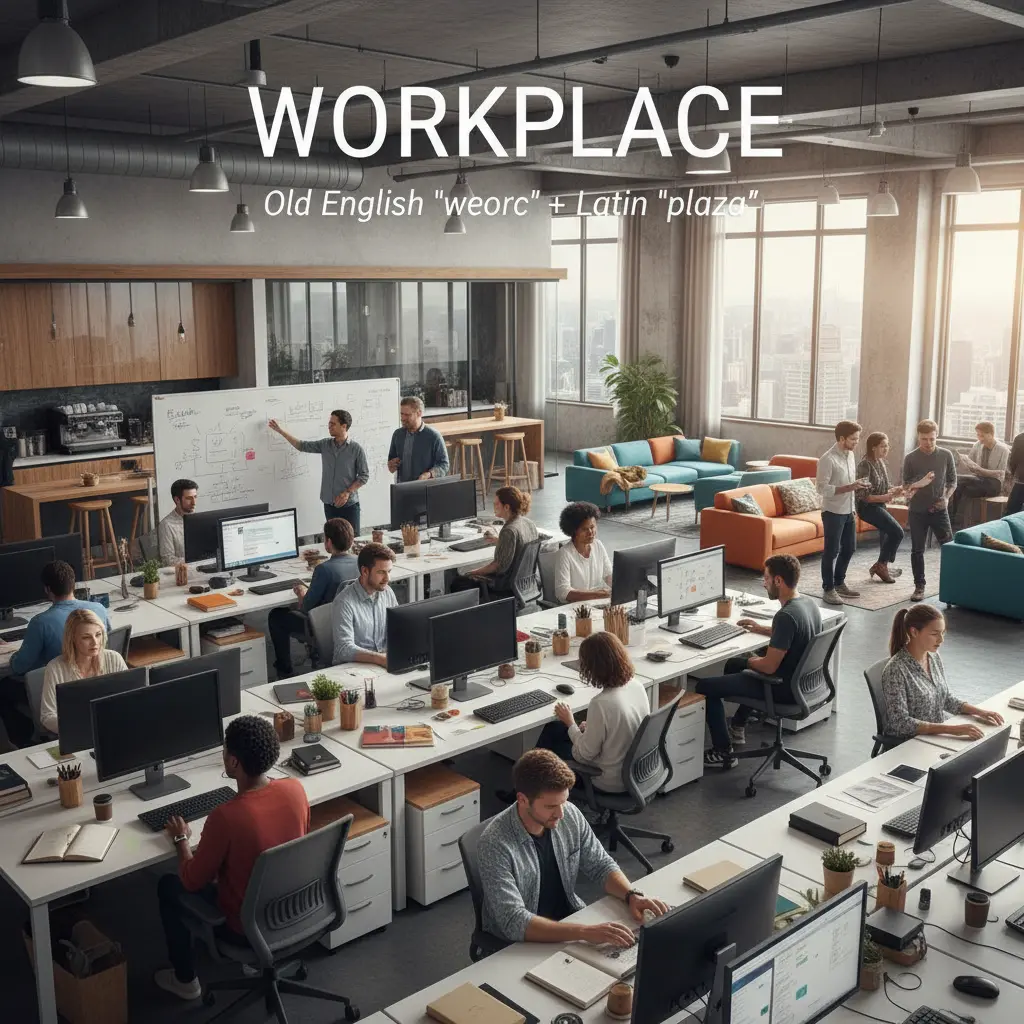
work + place: 'work' means to perform tasks and 'place' denotes a location. Historical origin: Old English 'weorc' + Latin 'plaza' → English 'workplace'. Memory image: Picture a bustling office, with desks and people collaborating on projects, highlighting the space where effort and productivity come together.
Note 1: These definitions and etymologies are not standard dictionary definitions, but extended explanations provided to help with memorization and understanding of the actual application of words. Through this background information, we strive to make words more vivid and easier to understand, and help you remember their meanings in real life.
Note 2: LexiTalk designs the learning flow around the linguistics principle of “Comprehensible Input.” When learners encounter material that is slightly above their level but still understandable from context, the brain naturally absorbs the language. That’s why we keep every word inside authentic contexts, using examples and associations to help you understand it and use it flexibly.
Read the FAQ explanation of Comprehensible InputI push the door and step into the workplace, a quiet morning already humming. I move to my desk, sit down, and set up my laptop as the screen wakes. I adjust the chair and my posture, keeping my focus as the day starts. The space begins to feel like a place where tasks take shape and people connect.
Workplace refers to the place where work happens, including physical offices, factories, or remote hubs, and it can also describe the broader environment around one's job. It emphasizes not just the building, but the social and organizational setting that shapes how people perform tasks, collaborate, and manage responsibilities. Learners should distinguish workplace from office: a workplace can be anywhere work is performed, while an office is a specific kind of workplace typically in a building. This term often appears in discussions about work-life balance, safety, culture, and productivity.
English treats workplace as a broad, location-inclusive term for where work happens, not just a building. Learners may overemphasize 'office' or imagine a single room, missing the idea that culture and processes matter too.
Choose the correct sentence using 'workplace': Mary enjoys decorating her ____.
Select the antonym of 'workplace':
In what setting would you typically find a 'workplace'?
Reflect on a place where you spend most of your day working. What do you call that place?
Download LexiTalk app for personalized learning experience
Download AppCookies
We use cookies for essential site functions, analytics, and ads. You can accept, reject, or manage preferences. Privacy Policy