worse - Master This Word
Master this word with our 5-step learning method – Learn English in English
Train English Through Brain Routes, Not Translation.
This page helps you stop memorizing isolated translations and start understanding a word through its shared mental image, native-style thinking, and practical training steps.
Master this word with our 5-step learning method – Learn English in English
Example sentences are the start of understanding. Don't rush to memorize. First feel how the word works in a sentence.
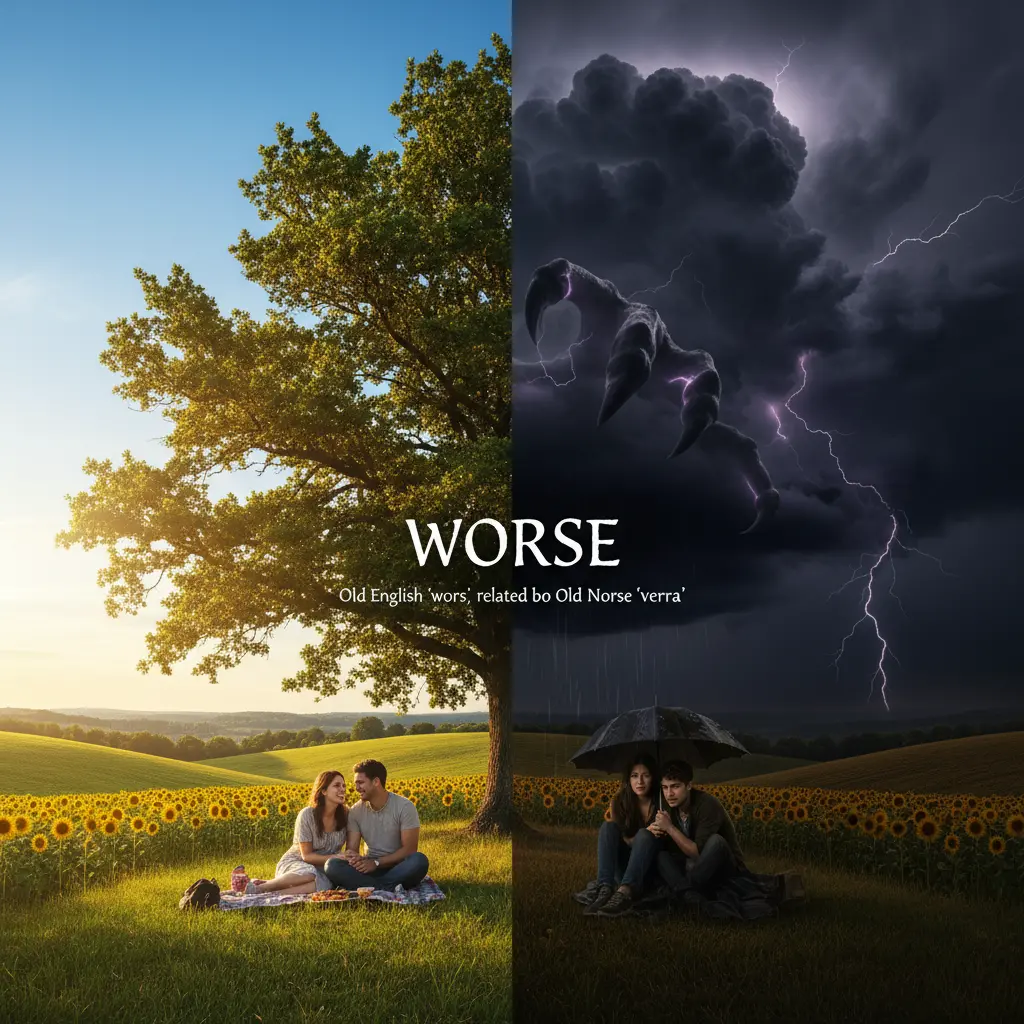
Root: 'worse' (comparative of 'bad'), Historical: Old English 'wors', related to Old Norse 'verra', Memory Image: Picture a dark cloud overshadowing a sunny day, representing a decline from happiness.
Note 1: These definitions and etymologies are not standard dictionary definitions, but extended explanations provided to help with memorization and understanding of the actual application of words. Through this background information, we strive to make words more vivid and easier to understand, and help you remember their meanings in real life.
Note 2: LexiTalk designs the learning flow around the linguistics principle of “Comprehensible Input.” When learners encounter material that is slightly above their level but still understandable from context, the brain naturally absorbs the language. That’s why we keep every word inside authentic contexts, using examples and associations to help you understand it and use it flexibly.
Read the FAQ explanation of Comprehensible InputI move my hand to turn the dimmer, adjust the lights, and keep the room calm as night settles in. The colors drift toward darker tones and the scene feels heavier, as if things are getting worse. I hold the remote, push a little brightness back, and feel the effort travel up my arms. In small shifts and careful decisions, I learn how worse can creep in when control slips.
worse is the comparative form of bad. It describes a decline in quality, condition, or circumstances, often when something has deteriorated from an earlier state. We use worse when comparing two or more situations or when talking about a change over time. Common collocations include worse than expected, things got worse, and the worse option of two choices. It also appears in idioms like the worst is yet to come; note that worse is not the same as worst, which is the superlative meaning most bad. The irregular stem reflects historical forms, and in everyday speech you might hear things have gotten worse rather than things have worse.
Think in terms of a comparison: worse marks a decline relative to something else; many languages avoid a direct word by word gloss and use a different clause structure
What is the meaning of the word 'worse'?
Which sentence uses 'worse' correctly?
Which word is most similar to 'worse'?
What is the opposite of 'worse'?
Can you think of a real-life context where a situation became worse?
Download LexiTalk app for personalized learning experience
Download AppCookies
We use cookies for essential site functions, analytics, and ads. You can accept, reject, or manage preferences. Privacy Policy