
wrangle - Master This Word
Master this word with our 5-step learning method – Learn English in English
Train English Through Brain Routes, Not Translation.
This page helps you stop memorizing isolated translations and start understanding a word through its shared mental image, native-style thinking, and practical training steps.
Master this word with our 5-step learning method – Learn English in English
Example sentences are the start of understanding. Don't rush to memorize. First feel how the word works in a sentence.
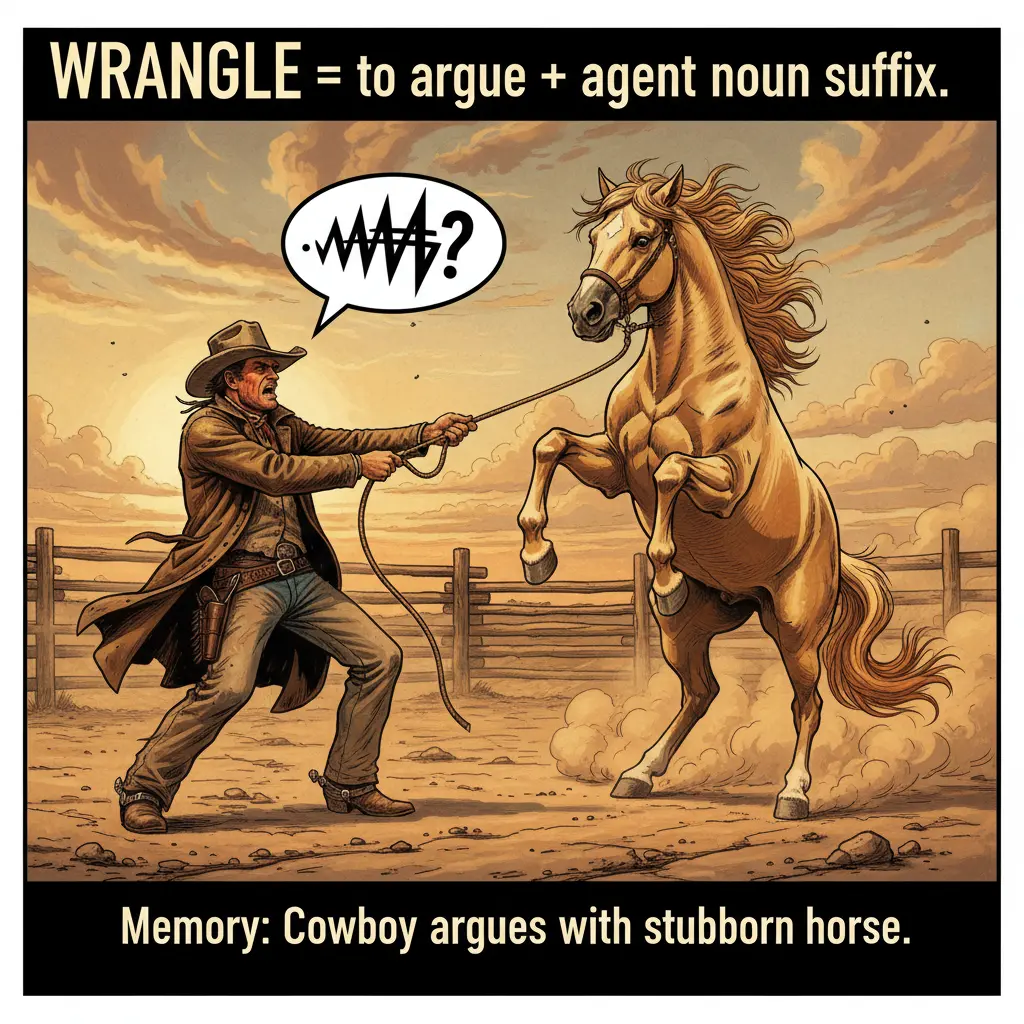
wrangle = wrang- (to argue) + -gle (agent noun suffix). Historical origin: Middle English → Old Norse → English. Memory image: Imagine a cowboy trying to wrangle a stubborn horse, arguing with it as he tries to tame it.
Note 1: These definitions and etymologies are not standard dictionary definitions, but extended explanations provided to help with memorization and understanding of the actual application of words. Through this background information, we strive to make words more vivid and easier to understand, and help you remember their meanings in real life.
Note 2: LexiTalk designs the learning flow around the linguistics principle of “Comprehensible Input.” When learners encounter material that is slightly above their level but still understandable from context, the brain naturally absorbs the language. That’s why we keep every word inside authentic contexts, using examples and associations to help you understand it and use it flexibly.
Read the FAQ explanation of Comprehensible InputWrangle is a versatile verb that most often means to argue or dispute, sometimes heatedly, particularly in informal speech. It can also mean to herd or manage animals, especially cattle, with some effort or fuss. A third sense is to arrange or bring into order something that is tangled or disorganized, for example wrangling data, schedules, or a project plan into shape. In everyday use, you might say two coworkers are wrangling over the best approach, or a ranch hand is wrangling a group of calves. The word connotes persistence and rough, practical handling rather than polished debate. Memory image: imagine a cowboy trying to wrangle a stubborn horse, arguing with it while taming it.
English often blends a sense of stubborn persistence (the practical, hands-on side) with social friction (the argumentative side). Learners should note that wrangle carries a rougher, more colloquial feel than argue, and it can apply to people, animals, and even messy data or plans. A common mistake is overusing wrangle in formal writing where dispute or argue would be more stylistically appropriate.
What is the meaning of 'wrangle'?
Which sentence uses 'wrangle' correctly?
Choose the synonym for 'wrangle':
Choose the antonym for 'wrangle':
In what situation might people 'wrangle'?
Download LexiTalk app for personalized learning experience
Download AppCookies
We use cookies for essential site functions, analytics, and ads. You can accept, reject, or manage preferences. Privacy Policy