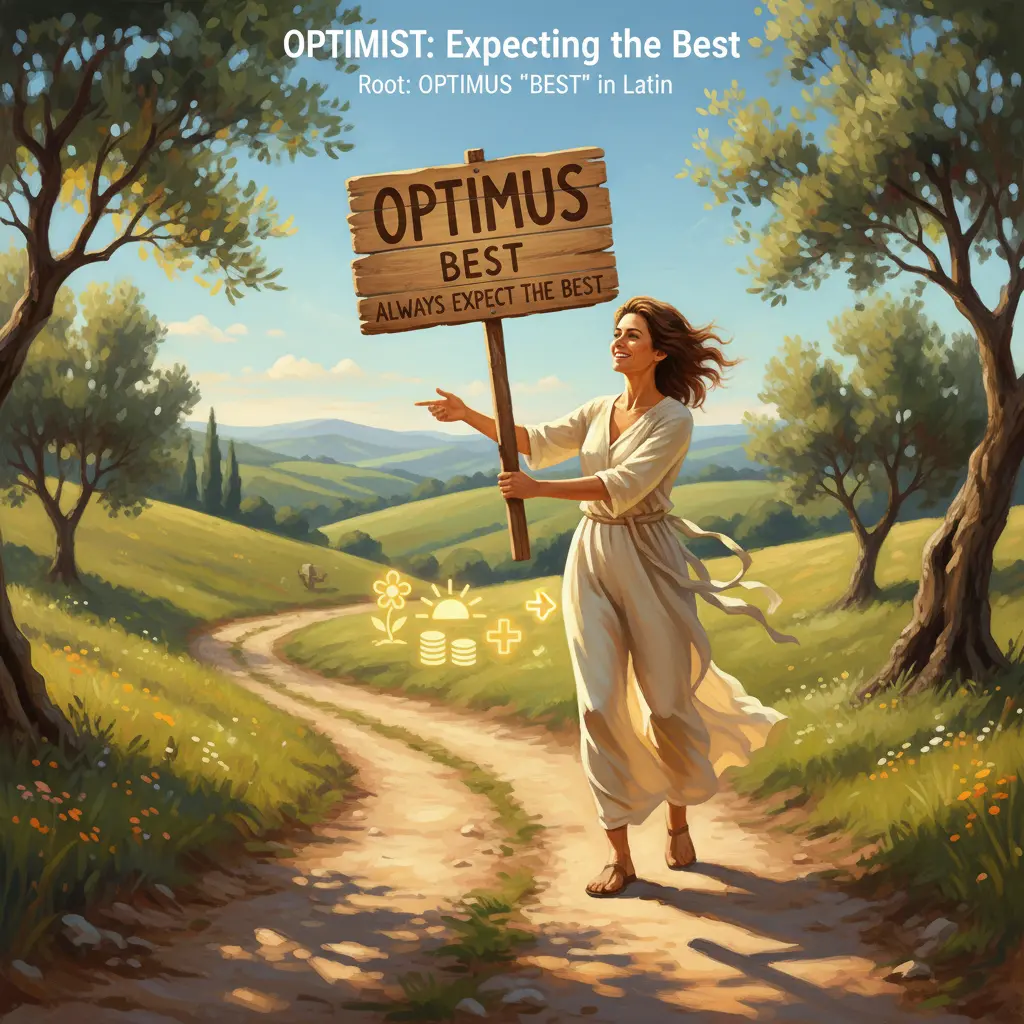
optimist 單詞的含義
- 對未來抱有樂觀態度的人
- 相信事情會好轉的人
- 能看到事物正面的那個人
optimist 英文例句
例句是你理解詞義的起點,不必急著背誦,先感受它在句子中的用法。
optimist 音標與發音
英式
/ˈɒp.tɪ.mɪst/
美式
/ˈɑːp.tɪ.mɪst/
optimist 單詞的語源
根部分解:詞根 optim- + 後綴 -ist;詞根來自拉丁語 optimus '最好'。歷史起源:源自拉丁語 optimus '最好',經由中古法語 optimiste 而入英語。記憶圖像:想像一個人站在陽光大道上,相信未來一定會更好。
註一:這些釋義和詞源並非傳統字典中的標準定義,而是為了幫助記憶和理解單詞的實際應用而提供的擴展解釋。透過這些背景資訊,我們力求讓單詞更加生動、易於理解,並幫助你記住它們在真實生活中的含義。
註二:LexiTalk 在設計學習流程時,遵循語言學中的「可理解輸入」原則。當學習者接觸略高於自己水準、但能從語境中理解的內容時,大腦會自然吸收語言。這就是為什麼我們讓每個單詞都出現在真實語境中,透過例句和聯想幫助你理解並靈活使用。
前往 FAQ 了解「可理解輸入」
真實語境解釋
樂觀主義者通常對未來抱持希望,善於看到事物的光明面,並相信事情最終會好轉。他們聚焦可能性、相信努力或機會能改善情況,即使遇到挫折也保持信心。這種態度能激勵他人,也可能在不夠現實時造成期望過高。日常對話中,常會說「一切都會好起來」之類的話,樂觀主義者往往如此表述。
用法提醒
- - 作為名詞使用:一個樂觀主義者。
- - 不作形容詞用(樂觀的是 optimistic)。
- - 常見搭配:be an optimist about、stay hopeful。
- - 與 pessimist 做對比以清楚區分。
- - 留意語氣:樂觀不等於天真。
常見誤解
- 樂觀主義者就是天真無知的人。
- 樂觀的人總是避開問題、不做計畫。
- 樂觀並不等於完全不切實際。
- 樂觀就是每次都期望完美結果。
- 這個詞僅指性格,與某次心情無關。
語言思維差異
對繁體中文使用者,樂觀主義者常帶有正向意味,但若語氣過度,可能被誤解為不切實際。學習時要留意語境與語氣,避免過度樂觀成為問題。
學習提示
- 用對比樂觀與悲觀學習細微差別。
- 注意 optimist 指的是人,而非情緒。
- 可搭配 about: be an optimist about the outcome。
- 與 realistic 對比,理解平衡感。
- 觀察搭配:optimistic about、expected success。
- 不要用 optimist 形容情景,適用於人。
五步學習法,用英語來學習英語
步驟1:含義
What does 'optimist' mean?
B.a person who studies the stars and planets
C.a person who expects the best or sees the positive side of things
D.a person who collects stamps as a hobby
步驟2:使用
Which sentence uses the word 'optimist' correctly?
A.Even after the team lost their lead, Miguel remained an optimist, encouraging teammates to keep trying because he believed they could come back.
B.As an optimist, Sarah always plans for the worst and prepares for failure.
C.The scientist called the experiment optimist because it showed promising preliminary results.
D.She wore an optimist to the party.
步驟3:同義詞
Which word is most similar in meaning to 'optimist'?
A.sanguine
B.pessimist
C.cynic
D.realist
步驟4:反義詞
Which word is the opposite of 'optimist'?
A.sanguine
B.pessimist
C.hopeful
D.enthusiast
步驟5:掌握
Can you think of a real-life scenario that fits the meaning of the word without using the word itself?
A.When the project failed, he said it was predictable and that he had warned everyone it would happen.
B.He refused to leave the house during a flood because he believed nothing bad could ever happen.
C.After several rejections, she kept submitting her book to publishers, confident that one would accept it eventually.
D.She saved every penny because she expected the economy to collapse and wanted to be prepared.
想要練習更多單詞嗎?
下載 LexiTalk 應用程式,獲得個人化學習體驗
下載應用