solute 英文例句
例句是你理解詞義的起點,不必急著背誦,先感受它在句子中的用法。
solute 音標與發音
英式
/ˈsɒljuːt/
美式
/ˈsɑːljuːt/
solute 單詞的語源
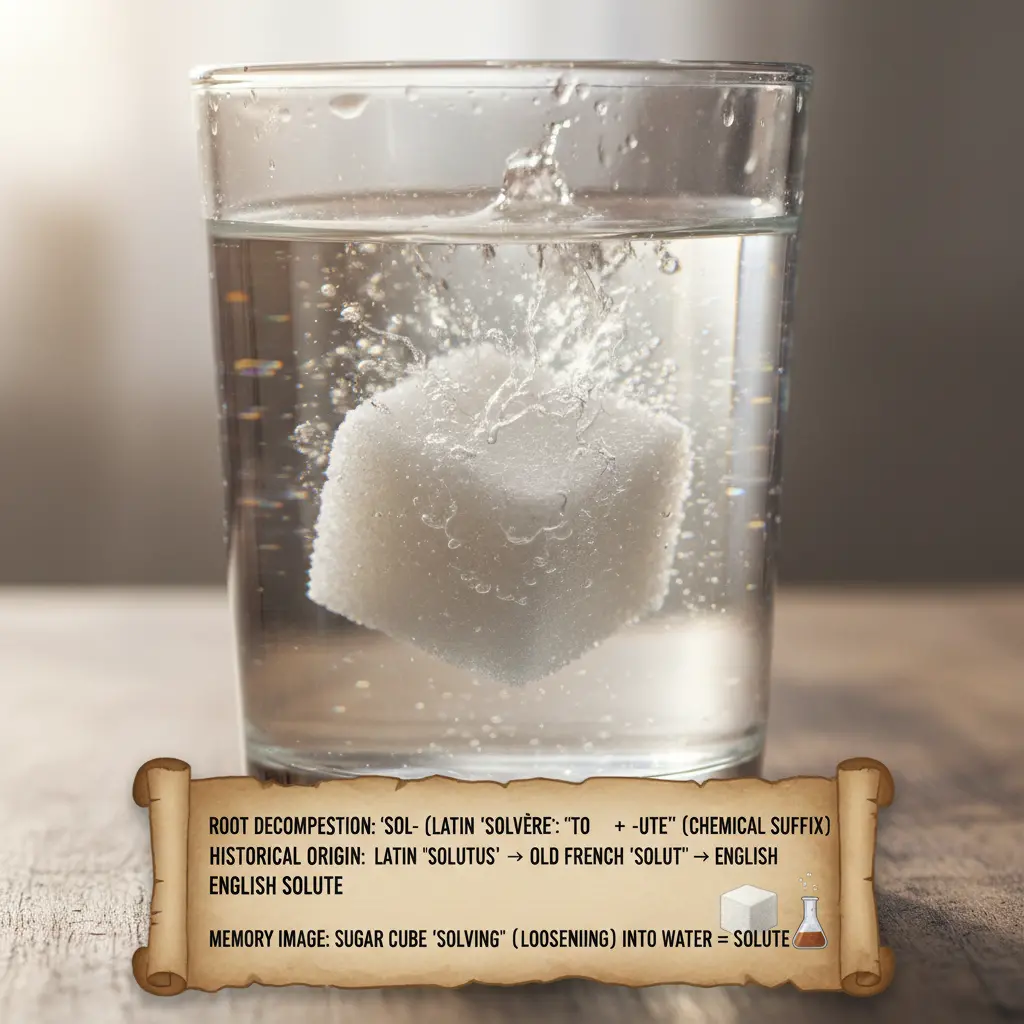
詞根分解:'sol-'(來自拉丁文'solvĕre', 意為'鬆開') + '-ute'(化學術語中的後綴)。歷史起源:拉丁文'solutus' → 古法文'solut' → 英文'solute'。記憶圖像:想像一塊糖在水中溶解,糖是溶解在液體中的溶質,'被鬆開的'物質。
註一:這些釋義和詞源並非傳統字典中的標準定義,而是為了幫助記憶和理解單詞的實際應用而提供的擴展解釋。透過這些背景資訊,我們力求讓單詞更加生動、易於理解,並幫助你記住它們在真實生活中的含義。
註二:LexiTalk 在設計學習流程時,遵循語言學中的「可理解輸入」原則。當學習者接觸略高於自己水準、但能從語境中理解的內容時,大腦會自然吸收語言。這就是為什麼我們讓每個單詞都出現在真實語境中,透過例句和聯想幫助你理解並靈活使用。
前往 FAQ 了解「可理解輸入」
真實語境解釋
溶質(sol ute)是指在溶液中被溶解的物質。以鹽溶於水為例,鹽是溶質,因為它會分散到水中。相對的,溶劑是在溶液中量較多、執行溶解作用的成分。這個概念在化學與日常混合物中都很常見。理解溶質與溶劑的區別有助於解釋濃度、飽和度及品質守恆等現象。
用法提醒
- 記住:溶質是被溶解的物質。區分溶質和溶劑。用粒子與濃度來思考。溶質可以是固體、液體或氣體。溫度會影響溶解度。多用日常實例練習。
常見誤解
- 溶質就是溶劑本身。
- 溶質和溶劑的量必須相等。
- 只有固體可以成為溶質。
- 溶質在溶液中會完全消失。
- 溶質是溶解溶劑的成分。
語言思維差異
繁體中文使用者可能把溶質與溶劑混淆,容易把“溶解”責任誤判為溶劑在主動溶解。
學習提示
- 回憶:溶質是被溶解的物質。
- 對比溶質與溶劑的角色以加深記憶。
- 用日常例子練習(茶中的糖、水中的鹽)。
- 練習質量與濃度的情境。
- 畫一個簡短圖解標註溶質/溶劑。
- 留意情境:固體、液體或氣體都可以是溶質。
五步學習法,用英語來學習英語
步驟1:含義
What is the definition of 'solute'?
A.A measurement unit for liquids
B.A type of solid object
C.A substance that dissolves in a solvent
D.A method of planting seeds
步驟2:使用
How is 'solute' used in a sentence?
A.Salt is often used as a solute in cooking.
B.The solute floats on the surface of the water.
C.The solute is the color of the rainbow.
D.Water is the primary solute in the solution.
步驟3:同義詞
Which word is most similar to 'solute'?
A.Solution
B.Solid
C.Syrup
D.Mixture
步驟4:反義詞
What is the opposite of 'solute'?
A.Combine
B.Evaporate
C.Solvent
D.Dissolve
步驟5:掌握
Can you think of a real-life scenario involving 'solute'?
A.The plant grew taller due to the sunlight it received.
B.He forgot to add sugar to his tea, so it was tasteless.
C.When making a soup, it's essential to consider the solute for flavor.
D.She enjoyed watching the clouds change shapes.
想要練習更多單詞嗎?
下載 LexiTalk 應用程式,獲得個人化學習體驗
下載應用