afraid - Master This Word
Master this word with our 5-step learning method – Learn English in English
Train English Through Brain Routes, Not Translation.
This page helps you stop memorizing isolated translations and start understanding a word through its shared mental image, native-style thinking, and practical training steps.
Master this word with our 5-step learning method – Learn English in English
Example sentences are the start of understanding. Don't rush to memorize. First feel how the word works in a sentence.
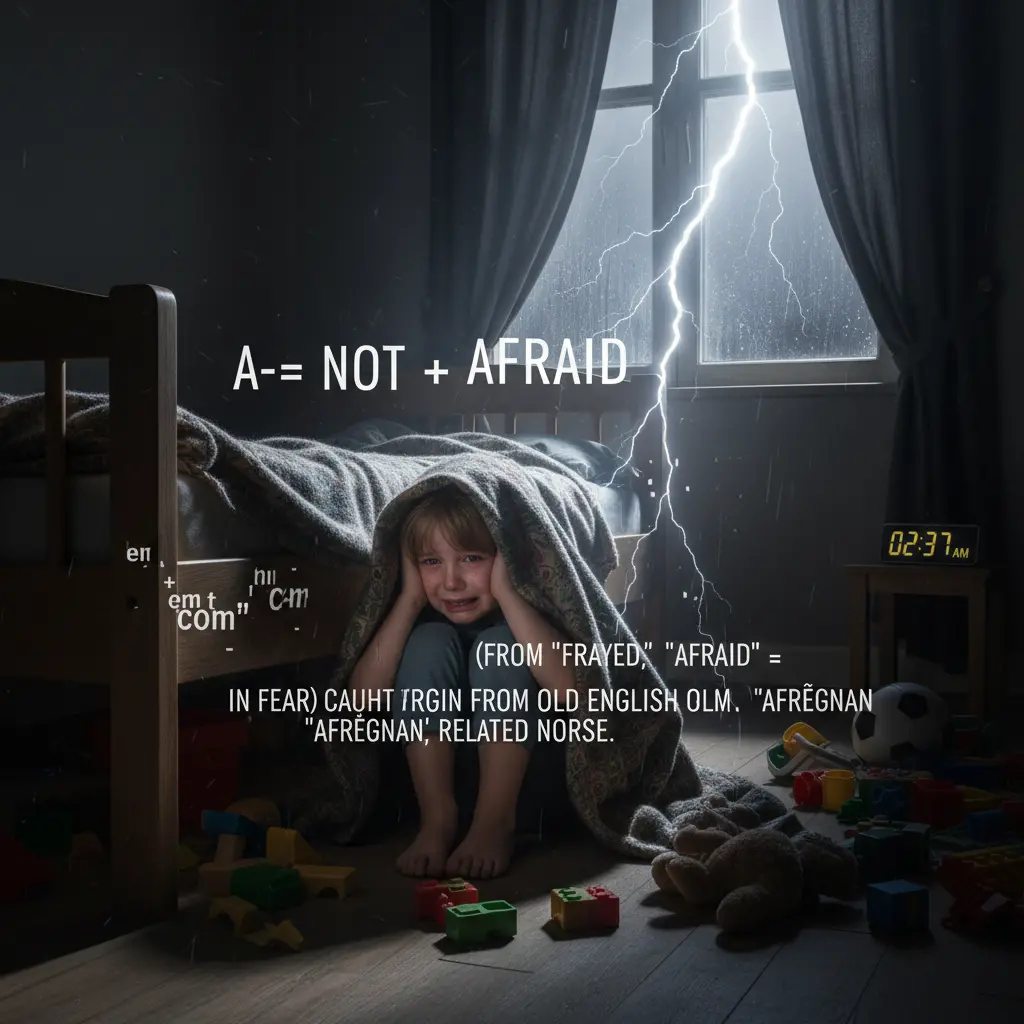
a- = not + afraid (from 'frayed', 'afraid' = caught in fear). Origin from Old English 'afrægnan', related to Old Norse. Imagine a child hiding under a bed during a thunderstorm, feeling afraid of the loud noises.
Note 1: These definitions and etymologies are not standard dictionary definitions, but extended explanations provided to help with memorization and understanding of the actual application of words. Through this background information, we strive to make words more vivid and easier to understand, and help you remember their meanings in real life.
Note 2: LexiTalk designs the learning flow around the linguistics principle of “Comprehensible Input.” When learners encounter material that is slightly above their level but still understandable from context, the brain naturally absorbs the language. That’s why we keep every word inside authentic contexts, using examples and associations to help you understand it and use it flexibly.
Read the FAQ explanation of Comprehensible InputI grip the door handle and slowly turn it, inching the world into view. The chill air brushes my skin and my breath catches as my heart shifts into a quicker rhythm. I adjust my stance, set my shoulders, and tell myself to keep moving. Afraid sits at the edge of my thoughts, guiding my steps as I choose what to do next.
Afraid is an adjective describing a feeling of fear or anxiety in response to a real or imagined threat. It covers both general unease and specific fears, such as dangerous animals, loud noises, or situations that feel unsafe. In everyday English you can say, I am afraid; I am afraid of spiders; or that sounds scary, I’m afraid. The word is also used for polite refusals or apologies, as in I’m afraid I can’t help you right now. Etymology links to Old English roots and the sense of being caught in fear; imagine a child hiding under a bed during a thunderstorm, afraid of the loud noises.
Explain to an English speaker (meta, keep short)
What is the meaning of the word 'afraid'?
How is the word 'afraid' used in a sentence?
Which of the following words is similar to 'afraid'?
What is the opposite of 'afraid'?
In what real-life context would someone feel afraid?
Download LexiTalk app for personalized learning experience
Download AppCookies
We use cookies for essential site functions, analytics, and ads. You can accept, reject, or manage preferences. Privacy Policy