arid - Master This Word
Master this word with our 5-step learning method – Learn English in English
Train English Through Brain Routes, Not Translation.
This page helps you stop memorizing isolated translations and start understanding a word through its shared mental image, native-style thinking, and practical training steps.
Master this word with our 5-step learning method – Learn English in English
Example sentences are the start of understanding. Don't rush to memorize. First feel how the word works in a sentence.
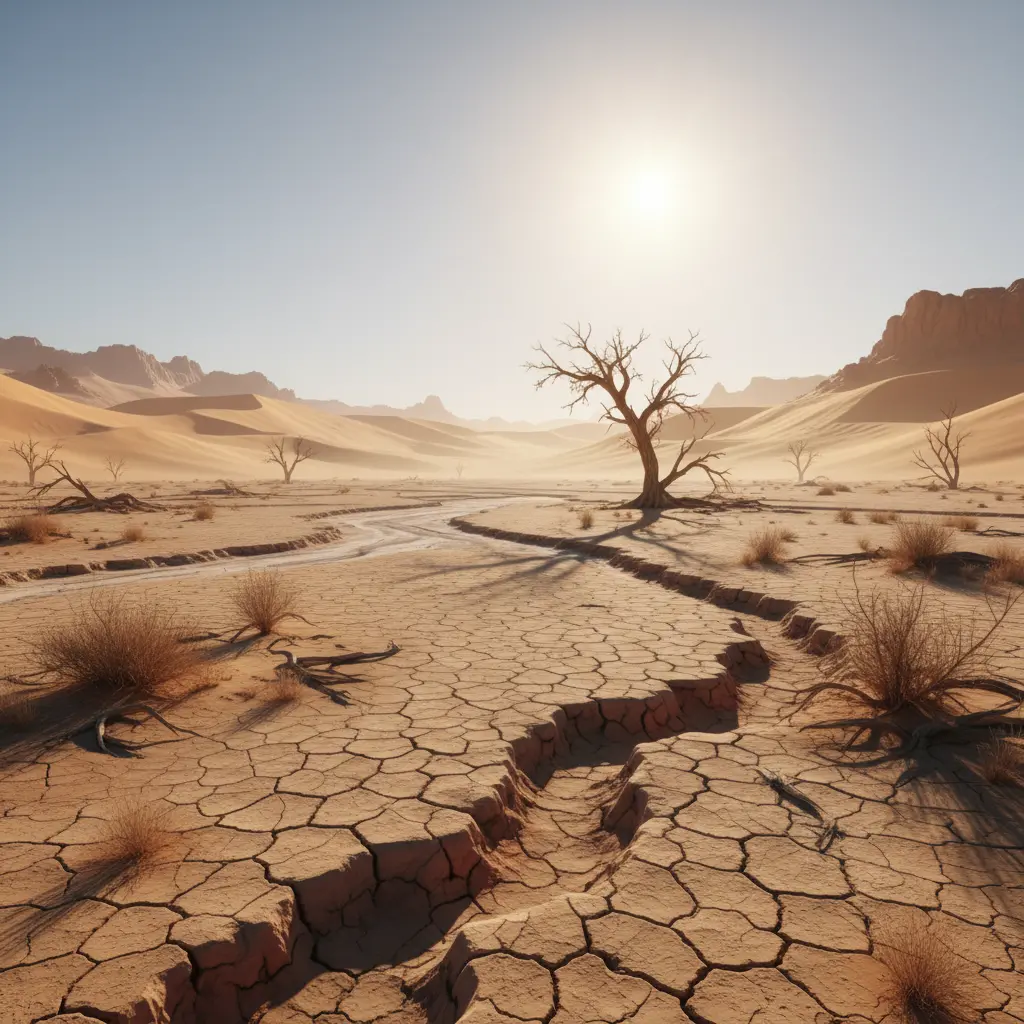
arid comes from the Latin 'aridus' meaning 'dry' (a- = not, 'ri- = flow). A memory image to recall arid is a vast desert landscape, parched and cracked with the sun beating down, where no water flows and life struggles to thrive.
Note 1: These definitions and etymologies are not standard dictionary definitions, but extended explanations provided to help with memorization and understanding of the actual application of words. Through this background information, we strive to make words more vivid and easier to understand, and help you remember their meanings in real life.
Note 2: LexiTalk designs the learning flow around the linguistics principle of “Comprehensible Input.” When learners encounter material that is slightly above their level but still understandable from context, the brain naturally absorbs the language. That’s why we keep every word inside authentic contexts, using examples and associations to help you understand it and use it flexibly.
Read the FAQ explanation of Comprehensible InputArid describes climates that receive little or no rainfall, producing dry conditions that slow plant growth and shape animal life. It can refer to deserts or to regions with extended dry seasons, where water sources are scarce and soils are cracked under the sun. In figurative use, arid can describe situations that feel barren or lacking in moisture for ideas, excitement, or emotion, as in an arid conversation that dries up without engagement. The word emphasizes the physical reality of drought as well as the sense of sterility in an environment or discussion.
English speakers often learn arid primarily as a climate term, but may forget its metaphorical use for dull or unengaging situations. Learners should note that arid carries a strong sense of moisture absence, so avoid describing things as arid when attendances are merely low or weather is dry but not unusually parched.
What is the meaning of the word 'arid'?
In which of the following sentences is 'arid' used correctly?
Which of the following is a synonym for 'arid'?
What is the opposite of 'arid'?
In what real-life situation would you describe a place as 'arid'?
Download LexiTalk app for personalized learning experience
Download AppCookies
We use cookies for essential site functions, analytics, and ads. You can accept, reject, or manage preferences. Privacy Policy