blind - Master This Word
Master this word with our 5-step learning method – Learn English in English
Train English Through Brain Routes, Not Translation.
This page helps you stop memorizing isolated translations and start understanding a word through its shared mental image, native-style thinking, and practical training steps.
Master this word with our 5-step learning method – Learn English in English
Example sentences are the start of understanding. Don't rush to memorize. First feel how the word works in a sentence.
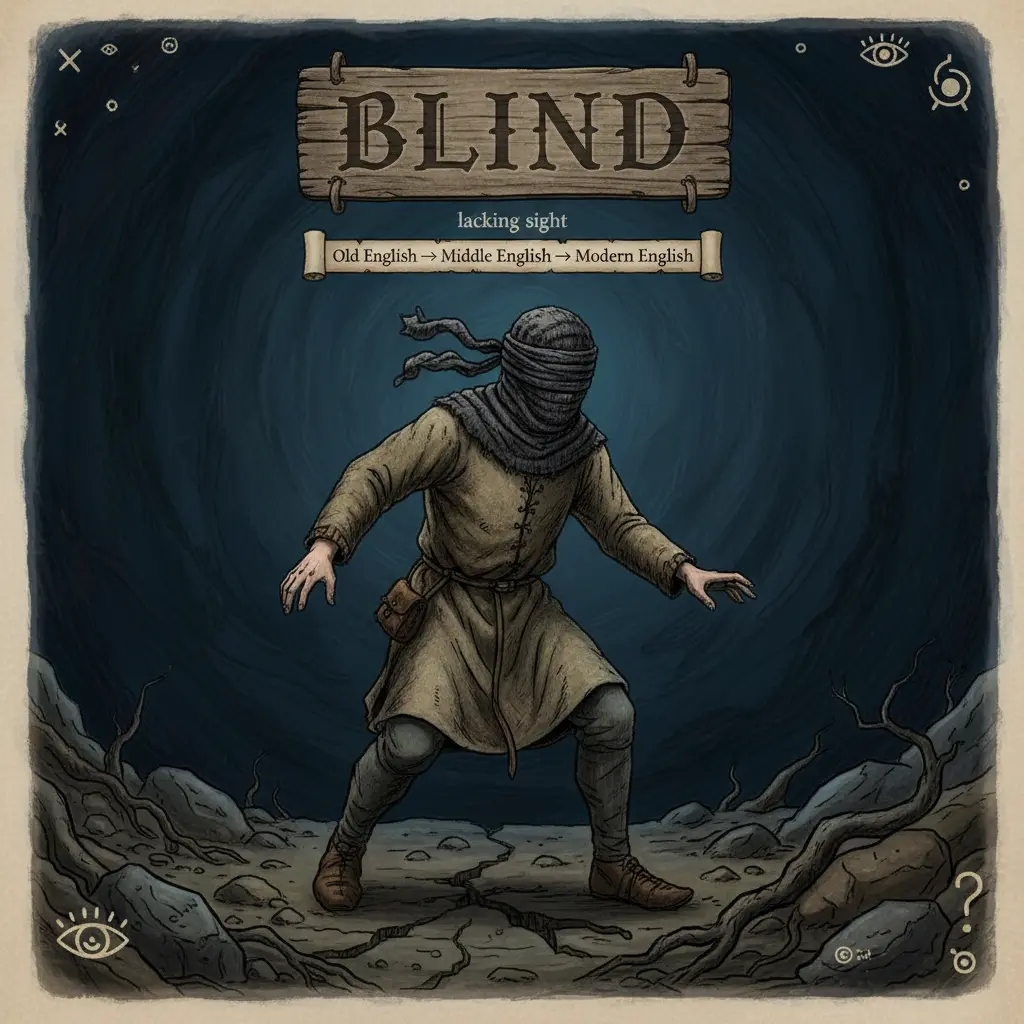
Root decomposition: blind (from Old English 'blind') - meaning 'lacking sight'. Historical origin: Old English → Middle English → Modern English. Memory image: envision a person covered in a blindfold, symbolizing lack of sight; adds a contextual image of someone stumbling in darkness.
Note 1: These definitions and etymologies are not standard dictionary definitions, but extended explanations provided to help with memorization and understanding of the actual application of words. Through this background information, we strive to make words more vivid and easier to understand, and help you remember their meanings in real life.
Note 2: LexiTalk designs the learning flow around the linguistics principle of “Comprehensible Input.” When learners encounter material that is slightly above their level but still understandable from context, the brain naturally absorbs the language. That’s why we keep every word inside authentic contexts, using examples and associations to help you understand it and use it flexibly.
Read the FAQ explanation of Comprehensible InputI close my eyes and reach out, palm flat, feeling the room through my skin. I move my hand along the wall, letting texture push and pull between corners while I adjust my stance. With each small turn of my body, I sense the space by touch, the floor answering my shifts in balance. When sight fails, I learn to keep listening to pace and height, letting the world reveal itself through effort and control.
blind is a versatile English word that most learners meet early. It primarily means unable to see, whether describing a person with limited vision or a moment when sight is blocked by darkness or an object. It also functions metaphorically to describe a lack of awareness, judgment, or discernment—for example, someone who is blind to important details or blind to the consequences of their actions. As a verb, to blind means to cause someone to lose sight or to make something hard to see, and related forms include blindfold and blindsided. The term’s etymology traces to Old English, through Middle English, into Modern English. A memory image: a person stepping forward with eyes covered, stumbling in a dark corridor.
Explain to an English speaker (keep it concise): in English, blind often signals a strong, sometimes harsh contrast between sight and awareness; learners may overextend the metaphor and misplace it in contexts about opportunities or opportunities missed.
What is the meaning of the word 'blind'?
Which sentence uses the word 'blind' correctly?
Which word is most similar to 'blind'?
What is the opposite of 'blind'?
Can you give an example of a real-life scenario of 'blind'?
Download LexiTalk app for personalized learning experience
Download AppCookies
We use cookies for essential site functions, analytics, and ads. You can accept, reject, or manage preferences. Privacy Policy