blockade - Master This Word
Master this word with our 5-step learning method – Learn English in English
Train English Through Brain Routes, Not Translation.
This page helps you stop memorizing isolated translations and start understanding a word through its shared mental image, native-style thinking, and practical training steps.
Master this word with our 5-step learning method – Learn English in English
Example sentences are the start of understanding. Don't rush to memorize. First feel how the word works in a sentence.
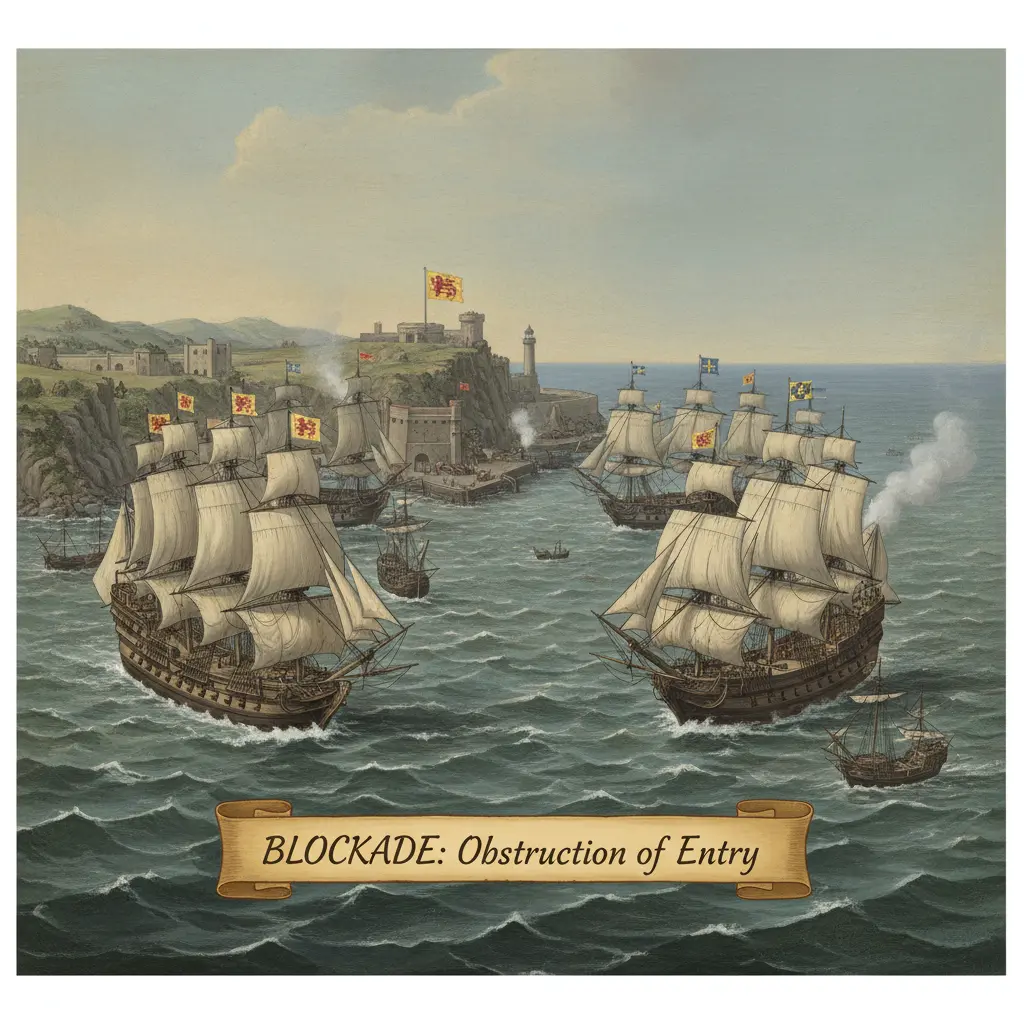
Root decomposition: 'block' (to obstruct) + 'ade' (act of). Historical origin: Latin 'bloccāre' → Old French 'bloquer' → English 'blockade'. Memory image: Imagine ships circling around an enemy port, forming a wall to keep supplies from getting in or out, visually blocking entry.
Note 1: These definitions and etymologies are not standard dictionary definitions, but extended explanations provided to help with memorization and understanding of the actual application of words. Through this background information, we strive to make words more vivid and easier to understand, and help you remember their meanings in real life.
Note 2: LexiTalk designs the learning flow around the linguistics principle of “Comprehensible Input.” When learners encounter material that is slightly above their level but still understandable from context, the brain naturally absorbs the language. That’s why we keep every word inside authentic contexts, using examples and associations to help you understand it and use it flexibly.
Read the FAQ explanation of Comprehensible InputBlockade is a term used to describe an organized effort to seal off a place and prevent people, goods, or information from moving in or out. In its strongest sense it refers to a formal military action that blocks ports, borders, or supply lines; in everyday use it can describe a stubborn set of obstacles that prevents progress, such as a bureaucratic blockade slowing a project. While a blockade aims to cut access, a lockdown is different in scope and purpose. The word can also be used metaphorically, as in a data blockade that hinders streaming services. Understanding both the physical and figurative senses helps learners use the term precisely and confidently.
Blockade is a formal, often military term; learners should expect it to appear in official reports, news on conflicts, or historical accounts. In casual speech, use block or block off for temporary barriers. The verb form blockade is rarer and may sound ceremonial.
What does the word 'blockade' mean?
Choose the correct usage of the word 'blockade' in a sentence.
Which word is most similar to 'blockade'?
What is the opposite of 'blockade'?
Can you think of a real-life scenario where something similar to a blockade might occur?
Download LexiTalk app for personalized learning experience
Download AppCookies
We use cookies for essential site functions, analytics, and ads. You can accept, reject, or manage preferences. Privacy Policy